
- All
- Product Name
- Product Keyword
- Product Model
- Product Summary
- Product Description
- Multi Field Search


Views: 0 Author: Site Editor Publish Time: 2026-07-29 Origin: Site


A flawless prototype proves a design concept works on a workbench. It does not guarantee the factory can manufacture that same product reliably, safely, or profitably at scale. Moving from a single handmade model to mass production introduces severe risks. You face potential structural failures, non-compliance with strict juvenile product safety standards, and massive manufacturing inefficiencies. Hand-sanding a single unit takes hours; replicating that finish across ten thousand units requires automated precision. To prevent costly recalls and production delays, you must implement a rigorous, multi-stage validation framework before committing to large-scale manufacturing runs. Executing Engineering Validation Test (EVT), Design Validation Test (DVT), and Production Validation Test (PVT) phases systematically eliminates functional, aesthetic, and scalable risks. This structured approach ensures your custom baby furniture transitions smoothly from a concept to a market-ready product without compromising infant safety or production timelines.
Safety and Compliance Precede Scale: Prototypes must pass strict regulatory testing (e.g., CPSC, ASTM) for toxicity, structural integrity, and entrapment hazards before tooling begins.
Design for Manufacturability (DFM) is Non-Negotiable: A successful prototype must be translated into repeatable processes; complex custom joints or finishes may require simplification to maintain unit economics.
The Three-Stage Validation Framework: Engineering Validation Test (EVT), Design Validation Test (DVT), and Production Validation Test (PVT) systematically eliminate functional, aesthetic, and scalable risks.
Pilot Runs Mitigate Financial Exposure: Executing a small-batch production run identifies assembly inefficiencies and tooling errors before committing capital to mass production.
Many operators operate under the misconception that an approved prototype is ready for the factory floor. There is a massive gap between making one perfect unit and making ten thousand identical units. A prototype is often crafted by skilled artisans using manual techniques. Mass production relies on machine automation, standard materials, and factory operators with varying skill levels. You cannot scale artisan craftsmanship without exponentially increasing labor hours.
When transitioning to run-rate production, several variables shift immediately. Manual artisan labor is replaced by automated CNC routing and edge banding machines. Natural materials like solid pine or beech wood experience kiln-drying variances that affect dimensions and stability. A prototype built in a climate-controlled design studio behaves differently than wood processed in a humid factory environment. Bespoke prototype techniques, such as meticulous hand-sanding or custom joinery, fail to translate to high-speed production lines. Factories require standardized dowel placements, cam locks, and uniform panel thicknesses to maintain throughput.
Skipping validation stages leads to severe consequences on the production floor. Premature scaling results in high defect rates, inconsistent tolerances, and catastrophic product recalls. In the juvenile furniture industry, a structural failure or finish defect is a critical safety hazard. Implementing Design for Manufacturability (DFM) ensures the design can be produced efficiently. DFM forces engineers to look at every component and ask if it can be simplified, combined with another part, or eliminated entirely without compromising the structural integrity.
Material Substitution: Replacing exotic prototype woods with readily available, sustainable timber grades.
Joint Simplification: Converting complex mortise and tenon joints into standard dowel and minifix cam lock systems for faster assembly.
Finish Standardization: Moving from hand-rubbed oils to automated UV-cured non-toxic lacquers.
Hardware Consolidation: Reducing the number of unique screw sizes required for final assembly to minimize user error.
Engineering Validation Testing (EVT) establishes the baseline mechanical and structural requirements for juvenile products. This stage proves that the fundamental design is structurally sound and can withstand intended use and foreseeable abuse. You are testing the physics of the design, not the aesthetics.
Tolerance stack-up is a critical check during EVT. Individual part tolerances compound when manufactured in batches. Minor millimetric variations in a custom kids table set create structural instability or dangerous gaps during final assembly. If a leg is 1mm too long, and the tabletop socket is 1mm too shallow, the resulting 2mm gap creates a wobble. Engineers must verify part test-fitting across dozens of random samples to ensure consistent assembly.
Load and stress testing are paramount for infant products. Products undergo rigorous testing for weight limits and impact resistance. A custom baby crib requires extensive mattress support strength testing, slat durability checks, and side-rail integrity evaluations under cyclic load testing. We drop heavy weights onto the mattress support system repeatedly to simulate a jumping toddler. Hardware and fastener reliability must also be evaluated. Inserts, bolts, and locking mechanisms must endure repeated assembly and disassembly without thread stripping or loosening.
Environmental stress screening assesses how prototype materials react to changes in humidity and temperature. Wood is hygroscopic; it absorbs and releases moisture. We place EVT samples in environmental chambers, cycling them through extreme heat and high humidity. This prevents wood warping, joint separation, and adhesive failures during ocean freight shipping and long-term warehouse storage.
EVT Test Category | Testing Method | Passing Criteria |
|---|---|---|
Static Load Testing | Apply fixed weights to structural center points for 24 hours. | Zero deflection, cracking, or joint separation. |
Dynamic Impact Testing | Drop a specified mass from a set height onto the mattress base. | Hardware remains secure; no structural failure. |
Cyclic Shake Testing | Machine shakes the assembled unit 10,000 times. | Fasteners do not loosen; unit remains rigid. |
Environmental Cycling | Expose unit to 85% humidity and 40°C for 72 hours. | Wood moisture content remains stable; no warping. |
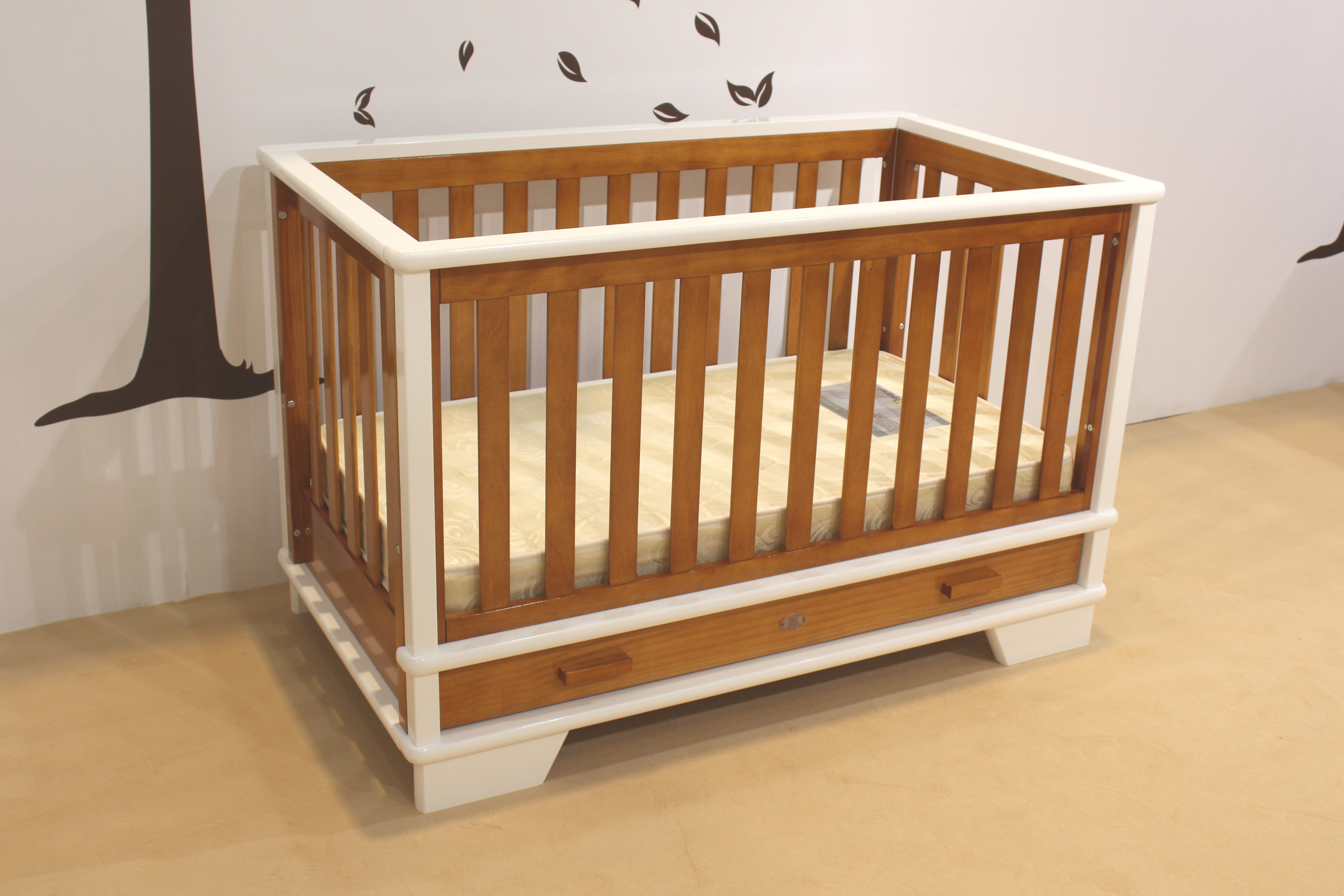
Design Validation Testing (DVT) shifts the focus from raw structural integrity to user safety, regulatory compliance, and final cosmetic approval. This stage ensures the product meets all legal requirements and brand standards before mass production begins. You are locking in the final look, feel, and legal safety of the product.
Toxicity and material certifications are mandatory. All paints, varnishes, textiles, and engineered woods used in juvenile products must be tested for lead, phthalates, VOCs, and heavy metals. Compliance with these standards is non-negotiable for market entry. Third-party testing laboratories must verify that the surface coatings contain less than 90 parts per million (ppm) of lead.
Tip-over risks and center of gravity must be carefully evaluated for heavy case goods. A custom nursery dresser must undergo specific stability testing to ensure anti-tip compliance (ASTM F2057). This involves testing drawer interlock systems, which prevent multiple drawers from opening simultaneously, and assessing the unit's stability with 50-pound weights hanging from extended drawers.
Entrapment and spacing standards require strict dimensional checks. Tolerances must be tightly controlled to prevent limb, head, or torso entrapment. These checks apply to spindles, rails, and decorative cutouts. We use standardized testing probes to ensure gaps are either too small for a finger to enter or large enough that a head cannot get stuck. Cosmetic consistency is established by defining a "Golden Sample"—the absolute standard for production. Limit samples define acceptable visual and tactile variances, such as natural wood grain variation, color matching, and paint finish roughness limits across different batches.
Production Validation Testing (PVT) moves from product testing to process testing. It evaluates the actual production line under real factory conditions to ensure the manufacturing process can consistently yield quality products at scale. You are testing the factory's ability to build the product, not just the product itself.
Tooling and jig verification is the first step. Factories must confirm that molds, cutting jigs, and CNC fixtures produce parts within the exact tolerances specified in the final engineering CAD files. Any deviation here results in widespread assembly issues. We run 50 parts through the CNC machine and measure every single one with digital calipers to verify machine calibration.
The Bill of Materials (BOM) and process freeze lock in the precise technical specifications of every component. From non-toxic wood sealers to child-safe assembly screws, this ensures zero unauthorized component substitutions during mass assembly. Supply chain stress testing evaluates the consistency and reliability of raw material suppliers. Sourcing consistent natural materials, such as non-toxic woven elements or specific wood grades for a custom Moses basket stand, requires robust vendor management. If the primary wood supplier faces a shortage, the factory cannot substitute a lower-grade timber without authorization.
Incoming Quality Control (IQC): Inspecting raw lumber for moisture content and hardware for thread accuracy before it enters the factory floor.
In-Process Quality Control (IPQC): Checking part dimensions immediately after CNC routing and before the painting phase.
Final Quality Control (FQC): Assembling random units from the finished batch to verify fit, finish, and packaging integrity.
Analyzing how production realities impact the final cost of goods sold (COGS) dictates profitability. Material yield and waste reduction play a significant role. Slight design modifications drastically improve material utilization on standard lumber or MDF sheets. Optimizing CNC nesting layouts reduces waste and lowers material costs. If adjusting a panel size by half an inch allows you to fit four panels on a sheet instead of three, you instantly reduce material costs by 25 percent.
Assembly time and packaging efficiency present conceptual trade-offs. Pre-assembled components incur higher shipping volumes and freight costs but offer a better customer experience out of the box. Flat-pack designs reduce shipping costs but increase the risk of user assembly error and packaging damage. You must evaluate these factors to determine the best approach for your distribution model.
Structuring a 50-100 unit pilot run serves as the final check. This small-batch run validates assembly line times, transit packaging drop-tests, and final unit economics before authorizing full-scale production. It is a critical step to identify and resolve inefficiencies without risking massive capital. We track the exact time it takes a worker to assemble the unit on the line; if it takes 15 minutes instead of the projected 8 minutes, we must redesign the assembly process.
Manufacturing partner selection and capability matching dictate the success of the production run. You must match the product’s complexity with a factory's specific capabilities. Verify that the manufacturer possesses the precise machinery, such as 5-axis CNC routers, and the quality management systems required for juvenile product tolerances.
Managing vendor dependencies requires diversifying component suppliers. Sourcing proprietary joint fasteners or specialized child-safe finishes from multiple vendors prevents production bottlenecks if one supplier fails to deliver. Never rely on a single source for a critical safety component.
Navigating regulatory changes involves establishing a framework for continuous compliance monitoring. Ensure that updates to CPSC, ASTM, or international juvenile product safety standards are immediately reflected in production runs to maintain market access and consumer safety. Intellectual Property (IP) protection is also critical. Take steps to protect proprietary designs and mechanical joint mechanisms when sharing CAD files and prototypes with overseas or third-party manufacturers. Use non-disclosure agreements (NDAs) and register design patents before transmitting final engineering files.
Initiate a formal DFM review with your engineering team to simplify complex joints before finalizing CAD files.
Establish clear tolerance limits and cosmetic limit samples with your factory manager prior to authorizing tooling budgets.
Schedule a 50-unit pilot run to validate assembly line efficiency and packaging durability under real transit conditions.
Secure secondary suppliers for critical proprietary hardware to mitigate potential supply chain bottlenecks.
A: Engineering Validation Test (EVT) proves the basic structural and functional design. Design Validation Test (DVT) ensures the product meets safety, compliance, and cosmetic standards. Production Validation Test (PVT) verifies that the factory line can manufacture the product consistently at scale.
A: Prototypes fail in mass production due to a lack of Design for Manufacturability (DFM). Issues arise from tooling limitations, material batch changes, tolerance stack-up problems, and the shift from manual artisan labor to automated factory processes.
A: A "Golden Sample" is the perfect, approved standard unit that all production must match. A "Limit Sample" defines the maximum acceptable deviation from the Golden Sample, such as acceptable variations in wood grain, paint finish roughness, or assembly tightness.
A: In the US, baby furniture must comply with CPSC regulations. Specific standards include ASTM F1169 for full-size baby cribs and ASTM F2057 for clothing storage units to prevent tip-over hazards.
A: A typical pilot run includes 50 to 100 units, or roughly 2-5% of the initial mass production volume. This quantity is sufficient to test assembly line efficiency, tooling accuracy, and packaging durability without excessive financial risk.
A: DFM is the engineering practice of designing products specifically to optimize the manufacturing process. It aims to make the product easier and cheaper to produce at scale while maintaining structural integrity, safety, and aesthetic standards.
A: Packaging is tested using ISTA (International Safe Transit Association) standards. This involves rigorous drop testing, vibration testing, and compression testing to ensure flat-pack or assembled items survive transit and warehouse handling unharmed.


