
- All
- Product Name
- Product Keyword
- Product Model
- Product Summary
- Product Description
- Multi Field Search


Views: 0 Author: Site Editor Publish Time: 2026-08-19 Origin: Site


Parents face a strict safety inflection point during their baby's first year. Newborns outgrow their initial sleep space rapidly, creating significant anxiety for caregivers. Moving away from bedside sleeping feels daunting. A core problem emerges during this developmental phase. Pediatric guidelines recommend room-sharing for the first six months. However, physical milestones often happen sooner. Babies begin rolling and sitting up early, making shallow bassinets inherently unsafe. You must resolve this tension between guidelines and physical reality. Transitioning requires more than simply watching the calendar. It demands a calculated structural decision. You must evaluate current safety standards thoroughly and assess spatial dynamics in your home. Sourcing reliable sleep environments from a verified manufacturer ensures long-term safety. We will explore how to navigate this shift safely by identifying exact physical triggers and executing a gradual transition strategy to minimize sleep disruption.
Milestone Triggers: Transitioning is dictated by physical milestones (attempting to roll, sitting unassisted, reaching 15–20 lbs), with the "sweet spot" typically occurring between 4 and 6 months of age.
Safety Compliance: Moving to a larger sleep space requires strict adherence to mattress firmness and slat-spacing standards to mitigate SIDS risks.
Strategic Sourcing: Whether purchasing for a single nursery or sourcing as a retailer, evaluating the structural integrity and certifications of the manufacturer is a non-negotiable step in the decision-making process.
Transition Execution: Successful transitions rely on gradual environmental familiarization and managing both infant startle reflexes and parental monitoring anxiety, minimizing sleep disruption.
Most standard bassinets hold a strict weight limit ranging from 15 to 20 pounds. You must check your specific product manual immediately. Length restrictions matter equally in this evaluation. A baby’s head or feet cannot touch the ends of the sleep space. Bassinets sit on high center-of-gravity frames. They become top-heavy easily when babies shift their weight. Exceeding weight limits compromises structural stability entirely. The unit could tip over during active sleep phases. Always follow verifiable pediatric guidelines for sleep safety. Ignore anecdotal parenting advice regarding sleep space longevity. Rely strictly on manufacturer safety limits and structural testing data. Pushing these limits invites catastrophic failure. When a baby pushes against the mesh or fabric sides, the entire frame experiences lateral stress. Lightweight aluminum or plastic frames cannot withstand this repeated force. The locking mechanisms on folding models become particularly vulnerable to stress fractures. You must monitor your child's growth curve closely. Weigh your infant weekly once they pass the three-month mark. Measure their length against the internal dimensions of the mattress pad. Leave at least two inches of clearance at both the head and foot.
Watch your infant for exact physical signs of mobility. Babies start shifting their weight from side to side. They lift their legs high into the air and slam them down. They twist their torsos during active play on their playmats. Soon, they push up on hands and knees, rocking back and forth. Unassisted sitting follows shortly after these initial movements. Active rolling serves as the final, non-negotiable warning sign. A mobile infant faces severe risks in a bassinet. Shallow walls offer absolutely no containment for a rolling baby. Suffocation hazards increase dramatically against soft mesh sides. Fall risks become imminent once a baby can pull up on the top rail. You must move them before they master these skills completely. Do not wait for them to roll over in their sleep. The first time they roll should not happen in a confined, shallow space. Observe their daytime floor play. If they show the core strength to bridge their hips or pivot on their stomachs, their nighttime mobility will soon follow.
The AAP advises room-sharing for the first six months. Yet, bassinets have a hard six-month structural limit. Many babies outgrow them at three or four months. This creates a stressful dilemma for parents trying to follow all guidelines simultaneously. Parents need a clear decision framework for this phase. Option one involves moving larger sleep structures into the primary bedroom. You bring full-sized Cots into your personal space. Option two means transitioning the baby directly to the nursery. Base this choice on your bedroom square footage and layout. Prioritize a safe, firm sleep surface over the room location. A safe bed in a separate room beats an unsafe bassinet in your room. If you choose option one, ensure you have a minimum of two feet of clearance around the perimeter of the frame. You need space to safely lift the baby in and out during the night. Do not wedge the furniture against radiators, windows, or heavy drapery. If your primary bedroom cannot accommodate the footprint, move the baby to their dedicated nursery.
Bassinets create a highly enclosed sleep environment. They often utilize heavy fabrics and solid canvas walls to block light. Standard slatted designs offer significantly higher airflow. Better air circulation aids infant thermal regulation immensely. Babies cannot regulate their body temperature well during early months. Overheating remains a primary safe sleep concern for pediatricians. Slatted sides allow trapped body heat to escape efficiently. Fresh oxygen circulates freely around the sleeping infant. This continuous airflow reduces rebreathing risks during deep sleep cycles. Transitioning provides a superior respiratory environment for your growing child. The spacing between slats must measure no more than 2 3/8 inches. This precise measurement prevents the baby's head from becoming trapped while maximizing ventilation. The open design also allows caregivers to monitor the infant from across the room without standing directly over the mattress.
Bassinets use thin, highly compressed foam pads. Full-sized sleep spaces require strictly regulated firmness levels. Dual-sided mattresses offer excellent longevity for growing toddlers. The infant side stays rock-hard to prevent suffocation. Apply the "two-finger rule" for safe edge fitting. You should not fit two fingers between the mattress and the frame. This tight tolerance prevents dangerous entrapment hazards. The structural support must remain rigid across the entire surface. Sagging mattresses create dangerous depressions where infants can roll and become stuck. Upgrading ensures your baby sleeps on a biomechanically supportive surface. The base support system usually consists of metal springs or solid wooden slats. Metal spring bases offer superior durability and resist sagging over years of use. Wooden slat bases provide excellent breathability but require regular inspection for cracks or warping.
Sleep Environment Comparison
Feature | Standard Bassinet | Full-Sized Sleep Structure |
|---|---|---|
Airflow | Restricted by fabric walls | Maximum circulation via slats |
Mattress | Thin pad (1-2 inches) | Regulated firm core (4-6 inches) |
Lifespan | 3 to 6 months | Up to 3 years (if convertible) |
Containment | Shallow walls (high fall risk) | Deep walls (prevents climbing) |
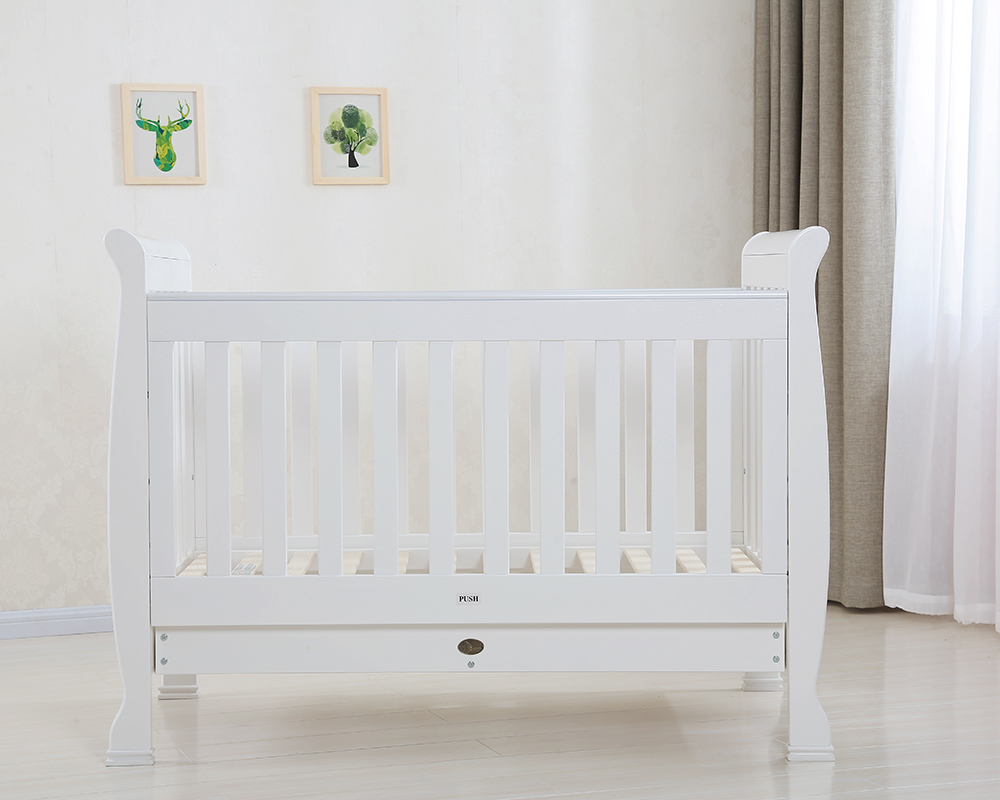
Establish strict baseline requirements for material safety. Demand GREENGUARD Gold certification for all nursery furniture. Insist on zero-VOC paints to protect indoor air quality. Require completely lead-free finishes on all painted surfaces. Teething infants inevitably chew on wooden top rails. They ingest whatever chemical coats the timber surface. Chemically safe finishes protect their developing nervous systems. Off-gassing from cheap furniture causes respiratory irritation in newborns. Verify the chemical testing reports before making a purchase. Safe materials guarantee a healthier sleep environment for years. Manufacturers achieve these safe finishes through multi-step painting processes. They cure the paint in specialized kilns to eliminate volatile organic compounds before the product ever reaches the shipping box. Look for water-based stains and food-grade mineral oils on natural wood finishes.
Evaluate your chosen baby cot supplier carefully. Check their adherence to current CPSC safety standards. Look for ASTM or EN 716 compliance documentation. Solid wood construction vastly outperforms composite materials. Solid timber retains metal hardware better over time. Screws strip easily out of cheap particleboard frames. Active toddlers exert immense force on the side rails. The joints must withstand daily shaking and pulling. A verified supplier provides structural testing certificates upon request. Never compromise on the physical integrity of the frame. Inspect the hardware packet upon delivery. High-quality suppliers use heavy-duty steel bolts and barrel nuts. They avoid cheap wood screws that back out over time. The corner posts should feature mortise and tenon joinery for maximum stability.
Evaluate the long-term return on your investment. Convertible models offer exceptional value for growing families. Look at 3-in-1 or 4-in-1 adaptable designs. Check the specific hardware requirements for these conversions. You need multiple levels of mattress height adjustability. The structure must scale safely from a 6-month-old to a 3-year-old. Lower the mattress as the baby learns to stand. Convert the frame to a toddler bed when climbing begins. Scalable designs eliminate the need for intermediate furniture purchases. This approach saves money and reduces environmental waste. Keep the conversion kits and extra hardware in a labeled bag. Store them in a dry place to prevent rust. When lowering the mattress, ensure all support brackets lock firmly into their new positions. Test the stability by pressing firmly on all four corners of the mattress.
Retailers, hoteliers, and childcare centers face unique procurement challenges. Bulk purchasing requires strict evaluation criteria to ensure profitability. Flat-pack shipping efficiency matters for warehousing and logistics. Warranty terms protect your commercial bottom line against defects. Drop-ship capabilities streamline logistics for e-commerce retail operations. Batch-testing ensures consistent quality across large production runs. Continuous compliance monitoring remains vital for liability protection. Choose an infant cot wholesale provider with a proven track record. Request detailed spec sheets and shipping manifests before signing contracts. Reliable partners prevent costly recalls and customer complaints. Commercial buyers must also evaluate the replacement parts program. High-traffic environments like hotels experience faster wear and tear. You need a supplier who stocks replacement hardware, teething rails, and mattress supports ready for immediate dispatch.
Manufacturing transparency builds essential trust with commercial buyers. Sustainable timber sourcing remains a non-negotiable industry standard. Look for FSC certified wood in their supply chain. Ethical labor practices reflect the core values of the factory. Rigorous in-house stress testing proves long-term durability. Slat impact tests simulate the force of active toddlers. A tier-1 nursery cot manufacturer provides all this documentation upfront. They welcome third-party factory audits and quality inspections. They maintain strict control over their painting and finishing lines. Partnering with top-tier factories guarantees product safety and brand reputation. These manufacturers utilize CNC routing machines for precision cuts. This technology ensures every slat fits perfectly into the top and bottom rails without gaps. They also employ dedicated quality assurance teams who pull random samples from the production line for destructive testing.
Implement a step-by-step plan for the transition. Start with daytime naps in the new environment. Let the baby adjust to the room lighting. Use the new space before attempting overnight sleep. Transfer existing sleep associations to the new room. Use the same unwashed sleep sack for familiar scents. Maintain the exact white noise volume and track. Keep the bedtime routine identical to previous nights. Read the same books and sing the same songs. Consistency reduces the infant's stress during environmental changes. Gradual introductions prevent sudden sleep regressions. Spend awake time in the nursery during the day. Let the baby play on the floor near the new furniture. This builds positive associations with the space. Do not rush the process. If the baby resists naps in the new room, try again the next day.
Infants wake up easily in larger, open spaces. They miss the tight boundaries of their bassinet. Evaluate safe solutions to manage this startle reflex. Transitional swaddles work well for babies not yet rolling. Sleep suits offer safe resistance for older infants. Avoid unsafe solutions entirely, regardless of marketing claims. Never use dock-a-tots inside the slatted frame. Ban pillows, heavy quilts, and crib bumpers completely. Strictly reinforce AAP safe sleep guidelines at all times. The space may look bare, but bare means safe. Dress the baby in appropriate layers to maintain warmth without loose blankets. Check the room temperature and adjust the TOG rating of the sleep sack accordingly. A firm mattress and a fitted sheet are the only items allowed inside the sleep space.
Moving a baby away from the bedside is psychologically hard. Address this hurdle openly with your partner. Use technological solutions to bridge the physical gap. High-definition video monitors provide immediate visual reassurance. Audio monitors alert you to early waking signs. Configure safe room-sharing setups if space permits. Place the monitor right next to your pillow. Maintain peace of mind during the initial transition weeks. Trust the safety of the new sleep environment. Your anxiety will fade as the baby sleeps soundly. Test the monitor range before the first night. Ensure the camera angle provides a clear view of the entire mattress. Secure all monitor cords at least three feet away from the frame to prevent strangulation hazards.
Transitioning away from a bassinet relies on physical milestones rather than a strict calendar date. The ideal transition window usually falls between four and six months of age. Weight limits, rolling attempts, and unassisted sitting dictate the exact timing. Prioritize structural safety, non-toxic materials, and manufacturer credibility over mere aesthetics. Solid wood construction and GREENGUARD Gold certifications represent non-negotiable evaluation criteria. Secure a safe, scalable sleep environment to ensure healthy development.
Follow these immediate next steps to execute a safe transition:
Measure your current bassinet dimensions and check the manufacturer's strict weight limits.
Weigh your infant and observe their daytime floor play for signs of rolling or bridging.
Evaluate your primary bedroom square footage to decide between continued room-sharing or a nursery transition.
Review supplier compliance documentation for GREENGUARD Gold and ASTM certifications before purchasing.
Request updated wholesale catalogs and hardware replacement policies if sourcing for commercial properties.
A: Most standard bassinets hold a strict weight limit between 15 and 20 pounds. Manufacturer variance exists, so always check the specific warning label on your model. Exceeding this threshold compromises the structural stability and creates severe tipping hazards.
A: Yes, early transitions are often necessary. If your 3-month-old reaches the height limits, touches the ends, or shows early rolling milestones, you must move them. Physical development always overrides age guidelines for sleep safety.
A: The AAP recommends room-sharing for six months. However, fitting a full-sized sleep structure in a primary bedroom is often impossible. If space lacks, prioritize a safe, firm sleep surface in the nursery over an unsafe bassinet in your room.
A: Utilize safe sleep practices like wearable blankets or transitional sleep sacks. These provide comforting resistance. Explicitly avoid using crib bumpers, loose blankets, or positioning nests. A bare sleep space is the only safe sleep space.
A: A reputable supplier must hold certifications proving structural and chemical safety. Look for ASTM and CPSC compliance in the US, or EN 716 in Europe. GREENGUARD Gold certification ensures the finish emits zero toxic VOCs.
A: Babies often experience the startle reflex more intensely in larger spaces without tight boundaries. Moving also disrupts established sleep associations. Using familiar unwashed sleep sacks and maintaining identical white noise routines helps mitigate this temporary regression.


