
- All
- Product Name
- Product Keyword
- Product Model
- Product Summary
- Product Description
- Multi Field Search


Views: 0 Author: Site Editor Publish Time: 2026-01-22 Origin: Site


When it comes to baby furniture, two items that often get confused are the cradle and the bassinet. Both are designed to provide a safe and comfortable sleeping environment for newborns, but they serve different purposes and have distinct features. Understanding the difference between a cradle and a bassinet can help parents make informed decisions when setting up their nursery, ensuring that their baby gets the best rest possible while also enhancing the aesthetic of the room.
In this article, we will explore the key differences between cradles and bassinets, their unique features, benefits, and which one is best suited for your needs. Whether you’re a first-time parent or an experienced one, knowing the ins and outs of these two baby sleeping options will guide you in making the right choice for your child.
A cradle is a small, rocking bed designed to gently sway to soothe infants to sleep. Historically, cradles have been used for centuries, offering a comfortable and safe space for babies to sleep while being rocked by a caregiver. The rocking motion is often believed to help babies settle more easily, mimicking the soothing motions they experienced in the womb.
Rocking Motion: Cradles are typically designed with rocking or swinging mechanisms, either manual or automatic. This movement helps calm infants and promote restful sleep.
Compact Design: Cradles are generally smaller than bassinets and cribs, making them perfect for keeping a baby close to the parents, particularly during the early months of life. This compact design makes cradles portable and easy to move around the house.
Traditional Use: Many cradles have a more traditional or vintage look, often crafted from wood or metal, with designs that hark back to old-fashioned furniture.
Cradles are ideal for parents who want to provide a cozy, calming, and familiar environment for their baby to sleep in. It’s a good option for newborns who still need the comfort of being gently rocked to sleep.
Comfortable rocking motion to help soothe the baby.
Portable and easy to move from room to room.
Ideal for babies who are still in the early stages of life and require constant supervision.
Most cradles have a shorter lifespan than bassinets or cribs, as babies outgrow them quickly.
The rocking motion may not be suitable for all babies, as some may not prefer it.
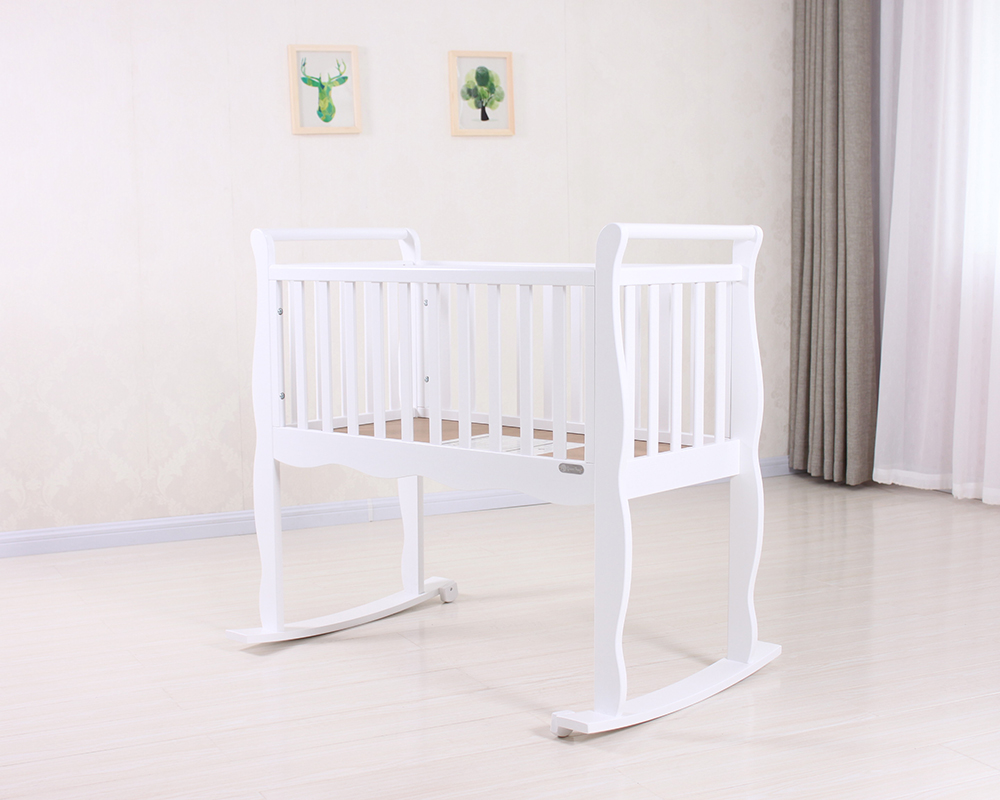
A bassinet is another popular choice for newborn sleep, designed to offer a safe, comfortable, and secure space for babies to rest. Unlike cradles, bassinets do not typically rock (though some models may have a slight tilt or sway). Bassinets are typically stationary, offering a more stable and secure sleeping environment.
Non-rocking design: Bassinets are typically stationary, providing a safe, secure, and solid sleeping surface for babies.
Compact and lightweight: Like cradles, bassinets are small and portable, making them easy to move around and fit into small spaces. They are often used in the early months, before babies transition to larger cribs.
Storage features: Many bassinets come with built-in storage options, such as shelves or baskets, where parents can keep baby essentials like diapers, blankets, and clothes. This adds convenience and functionality to the baby’s sleeping area.
Bassinets are ideal for parents who want a simple, stationary option that allows their baby to sleep in close proximity while still being stable and secure. They can also be more practical for families living in smaller spaces.
Compact and easy to move around the house.
Stable and secure, ideal for babies who do not need the rocking motion of a cradle.
Added storage space for baby essentials, making it a practical option for parents.
Typically does not offer the soothing rocking motion that some babies prefer.
Short lifespan, as babies tend to outgrow bassinets more quickly than cradles or cribs.
Now that we’ve explored the individual features of both cradles and bassinets, let’s compare them side-by-side to help you make a more informed decision.
Cradle: Designed to gently rock back and forth to soothe the baby, which some babies find calming.
Bassinet: Stationary and stable, providing a more secure environment for sleeping without movement.
Cradle: Typically smaller and easier to move from room to room. It’s ideal for keeping the baby close by in the early stages of life.
Bassinet: Also compact but may be less portable due to heavier materials or added storage features. It’s designed to stay in one place and serve as a more stable sleeping option.
Cradle: Cradles are often used only for a few months until the baby outgrows them or can no longer be safely rocked.
Bassinet: Bassinets generally last a bit longer than cradles, as they can accommodate babies who are ready to sleep in a stationary bed, typically until they reach 4 to 6 months of age.
Cradle: The rocking motion is helpful for calming fussy babies and is ideal for parents who want their baby to sleep in motion.
Bassinet: Offers a stable and secure sleeping space, perfect for babies who need to sleep without movement.
Choosing between a cradle and a bassinet depends on your specific needs, preferences, and the temperament of your baby. Here are some factors to consider when making your decision:
Rocking vs Stability: If your baby tends to get fussy and responds well to motion, a cradle may be a better choice. On the other hand, if you prefer a more stationary environment for your baby, a bassinet may be the better option.
Space: If you are limited on space, both cradles and bassinets are compact and portable. However, if you need additional storage for baby essentials, a bassinet may offer more functionality.
Longevity: A bassinet typically lasts longer than a cradle. If you want something your baby can sleep in for a longer period, a bassinet may be the more practical investment.
Ultimately, both cradles and bassinets provide a safe and cozy space for your baby. Your choice will come down to your preferences regarding mobility, soothing mechanisms, and space requirements.
Understanding the difference between a cradle and a bassinet is essential for making an informed decision when setting up your baby’s sleeping area. Both offer unique benefits and are designed to meet the specific needs of newborns, but the key differences lie in their movement capabilities, lifespan, and functionality.
At Auready Wood Industry Co., Ltd., we offer high-quality baby furniture such as cradles and bassinets to meet the needs of every family. Whether you prefer the gentle rocking motion of a cradle or the stability of a bassinet, we have a variety of options to choose from, ensuring your baby has a safe and comfortable sleep environment.
Q: Is a cradle better than a bassinet for soothing a baby?
A: A cradle’s rocking motion is specifically designed to soothe babies, making it ideal for those who respond well to movement. If your baby prefers stillness, a bassinet might be a better choice.
Q: How long can a baby use a cradle or bassinet?
A: Cradles typically last a few months, while bassinets can accommodate babies up to 4-6 months old, depending on their growth and mobility.
Q: Can a bassinet be used for sleeping in a crib later?
A: Bassinets are typically used as transitional beds before moving to a crib. Once your baby grows, they can safely transition to a crib for long-term use.
Q: Are cradles and bassinets safe for newborns?
A: Yes, both cradles and bassinets are designed with safety in mind, but it's important to ensure they meet safety standards and do not pose any risk of tipping or suffocation.


