
- All
- Product Name
- Product Keyword
- Product Model
- Product Summary
- Product Description
- Multi Field Search


Views: 0 Author: Site Editor Publish Time: 2026-06-24 Origin: Site


Transitioning a newborn into a dedicated sleep space often forces parents to choose between proximity and longevity. Stationary cribs lock you into one rigid room layout. Conversely, infants outgrow small bassinets in just a few months. For dynamic households, moving a heavy, fixed sleep space is deeply impractical. You cannot easily relocate it for room-sharing, deep cleaning, or daytime napping. Pushing heavy wooden furniture also risks severe floor damage.
A wheeled design perfectly bridges this gap. It serves as both a portable bassinet and a permanent nursery setup. By evaluating the mechanical reliability of the casters and the structural integrity of the frame, parents achieve ultimate flexibility. You can move the bed freely without compromising infant safety. In this guide, you will learn how to identify secure hardware. We also cover safe daily transitions, maintenance routines, and how to verify crucial manufacturing certifications.
Seamless Room-Sharing: Allows parents to follow safe-sleep proximity guidelines without purchasing secondary, temporary sleep furniture.
Operational Flexibility: Simplifies nursery hygiene by allowing full access under and around the crib for deep cleaning.
Hardware Matters: Not all mobile cribs are equal; evaluating dual-locking casters and floor-safe wheel materials is critical for safe implementation.
Scalable Lifecycle: High-quality mobile baby cribs feature removable wheels, allowing the unit to transition into a stationary toddler bed when mobility is no longer required.
New parents often struggle to design a functional nursery. Standard sleep setups usually involve stationary furniture. Once assembled, standard frames stay firmly planted in one corner. Relocating them requires frustrating disassembly. You might want to move the bed to avoid cold drafts. You might need to block harsh afternoon sunlight. However, standard frames make basic environmental control incredibly difficult. Dragging heavy furniture across a room risks gouging expensive hardwood floors. This forced movement also weakens internal frame joints over time.
Redundant purchases drain budgets quickly. Caregivers frequently buy a small bassinet for the primary bedroom. A few months later, they purchase a massive stationary bed for the nursery. This common path creates unnecessary financial strain. It also generates annoying storage issues once the infant outgrows the smaller bassinet. Many families simply lack the closet space to store outgrown furniture.
A mobile alternative solves these layout problems instantly. A Mobile Baby Crib eliminates the need for multiple sleep zones. It provides a single, highly scalable footprint. The unit moves seamlessly alongside your daily routine. You avoid buying redundant pieces. Instead, you invest in one adaptable unit designed for long-term utility.
Feature | Stationary Crib | Traditional Bassinet | Wheeled Crib |
|---|---|---|---|
Portability | Zero mobility without disassembly | Highly portable but lacks stability | Smooth room-to-room rolling |
Lifecycle | Lasts up to toddler years | Outgrown in 4-6 months | Scales from newborn to toddler |
Floor Protection | High risk of scratching if dragged | Safe (usually hand-carried) | Floor-safe rubber casters protect surfaces |
Understanding the daily benefits helps parents make confident choices. Wheeled designs offer remarkable advantages over static setups. These benefits range from medical compliance to basic home cleanliness.
The American Academy of Pediatrics (AAP) sets strict safe-sleep guidelines. They recommend room-sharing for the first six to twelve months. Infants should sleep in the parents' room to reduce risks. A wheeled unit facilitates this recommendation perfectly. You simply roll the bed from the nursery into the master bedroom. You maintain close proximity at night. Later, you can roll it back to the nursery for daytime naps.
Room environments fluctuate wildly throughout the day. A robust Baby Crib With Wheels enables caregivers to respond instantly. You can smoothly move the infant away from noisy neighborhood windows. You can dodge sudden cold air vents. You can easily reposition the bed to avoid blinding morning light. Furthermore, the gentle rolling motion itself serves as a soothing mechanism. Pacing the unit back and forth often calms a fussy infant effectively.
Dust accumulates rapidly under heavy, immovable furniture. Pet dander and allergens gather in these dark corners. A wheeled frame solves this hygiene problem entirely. You can effortlessly push the bed aside. Vacuums and mops easily reach hidden dust accumulation zones. These floor areas remain notoriously inaccessible under standard stationary beds. Better cleaning access directly improves nursery air quality.
Modern parents juggle countless tasks. The bed doubles as a highly secure daytime play station. You can roll it directly into your home office. You can keep it nearby in the open living area. This mobility ensures continuous, safe supervision while you work, cook, or relax. The baby remains visible and protected at all times.
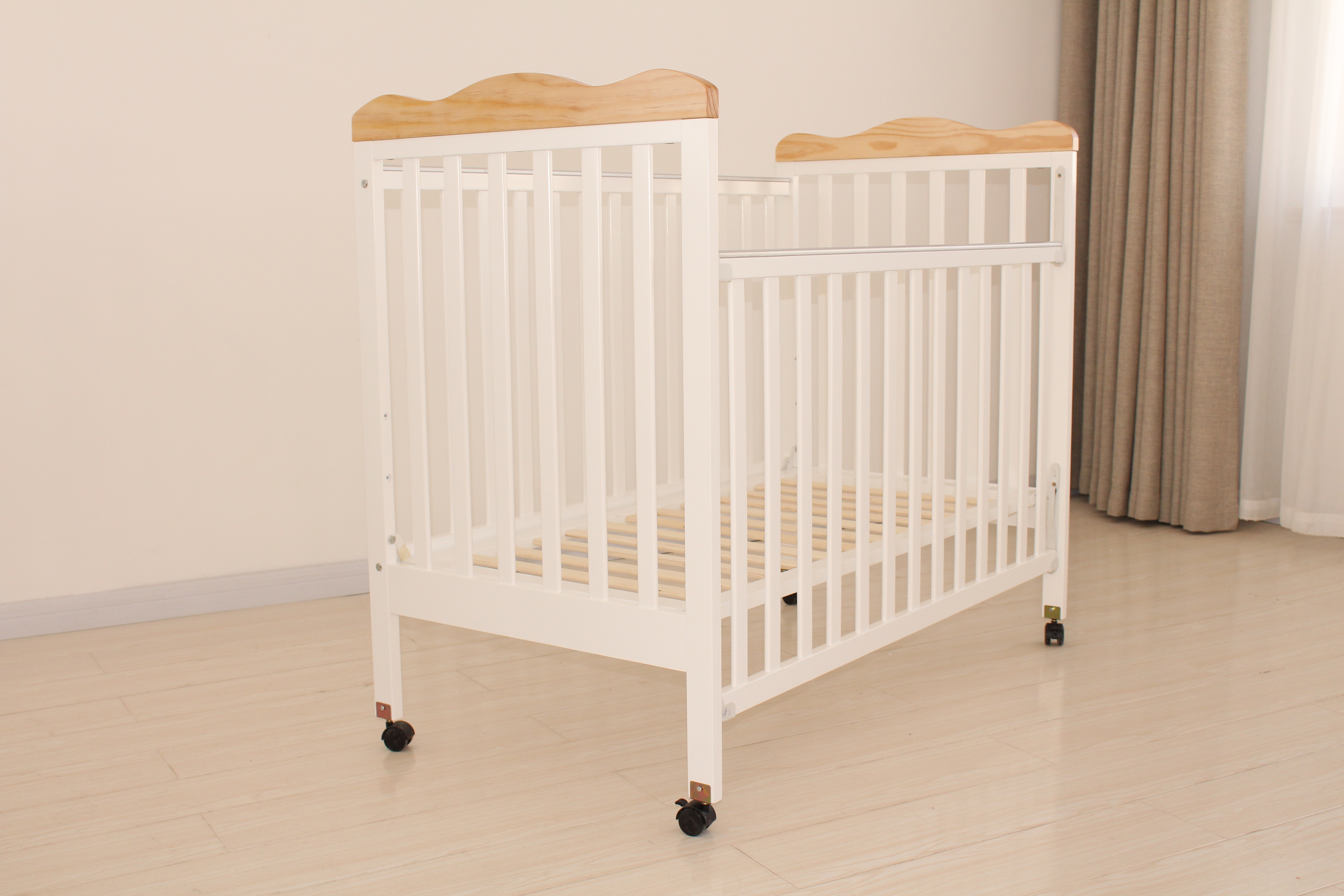
Not every rolling bed meets high quality standards. You must evaluate hardware meticulously. Shoddy materials compromise both safety and home aesthetics.
The wrong caster materials will destroy your home floors. Avoid hard plastic casters at all costs. Cheap plastics scratch delicate hardwood surfaces severely. They also drag awkwardly on thick carpets, making movement jerky. Look for rubberized or polyurethane casters instead. These premium materials glide smoothly across diverse surfaces. They also absorb minor floor vibrations. This shock absorption prevents the frame from rattling, keeping the baby sound asleep during transit.
Mobility only matters if the bed actually fits through your doors. Standard residential doorframes measure roughly 28 to 32 inches wide. Many full-sized models fail this crucial test. Measure your narrowest hallway and doorframes carefully before purchasing. Mini-cribs often pass this test beautifully. They offer the ideal external dimensions for seamless cross-room travel. If you buy a massive frame, you permanently restrict it to a single room.
Movement introduces dynamic stress into wooden joints. You must test the frame for torque and twisting. The addition of casters should never compromise overall structural integrity. Wooden slats must maintain tight safety tolerances. The mattress support deck must remain perfectly flat during movement. Shake the assembled frame gently. It should feel robust and rigid, not flimsy. Poorly built frames will slowly warp after months of rolling.
Adding mobility to baby furniture requires serious engineering. Caregivers must verify safety mechanisms before placing an infant inside. Do not trust clever marketing alone. Look for verifiable mechanical safeguards.
Never compromise on wheel locks. Gravity affects every home surface. Slight floor inclines exist everywhere. Wheels must feature easily accessible, heavy-duty locks. These mechanisms must secure both rolling and pivoting motions simultaneously. An unlocked wheel allows the bed to drift away from walls. Engage all locks immediately upon parking the unit.
High mattress profiles create dangerous tip-over risks. Rolling models should inherently feature a low center of gravity. This specific design prevents tipping during threshold navigation. Transitioning from slick hardwood to thick rugs poses unique physical challenges. The casters experience sudden resistance. A lower overall profile ensures ultimate stability during these tricky floor transitions.
Adding casters must not void national safety standards. Verify explicit regulatory compliance. Check the packaging for these specific validations:
CPSC Approval: Consumer Product Safety Commission guidelines dictate strict slat spacing and paint safety.
ASTM Standards: The American Society for Testing and Materials evaluates structural integrity under dynamic loads.
JPMA Certification: The Juvenile Products Manufacturers Association provides independent safety verification.
Beware of clever DIY hacks. Never add aftermarket wheels to standard wooden frames. Standard beds completely lack the engineering for dynamic movement loads. Manufacturers calculate weight limits specifically for stationary designs. Drilling holes into wooden legs destroys the wood's structural integrity. The legs will eventually splinter and collapse. Always evaluate units specifically engineered for mobility by professional manufacturers.
Owning wheeled furniture changes your daily routine. Caregivers must adopt specific habits to maximize safety. Small operational errors can lead to unnecessary risks. Practical experience dictates several best practices.
Modern homes contain varied flooring materials. Moving a wheeled unit over thick carpets requires deliberate caution. Elevated door thresholds pose similar physical challenges. Sudden jolts can easily wake a sleeping baby. Worse, forced sideways movement can snap the caster housing entirely. Lift the frame slightly when crossing significant thresholds. Never ram the wheels against floor obstacles. Smooth, deliberate pushing extends the hardware lifespan.
Caregivers must establish flawless locking habits. Create a firm daily routine. Lock all four casters immediately. Do this the exact second the bed reaches its destination. Do not rely on just two locks. An unlocked bed becomes a severe hazard. An older sibling might lean heavily against the rails. A large family dog could bump the frame. Consistent lock discipline prevents accidental drifting and tipping.
Babies grow incredibly fast. Soon, the infant learns to stand upright. They will aggressively grip and shake the side rails. This vigorous action dramatically increases lateral dynamic loads on the casters. Plan ahead for this developmental milestone. Remove the casters entirely once the child reaches the pulling-up stage. High-quality models allow easy hardware removal. Transitioning back to a flat, stationary base maximizes long-term toddler stability.
Months 0-5: Utilize full mobility for room-sharing and daytime office monitoring.
Months 6-8: Begin limiting movement as the baby starts sitting up independently.
Months 9+: Remove casters completely once the infant begins pulling up to stand.
A mobile sleep space is not a passing novelty. It represents a highly functional, long-term asset. You maximize limited floor space and maintain superior home hygiene. You easily adhere to strict safe-sleep proximity guidelines. Furthermore, you avoid buying redundant, temporary bassinets.
Take actionable steps before your purchase. Measure your home's narrowest doorways today. Assess your primary flooring type carefully to determine ideal wheel materials. Shortlist models featuring rubberized, dual-locking casters. Finally, demand verifiable CPSC and ASTM safety certifications. By prioritizing engineering quality over aesthetics, you guarantee a safe, adaptable environment for your growing child.
A: Yes, provided the locking mechanisms are fully engaged. However, for maximum safety, manufacturers strongly recommend removing the wheels once a child can independently pull themselves up to a standing position. Standing and shaking the rails increases lateral force, which can strain caster joints.
A: Mini mobile models are specifically designed to fit through standard residential doorways. Full-size wheeled models often will not fit. This restricts them to mobility within a single room. Always verify the assembled width against your home's narrowest doorframe before purchasing.
A: It is highly discouraged. Drilling into wooden legs or adding aftermarket casters alters the manufacturer's intended center of gravity. It also changes internal stress distribution. This DIY approach voids safety warranties and poses severe, unpredictable tip-over risks.
A: Cheap hard plastic wheels can easily scratch floors. High-quality models use rubber or silicone-coated casters. These materials are specifically designed to protect delicate hard surfaces while providing a much smoother glide. Ensure you verify the wheel material type before buying.


