
- All
- Product Name
- Product Keyword
- Product Model
- Product Summary
- Product Description
- Multi Field Search


Views: 0 Author: Site Editor Publish Time: 2026-09-09 Origin: Site


Bringing a newborn home means setting up a sleep space that actually works while meeting strict safety codes. You need a setup that handles 3 AM feedings without compromising the infant's airway. Room-sharing is the standard, but executing it requires specific hardware. Parents often get stuck trying to figure out which products are rated for unsupervised, overnight sleep versus those only meant for daytime observation. We see heavily marketed loungers that fail basic flat-surface tests every day. While a certified Bassinet passes federal regulations, you still have to evaluate the structural integrity, hardware quality, and daily usability of the specific model you buy. This guide breaks down exactly how to inspect sleep furniture, verify safety certifications, and set up a room environment that supports safe sleep habits without relying on dangerous aftermarket modifications.
Regulatory Consensus: A certified bassinet is unequivocally safe for nightly newborn sleep, provided it adheres to current Consumer Product Safety Commission (CPSC) and American Academy of Pediatrics (AAP) guidelines.
Non-Negotiable Features: Safe overnight use requires a firm, perfectly fitted mattress, breathable sides, strict back-sleeping positioning, and an absolute absence of inclined surfaces, pillows, loose bedding, or weighted swaddles.
Adoption Realities: While technically safe, real-world adoption varies; parents must prepare for the reality that newborns often resist flat sleep surfaces, requiring safe, evidence-based soothing strategies rather than unsafe product alternatives.
Material and Lifecycle Trade-offs: Choosing between a high-tech smart sleeper, a portable mesh unit, or a solid wood bassinet involves weighing upfront costs against a strict 4-to-6-month usage window.
The American Academy of Pediatrics (AAP) establishes the baseline for infant sleep safety. They mandate room-sharing for at least the first six months of life. Keeping the infant in the parents' room on a separate sleep surface reduces the risk of Sudden Infant Death Syndrome (SIDS) significantly. This separate surface must meet rigorous mechanical standards. You cannot simply place a baby in an adult bed or a makeshift sleeping area.
The Consumer Product Safety Commission (CPSC) dictates that any product intended for infant sleep must feature a firm, flat surface. The maximum allowable incline is 10 degrees. A completely flat surface of zero degrees is the safest configuration. Inclined surfaces force a newborn's heavy head forward. This chin-to-chest position compresses their fragile airway, leading to silent positional asphyxiation. You can verify the incline of your sleep surface using a standard bubble level or a smartphone leveling app placed directly on the mattress board.
The universal "Back to Sleep" mandate remains non-negotiable. Infants must be placed flat on their backs for every single sleep session. Side-sleeping and stomach-sleeping introduce severe suffocation risks for babies who lack the neck strength to reposition themselves. The sleep surface must support this back-sleeping position without causing the infant to roll or shift toward the edges.
You must draw a hard line between regulated newborn sleep furniture and unregulated lounging products. A regulated sleep space undergoes rigorous mechanical testing for structural stability, mattress fit, and hardware durability. Unsafe alternatives bypass these tests by marketing themselves for "lounging" or "supervised naps."
Products like plush infant loungers, inclined sleepers, motorized swings, and padded recliners are strictly unsafe for overnight sleep. Car seats are engineered for crash safety in a vehicle. When a car seat clicks into a stroller or sits on the floor, the resting angle changes. This altered angle introduces breathing risks if the baby falls asleep outside the car. Never use a car seat as a substitute for a flat sleep surface inside the house.
To filter out unsafe products, look for JPMA (Juvenile Products Manufacturers Association) certification. A JPMA seal indicates the product has been tested by an independent facility. It confirms compliance with both federal CPSC standards and voluntary ASTM (American Society for Testing and Materials) safety requirements. Check the manufacturer's label on the bottom of the frame to verify these certifications before assembly.
Feature | Certified Sleep Furniture | Unregulated Loungers/Sleepers |
|---|---|---|
Surface Angle | Flat (Under 10 degrees) | Inclined (15 to 30 degrees) |
Mattress Firmness | Rigid, resists hand pressure | Plush, conforms to body shape |
Side Walls | Breathable mesh or spaced slats | Padded fabric or solid foam |
Testing Standard | ASTM F2194 / CPSC compliant | No federal overnight sleep testing |
Standalone models serve as the standard choice for primary bedrooms. A solid wood bassinet offers exceptional structural stability. Heavy wooden frames resist tipping, making them ideal for homes with large pets or active toddlers. When assembling these units, inspect the hardware closely. Ensure all cam locks, wooden dowels, and metal bolts seat flush against the frame. A properly assembled wood frame should exhibit zero wobble when you push against the top rail.
Wood models require evaluation for chemical off-gassing. Look for GREENGUARD Gold certification to ensure the finishes, paints, and glues emit low levels of Volatile Organic Compounds (VOCs). If you notice a strong chemical odor upon unboxing, assemble the unit in a well-ventilated garage and let it off-gas for 48 hours before bringing it into the nursery. Consider the physical footprint as well. Wood frames are heavy. Measure your bedside clearance to ensure the unit fits without obstructing your path to the bedroom door.
Bedside sleepers attach directly to the adult bed. They feature a drop-down side that allows parents to reach the baby without standing up. This design supports mothers recovering from C-sections or those managing frequent night feedings. The mechanical execution of this drop-side is critical. Zippers must lock securely, and latches must require dual-action release to prevent accidental opening.
Safety mechanics dictate how these units function. You cannot simply push a sleeper against your mattress. Strict CPSC regulations require the use of secure attachment straps. You must route these nylon webbing straps under your adult mattress, secure the anchor plate against the opposite side of your box spring, and pull the tension buckle tight. The sleeper frame must compress slightly against the adult mattress. Even a half-inch gap between the adult mattress and the sleeper creates a fatal entrapment hazard.
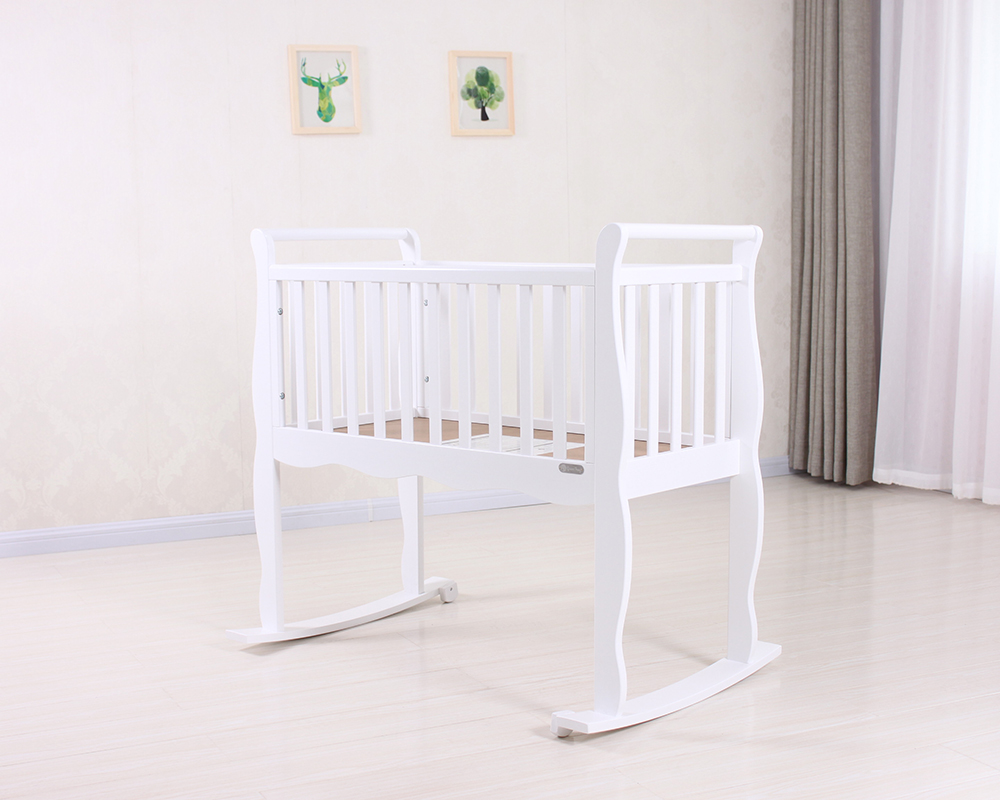
A traditional baby cradle utilizes a curved base or a suspended pendulum mechanism to provide a gentle rocking motion. This motion soothes fussy infants during the early weeks. When inspecting a cradle, check the pivot points. High-quality models use nylon washers or metal bearings to prevent squeaking and ensure a smooth glide.
Safety assessments for cradles focus entirely on motion control. Unrestricted rocking poses a hazard if the baby rolls to one side, potentially pinning their face against the wall. A reliable locking pin or latch feature is an absolute necessity. You must engage this lock to keep the cradle completely stationary before you go to sleep. Unsupervised rocking is never permitted under safe sleep guidelines.
Smart sleepers integrate technology to monitor and soothe the infant. They use internal microphones and sensors to detect crying. The unit then automatically responds with varying levels of mechanical rocking and white noise. When evaluating these units, inspect the motor housing and drive belt system. Listen for grinding noises that indicate mechanical wear.
The reliance on automated motion creates future sleep challenges. Infants become dependent on constant movement to connect their sleep cycles. You must proactively use the smart sleeper's weaning mode around four months of age. This mode gradually reduces the motion, preparing the baby for a stationary crib transition. Failure to wean the infant will result in severe sleep disruptions when they outgrow the smart unit.
Portable play yards offer a multi-stage alternative. They serve as a sleep space, a travel crib, and a contained play area for toddlers. Many come with a raised fabric insert designed specifically for newborns. When assembling a play yard, ensure the locking hubs on the top rails snap into place rigidly before pushing the floor center down.
You must verify the specific safety ratings of the raised attachments. The main, bottom floor of a standard play yard is approved for overnight sleep. However, the raised inserts often have different classifications. Check the manufacturer's manual to confirm if the specific insert is CPSC-approved for unsupervised nightly sleep. Some inserts are restricted to supervised daytime naps only due to their attachment clip strength.
A standard infant mattress feels extremely hard to an adult. You must resist the urge to add padding, blankets, or aftermarket foam to make the baby more comfortable. A firm surface is a critical engineering feature designed to prevent suffocation. If a baby inadvertently rolls over, a soft mattress conforms to their face and blocks their airway. A firm mattress ensures their airway remains unobstructed. Test the firmness by pressing your hand flat against the center of the mattress. It should not leave an indentation when you remove your hand.
Gap tolerances require precise measurement. Use the "two-finger rule" to test the mattress fit. Press the mattress against one side of the frame. If you can fit more than two fingers between the mattress edge and the opposite wall, the gap is too large. This space creates a severe entrapment risk. Always use the exact mattress pad supplied by the manufacturer. The thickness is usually restricted to 1 or 1.5 inches to prevent the baby from gaining enough height to roll over the side rails.
Proper ventilation regulates infant body temperature. Overheating is a documented risk factor for SIDS. Sleep environments must facilitate continuous airflow. Modern mesh walls provide 360-degree breathability. Inspect the mesh for tear resistance. Press against the mesh panels to ensure they do not stretch excessively or detach from the top rail.
Traditional slatted wood designs also offer excellent airflow. You must measure the wooden slats to ensure they meet current spacing regulations. The gap between slats must be no more than 2 3/8 inches apart. This specific measurement prevents the baby's head from passing through the slats and becoming trapped. Use a tape measure to check multiple gaps across the frame, as manufacturing defects can cause uneven spacing.
Maintaining bassinet sleep safety extends beyond the furniture itself. The baby's sleepwear dictates their overall safety. The CPSC issues strict warnings against using weighted blankets, weighted sleep sacks, or weighted swaddles in any infant sleep environment.
Weighted products compress the infant's chest. A newborn's ribcage is highly pliable. Extra weight restricts their ability to expand their lungs fully. Keep the sleep space entirely empty. Use only a tightly fitted sheet designed specifically for that mattress model. Dress the baby in layers or use a standard, lightweight, unweighted sleep sack. Monitor the room temperature, keeping it between 68 and 72 degrees Fahrenheit to prevent overheating.
Every infant sleep product has a strict expiration date based on developmental milestones and hardware stress. Standard weight limits typically range between 15 and 20 pounds. Check the metal brackets and plastic joints periodically for signs of fatigue or stress fractures as the baby grows heavier.
Developmental markers usually arrive before the baby hits the weight limit. You must stop using the product immediately once the infant begins to roll over independently. If the baby starts pushing up on their hands and knees, the shallow walls no longer provide adequate fall protection. At this stage, usually around four to six months, you must transition the baby to a full-size crib with higher sides.
Purchasing infant gear requires analyzing spatial logic and storage capacity. A dedicated newborn unit has a maximum lifespan of six months. Once the baby outgrows it, you must disassemble and store the frame. For families living in small apartments, buying a product with such a short utility window requires planning for future storage space.
Investing directly in a convertible mini-crib or a high-quality portable play yard offers a longer-lasting alternative. Mini-cribs fit into tight bedroom spaces and often convert into toddler beds, lasting for years. Play yards serve as travel beds well into the toddler years. Weigh the immediate convenience of a small bedside unit against the long-term value of convertible furniture.
You must choose between mobility and robustness. A lightweight, foldable model allows you to move the baby from the bedroom to the living room with ease. If you choose a model with caster wheels, inspect the locking mechanisms. Every wheel must have a functional brake lever that engages firmly to prevent the unit from rolling on hard floors.
Lightweight frames are inherently more susceptible to wobbling or frame flex. If you have large dogs that might bump the furniture, or active toddlers running through the house, structural integrity takes precedence. A heavy, stationary frame sacrifices room-to-room mobility but provides unparalleled stability against external forces.
The transition from the womb to a flat, stationary surface is jarring for an infant. Newborns frequently reject the flat sleep environment. They crave warmth, motion, and confinement. This biological response creates immense physical and mental strain for parents.
Exclusively breastfeeding mothers face specific exhaustion, waking every two hours to manage night feeds. Severe sleep deprivation dramatically increases the temptation to resort to unsafe practices. Bringing the baby into the adult bed, falling asleep on a sofa with the infant, or using an inclined lounger overnight are common, yet highly dangerous, reactions to this exhaustion. You must prepare the room environment to support the baby's transition to the flat surface.
To improve acceptance of a newborn bassinet, employ evidence-based soothing tactics rather than compromising on safety hardware.
Pre-warm the mattress surface. Place a standard heating pad on the mattress for ten minutes before laying the baby down. You must completely remove the heating pad and verify the surface is only lukewarm before placing the infant inside.
Utilize safe swaddling techniques. Use a standard, unweighted swaddle to suppress the Moro (startle) reflex. Ensure the swaddle is snug around the chest but loose around the hips to prevent hip dysplasia.
Optimize the room environment. Install blackout curtains to keep the room pitch dark. Use a continuous white noise machine placed at least three feet away from the baby to mask household sounds. Set the volume to around 50 decibels.
Practice strict consistency. Always place the baby flat on their back. Consistency builds safe sleep habits over time. The baby will eventually acclimate to the firm surface if you remain persistent and avoid introducing unsafe lounging products.
Soothing Strategy | Execution Method | Safety Check |
|---|---|---|
Pre-warming | Use heating pad for 10 mins prior to sleep | Remove pad completely; check for lukewarm temp |
Swaddling | Wrap snug at chest, loose at hips | Use unweighted fabric only; stop when rolling starts |
White Noise | Continuous sound machine | Place 3+ feet away; keep under 50 decibels |
Room Darkening | Install blackout shades | Ensure cords are secured away from the sleep area |
Measure your bedside clearance and adult mattress height with a tape measure to ensure mechanical compatibility with bedside sleepers.
Cross-reference the exact model number of your chosen furniture with the official CPSC recall database to verify it has no active safety warnings.
Assemble the furniture exactly according to the manual, ensuring all locking pins, cam locks, and anchor straps are fully engaged and tensioned.
Test the mattress fit using the two-finger rule and press the center of the pad to guarantee there are no dangerous entrapment gaps or soft spots.
A: Yes. Certified models are engineered and tested for unsupervised overnight sleep. As long as the product meets current CPSC standards, features a firm mattress, and remains free of loose bedding, it provides a secure environment for nightly use.
A: The typical timeline is four to six months. You must stop using the product immediately when the baby reaches the manufacturer's specific weight limit or when the baby begins to roll over or push up on their hands and knees.
A: Bedside sleepers are safe only if attached tightly to the adult bed exactly according to the manufacturer's instructions. You must use the provided anchor straps to secure the unit to your bed frame, ensuring zero gaps exist between the mattresses.
A: A cradle features a curved base or a suspended frame designed to rock or glide. A standard model is stationary with a fixed base. If using a cradle for overnight sleep, you must engage the locking mechanism to prevent unsupervised rocking.
A: The mattress is intentionally firm to prevent suffocation. A soft mattress conforms to an infant's face if they inadvertently roll over, blocking their airway. The firm surface ensures the airway remains clear. Never add aftermarket padding.
A: No. The CPSC strictly warns against using weighted blankets or weighted swaddles in any infant sleep environment. Weighted products compress the infant's chest, restricting their ability to expand their lungs fully and breathe normally.


