
- All
- Product Name
- Product Keyword
- Product Model
- Product Summary
- Product Description
- Multi Field Search


Views: 0 Author: Site Editor Publish Time: 2026-10-14 Origin: Site


Children grow up incredibly fast. You finish building the nursery, and before you know it, your toddler is scaling the crib rails. The endless cycle of replacing outgrown clothes, toys, and bedroom setups drains both your time and your budget. If you are tired of hauling old frames to the curb every few years, you need a better strategy.
Convertible designs solve this exact problem by adapting to your growing child. This engineering approach eliminates the frustrating cycle of buying new beds. In this guide, we break down the true return on investment of adaptable modular systems. We will look at the mechanics, the material requirements, and the financial realities to help you make a smart, long-lasting choice for your home.
Recent industry analyses reveal a massive shift in how families approach nursery setups. Search trends and market reports indicate that demand for multi-stage, sustainable furniture has surged dramatically over the past three years. Modern parents are increasingly rejecting fast furniture. Instead, the focus has pivoted toward long-term value and environmental responsibility.
Supply chains reflect this change, with top-tier manufacturers prioritizing modular designs that drastically reduce landfill waste. This is not just a passing design fad. It is a fundamental change in consumer buying habits driven by inflation and a growing awareness of household carbon footprints. Buyers now expect a single piece of furniture to perform multiple roles over a decade.
Long-Term Savings: The upfront cost is higher. However, modular systems eliminate the need for three separate bed purchases over a decade, keeping more money in your pocket.
Transition Comfort: Keeping the same physical frame eases the jump from crib to a larger mattress. This familiar environment drastically reduces nighttime anxiety and sleep regressions.
Space Optimization: Multi-functional frames and collapsible designs free up critical floor space in smaller rooms and urban apartments.
Material Integrity: Durability dictates value. Solid hardwood handles repeated assembly and dynamic loads far better than composite boards.
When you start furnishing a room, the sheer volume of options can feel overwhelming. A true convertible piece relies on modular engineering. Instead of a single-purpose frame, these beds use standardized hardware, removable side panels, and adjustable mattress brackets. The core function transforms as the child grows. Specifically, this adaptability ensures the furniture evolves seamlessly with your daily needs.
The classic 4-in-1 system is the best example of this engineering. It starts as a deep, secure infant crib. As the baby gains mobility, you drop the mattress base to prevent falls. When they are ready for independence, you unbolt the front panel and install a small guardrail. This creates a highly secure Convertible Toddler Furniture setup. Later, you remove the rail entirely for a daybed. Finally, the heavy-duty front and back panels become the headboard and footboard of a standard full-size bed.
This modular approach applies to other pieces too. Premium changing tables now feature detachable top trays. Once diapers are done, you are left with a standard dresser that fits perfectly into an older child's room. Seating and play tables come with adjustable leg heights. A low sensory table becomes a proper study desk years later. By integrating these pieces, parents create a cohesive room design that matures alongside the child.
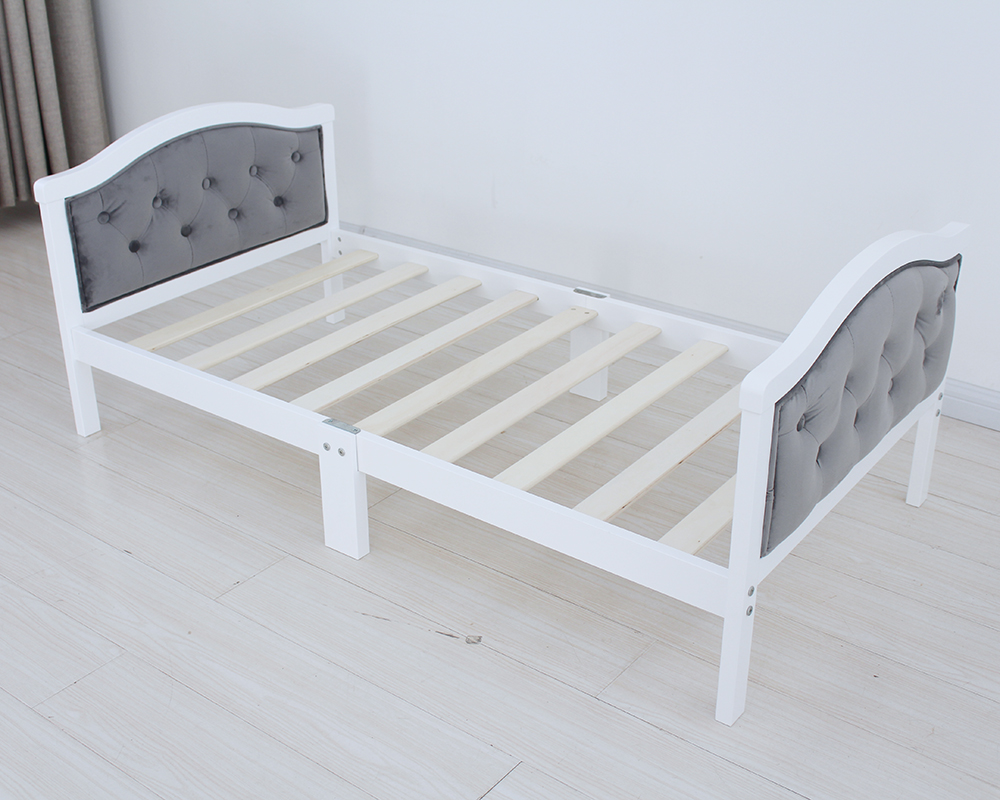
Sticker shock is common with premium modular systems. High-quality solid wood demands a higher initial price. To evaluate the real value, you have to look past the checkout cart and run a realistic lifecycle cost analysis.
Let's compare buying cheap, single-use items versus one engineered system.
Furniture Stage | Traditional Separate Purchases | Convertible System 4-in-1 |
|---|---|---|
Infant Stage | Standard Crib: $250 | Convertible Crib: $450 |
Toddler Stage | Standalone Bed: $150 | Conversion Kit: $80 |
Child/Teen Stage | Twin/Full Bed Frame: $300 | Full Bed Conversion Kit: $120 |
Total Estimated Cost | $700 | $650 |
Mattress costs are excluded as they apply to both scenarios. Spending more on a robust Toddler Bed prevents recurring expenses. Furthermore, you eliminate the hidden labor of shopping, assembling, and hauling old frames to the dump every three years.
Many buyers fall into the buy-cheap-buy-twice trap. They choose Kids Furniture made from medium-density fiberboard or thin particleboard. These materials look great under showroom lights. However, they lack the shear strength needed for active kids.
Toddlers treat beds like trampolines. Dynamic impact destroys cheap joints. Screws strip out of composite boards, laminates peel, and frames wobble. Once the structural integrity is compromised, you are forced to buy a replacement. A single, solid-wood frame handles these dynamic loads without failing.
No product is perfect for every layout. You need to weigh the mechanical advantages against practical drawbacks to see if they fit your lifestyle.
The primary benefit is operational lifespan. A well-built frame will last over ten years. In addition, there is a massive psychological advantage. Moving a two-year-old from a small crib to an open room often triggers sleep regressions. Keeping the exact same physical frame and room placement provides familiarity. The child transitions smoothly because the environment remains constant.
Kids destroy things. Teething babies gnaw on rails. Toddlers crash toys into legs. Even kiln-dried hardwoods will show dents and scratches over a decade. More importantly, conversion relies on specific hardware. If you lose the specialized bolts or wooden slats during five years of storage, the bed cannot be transformed. You also lock yourself into a specific design aesthetic for a long time.
Urban apartments rarely have extra square footage. A standard crib eats up valuable floor space, leaving no room for a play mat. Maximizing available space is a daily struggle for many families.
When square footage is tight, a Foldable Childrens Bed becomes a strategic asset. While a heavy-duty convertible frame is great for the main bedroom, collapsible models offer unmatched flexibility. These frames use heavy-duty steel hinges and secure locking pins. You can fold them flat and slide them into a closet during the day. This instantly reclaims floor space for playtime. They are also perfect for travel or for grandparents who need a temporary sleep setup.
Convertible designs inherently save space by combining functions. A crib featuring an attached changing table and built-in drawer storage eliminates the need for a separate dresser. By reducing the total number of pieces in a room, you maximize the open floor area. Toddlers require safe, open space to practice walking and engage in play. A streamlined room provides a safer environment for these activities.
If the ROI makes sense for you, it is time to look at specifications. Not all modular systems are built to the same standard. You must verify a few critical factors before purchasing.
This is the most common mistake buyers make. A box labeled 4-in-1 rarely includes the actual conversion components. The toddler guardrails and the full-bed wooden slats are usually sold separately. Buy every conversion kit the exact same day you buy the crib. If you wait three years, the manufacturer will likely discontinue that specific finish or bolt pattern. Your expensive frame will be stuck as a crib forever.
A frame built to last ten years needs a dense core. Look for solid hardwoods like FSC-certified New Zealand pine, oak, or beech. For example, high-quality Nursery Furniture uses kiln-dried wood to prevent warping and handle a 50-pound weight limit with ease.
Composite boards crumble when you back out screws. When you transition from crib to daybed, the drilled holes in composite materials often strip. In contrast, solid wood grips metal hardware tightly. This ensures the bed remains rigid and safe after multiple reassemblies.
Look at your family planning. If you plan to have a second child within two years, the newborn will need the crib just as the older child outgrows it. In this scenario, the modular feature goes unused. You will have to buy a separate twin bed anyway. Traditional furniture might be a better choice for back-to-back pregnancies.
Convertible modular systems are a highly intelligent financial move if you plan ahead. The key is prioritizing dense materials and buying your conversion kits on day one. A solid wood frame eliminates replacement costs and keeps your child comfortable during stressful sleep transitions.
By opting for timeless designs and robust engineering, you ensure long-lasting durability and uncompromising safety. If you are ready to upgrade your child's room with furniture engineered for the long haul, explore the premium, solid-wood collections at https://www.aureadywood.com to find the perfect adaptable pieces that will beautifully grow alongside your family.
Yes, you almost always have to buy the conversion kit separately. The main box usually only contains the crib components. The toddler rail and full-size bed slats are sold as add-ons. Always purchase these kits on the exact same day you buy the bed to ensure you have the matching parts before the model is discontinued.
The lifespan depends entirely on material density. High-quality solid wood frames can easily last 10 to 15 years, carrying a child from infancy into high school. Frames made from cheap particleboard usually fail at the joints within 3 to 5 years due to daily wear and tear.
Most children are ready to transition between 18 months and 3 years of age. The defining signal is usually physical. If your toddler can easily climb over the crib rail, or if they have reached a height of 35 inches, it is time to install the toddler guardrail for safety.
Yes. By combining multiple functions into a single footprint, you eliminate the need for extra furniture. A bed that includes built-in storage drawers or an attached changing table frees up significant floor area. For extremely tight spaces, collapsible models offer the ability to store the bed completely during daylight hours.
Absolutely, but only if it is constructed from solid hardwood. Transitioning a bed back and forth between a toddler setup and an infant crib puts immense shear stress on the joints and threaded inserts. Solid wood handles this stress easily, whereas composite boards will strip and become unsafe.


