
- All
- Product Name
- Product Keyword
- Product Model
- Product Summary
- Product Description
- Multi Field Search


Views: 0 Author: Site Editor Publish Time: 2026-01-20 Origin: Site


Choosing the right cradle for your newborn is one of the most important decisions parents make in the early stages of life. A cradle is not just a piece of furniture; it’s where your baby will rest, sleep, and grow during those first few months. It’s essential to select a cradle that provides comfort, safety, and convenience for both the baby and the parents. In this article, we will explore the different types of cradles, the key features to consider, and provide guidance on how to choose the right cradle for your newborn.
A cradle is a small, often rocking bed, designed for babies during their first few months. It provides a soothing environment where the baby can rest comfortably, mimicking the gentle motion they experienced in the womb. Unlike a crib, which is typically larger and used for older babies, a cradle is made to offer a compact, secure, and nurturing space for newborns who need a cozy and safe sleep environment.
The cradle is a critical part of an infant’s first months, and its design typically includes a rocking mechanism, smooth edges, and reinforced sides to ensure the baby’s safety while resting. In recent years, cradles have evolved with more modern features such as adjustable settings, non-toxic finishes, and multi-functionality. Whether you're looking for a classic, hand-carved design or a modern, functional cradle, the options are vast.
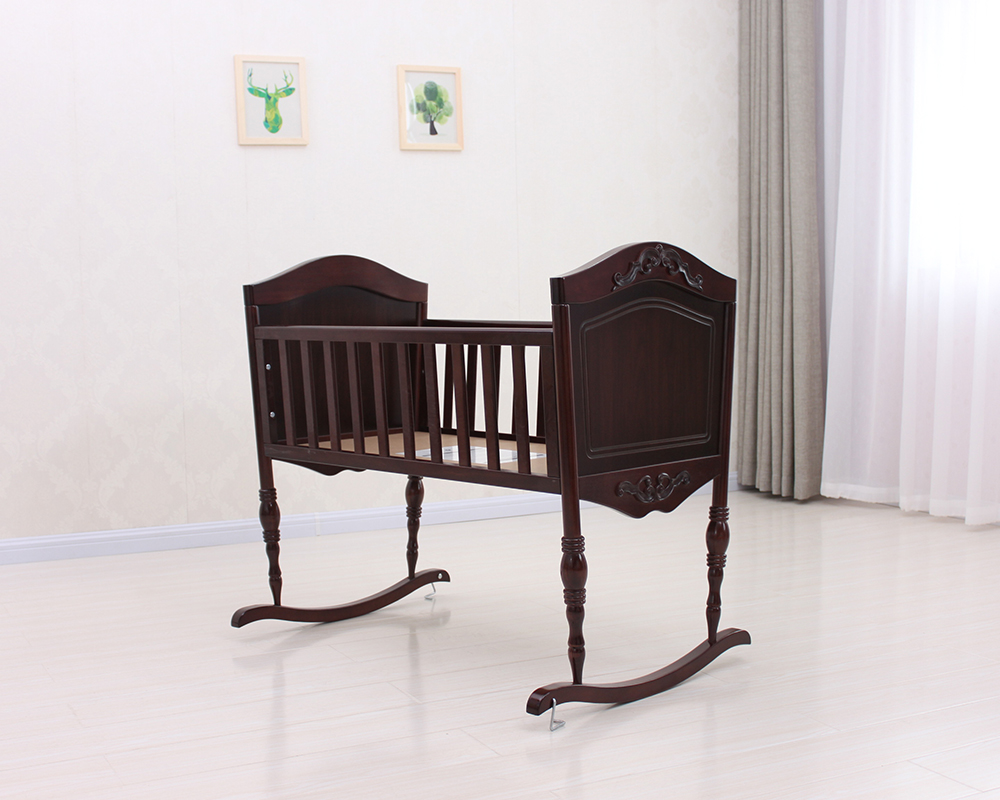
There are various types of cradles available on the market, each designed to suit different needs and preferences. Let’s take a closer look at some of the most popular options and the features that make them unique.
The French Baby Cradle is a classic and elegant option, often made from solid wood, such as New Zealand pine wood. These cradles are known for their French carved designs, with curved lines and classic patterns that create a sophisticated look in any nursery. The French Baby Cradle provides a gentle rocking motion and is designed with safety features such as reinforced side panels, smooth hand-polished surfaces, and rounded edges to eliminate any potential hazards.
Key features:
Material: Solid New Zealand pine wood
Design: French carved with curved lines and patterns
Safety: Meets CPSC and ASTM safety standards
Style: Classic and elegant, fits into various nursery decors
The Sled Baby Cradle is characterized by its arched headboard and footboard, which gives it a unique and elegant appearance. This cradle is typically made from pine wood and designed to rock gently, offering a soothing environment for your baby. Some versions of the sled cradle come with anti-rocking plates that can be added for those who prefer a stationary option.
Key features:
Material: New Zealand pine wood
Design: Curved sled base for a smooth rocking motion
Safety: PMA certification, exceeds CPSC/ASTM standards
Functionality: Optional anti-rocking plates for stationary use
For those who prefer a more modern aesthetic, the X-Shaped Baby Cradle offers a sleek and minimalist design. The X-shaped cross base ensures a smooth, gentle rocking motion while also providing extra stability. The X-Shaped Baby Cradle is ideal for families with limited space due to its compact size, but it still provides enough room for a newborn to rest comfortably.
Key features:
Material: Solid wood
Design: X-shaped base for modern, minimalist aesthetic
Safety: Hidden stabilizer bar for added support
Functionality: Compact size for smaller spaces
If you’re looking for flexibility, a portable cradle could be the right choice. Designed to be lightweight and easy to move around, these cradles allow parents to keep their newborn close during the day and night. Portable cradles are often equipped with foldable frames, making them perfect for travel or moving between different rooms in the house.
Key features:
Material: Various options, often woven wicker or light wood
Design: Compact and lightweight for easy mobility
Functionality: Foldable frame for storage or travel
Convenience: Easy to move from room to room
For those looking for a more modern solution, a cradle swing combines the classic design of a cradle with the soothing motion of a swing. These cradles are often motorized, offering adjustable speeds and motion controls. Some even include features like white noise, music, and vibration settings to help your baby fall asleep more easily.
Key features:
Material: Solid wood or high-quality plastic
Design: Combines cradle with swing functionality
Functionality: Adjustable swing speeds and added features like music and vibration
Safety: Meets CPSC and ASTM standards
Selecting the right cradle is not just about aesthetics; it's about ensuring that your baby has a safe, comfortable, and supportive place to sleep. Here are the key factors to consider:
Safety should always be the top priority when choosing a cradle. Look for cradles that are PMA certified, which means they meet or exceed the safety standards set by the CPSC (Consumer Product Safety Commission) and ASTM (American Society for Testing and Materials). Ensure that the cradle has the following features:
Reinforced side panels to prevent the baby from falling
Smooth, hand-polished surfaces to avoid sharp edges
Sturdy construction to prevent tipping over
Your newborn will spend a lot of time in the cradle, so comfort is essential. Look for cradles that are designed with the baby’s development in mind, such as those with breathable materials and a gentle rocking motion. The cradle’s mattress should be firm enough to prevent suffocation risks, yet soft enough to ensure comfort.
Consider the size of the cradle in relation to the available space in the nursery. While cradles are typically smaller than cribs, they come in various sizes, so make sure to choose one that fits your space while providing ample room for your baby. Some cradles, like the X-Shaped Baby Cradle, are compact, while others, like the French Baby Cradle, might offer a larger design.
Think about your lifestyle when selecting a cradle. If you plan to move the cradle from room to room, a portable cradle might be the best option. For parents who prefer a motorized swing, the cradle swing can provide additional features to help soothe your baby. If you're looking for a more traditional option, a classic rocking cradle might be ideal.
The material of the cradle is another critical factor. Opt for solid wood cradles like New Zealand pine wood, which are durable and natural. Wood is also environmentally friendly and provides a timeless look. For more lightweight options, woven wicker cradles may be ideal, especially for portable solutions.
A cradle is designed with a gentle rocking motion, making it perfect for soothing babies to sleep. A bassinet, on the other hand, typically has a stationary base and is more enclosed, providing additional safety for the baby.
Cradles are typically used for newborns up to around 3-6 months, or until the baby can sit up or roll over. After this, it’s time to transition to a crib.
Yes, cradle swings are safe for newborns as long as they meet safety standards and are used correctly. Always ensure the swing has a secure harness and is placed on a flat surface.
Yes, many cradles are designed to be lightweight and portable, making them easy to move around the house. Some cradles even come with foldable frames for easy storage and travel.
When choosing a cradle, make sure it fits your available space while providing enough room for your baby to sleep comfortably. Consider the design and dimensions of the cradle, and select one that suits your room layout.
Choosing the right cradle for your newborn is essential for ensuring your baby’s comfort, safety, and security during the first few months. Whether you opt for a French Baby Cradle, a Sled Baby Cradle, or a portable cradle, make sure to consider factors such as safety, comfort, and functionality. By selecting the right cradle, you’ll provide your baby with a secure, nurturing space that promotes restful sleep and healthy development.


