
- All
- Product Name
- Product Keyword
- Product Model
- Product Summary
- Product Description
- Multi Field Search


Views: 0 Author: Site Editor Publish Time: 2026-08-25 Origin: Site


Purchasing a combo nursery unit isn't just a space-saving decision. It is a fundamental structural one. Merging a sleep space into a changing station requires precise weight distribution. You must ensure absolute joint stability from day one. Poorly engineered combo units suffer from immediate wobbling. They experience premature hardware wear and highly uneven weight distribution. These issues compound rapidly as your child transitions into active toddlerhood. A shaky frame poses real safety risks over time.
Parents often overlook how kinetic energy transfers through furniture joints. By understanding these invisible forces, you protect your baby from unexpected structural failures. This guide provides an evidence-based framework for new buyers. We will help you evaluate structural integrity and CPSC compliance. You will understand the load-sharing mechanics of modern combo cribs. You can make a confident, safety-first investment today. Keep reading to learn exactly what separates a sturdy design from a risky one.
Every piece of nursery furniture manages multiple types of physical stress. Engineers categorize these stresses into static and dynamic loads. Static load refers to constant, unchanging downward pressure. It encompasses the heavy mattress, the dense wood frame itself, and any stored items. This weight presses consistently toward the floor. Dynamic load behaves entirely differently. It changes direction and intensity rapidly. A parent leaning heavily on the changer creates dynamic stress. A toddler shaking the crib rails generates aggressive lateral force. Setting a baby down suddenly introduces kinetic energy. Furniture joints must absorb all these shifting forces simultaneously.
A premium baby crib with changing table actively isolates different forces. High-quality engineering prevents kinetic energy from traveling across the entire frame. If a bouncing toddler shakes the crib side, this energy should stop before reaching the changer. Poor load isolation allows vibrations to travel freely. These constant vibrations slowly loosen the hardware securing the attached changing station. Excellent designs utilize specialized structural breaks. They absorb vibrations near the sleep zone. This isolation keeps the changing table side completely rigid and secure.
You must inspect the vertical supports carefully. Instruct buyers to look for dedicated, thick support legs framing the changing side. These legs should measure at least 2x2 inches in thickness. Thick legs ensure weight transfers directly down to the floor. Inferior units rely solely on lateral rail attachments to hold the changer up. Lateral attachments fail easily under repetitive stress. Heavy vertical supports act as independent pillars. They handle downward force effortlessly. You should prioritize designs featuring these massive corner posts for maximum safety.
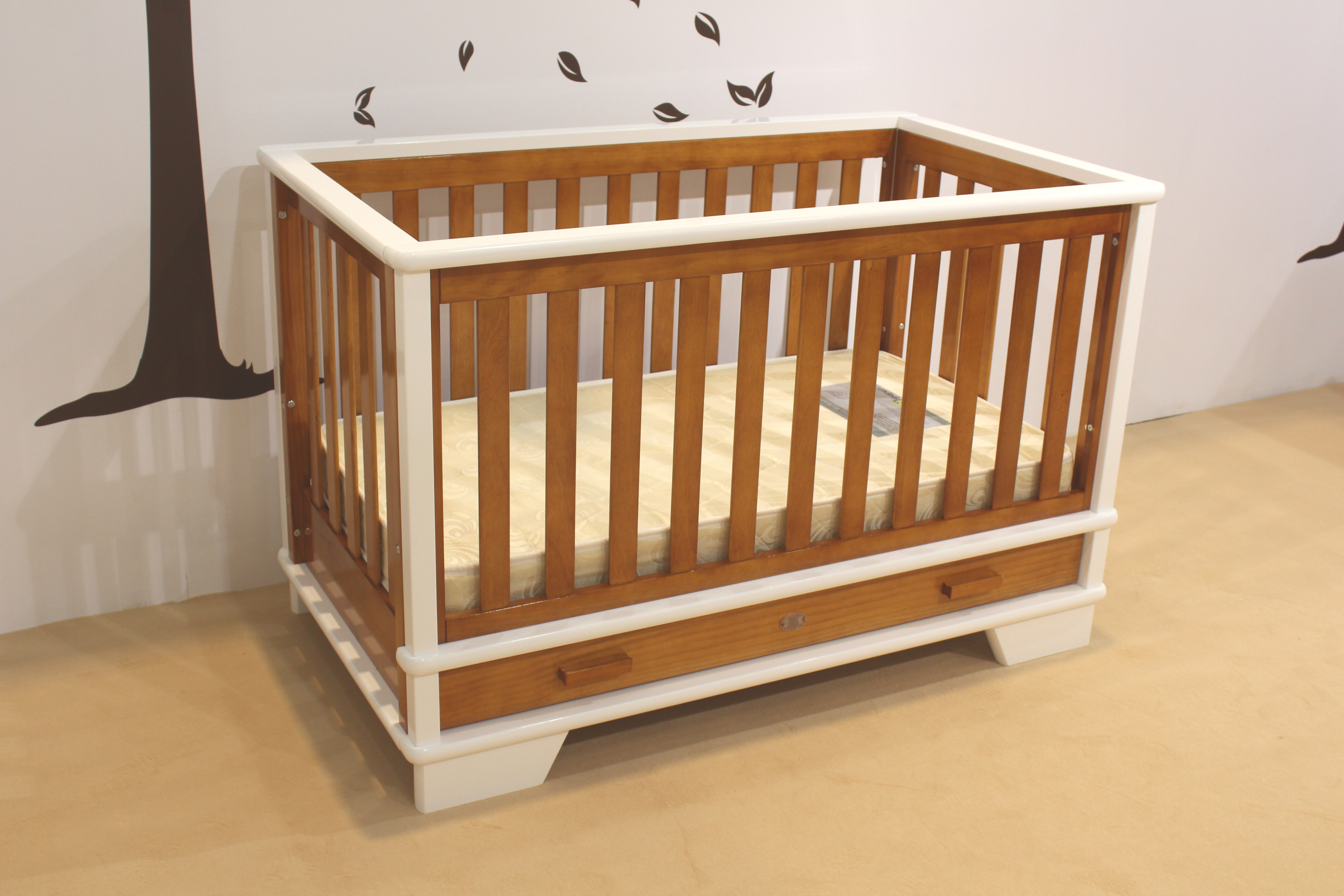
Many manufacturers build the changing table directly into the primary crib frame. We call this the fixed-frame approach. These units feature continuous top rails running across both the sleep and changing zones. Continuous rails provide superior lateral stability. They lock the entire structure into one rigid rectangle. If you push against the side, the entire unit resists the force together. However, this robust stability limits long-term modularity. You cannot separate the components later. The piece remains a single, massive furniture block forever.
Some modern designs offer separation capabilities. Evaluating a detachable changing table crib requires intense scrutiny of its connection points. Safe detachment demands specific structural engineering. Proper modular units follow strict design rules:
These four features ensure the unit acts as one solid piece when connected. They also guarantee each piece stands safely on its own once separated.
Budget-friendly detachable models often harbor dangerous structural flaws. The most common point of failure involves improper load bearing. Cheaper units rely heavily on the crib's side-slats to bear downward force. The changing pad section hooks onto the top rail of the crib. It lacks its own independent vertical supports. When a parent leans on this type of changer, the crib slats bow outward. Over time, these slats can crack or snap completely. You must avoid any detachable model lacking four ground-touching legs under the changer section.
Nursery furniture requires a low center of gravity to remain safe. A changing table with drawers functions as a massive structural counterbalance. The sleep area consists mostly of empty space and a lightweight mattress. It lacks natural density. The attached changing station houses heavy wooden drawers, metal tracks, and dense nursery supplies. This concentrated mass lowers the overall center of gravity significantly. It anchors the entire frame firmly to the floor. A heavier base absorbs vibrations much better than a hollow frame.
You must view this heavy base as a crucial safety feature. Changing a baby involves frequent asymmetrical downward pressure. A parent leans heavily on the front edge while wiping or lifting the infant. In a lightweight unit, this front-heavy pressure causes the rear legs to lift. The heavy drawer base prevents this opposite end from lifting. It resists the torque generated by parent access. The dense storage section acts exactly like an anchor on a ship. It keeps the structure grounded regardless of external pushing or pulling.
Weight alone does not guarantee long-term stability. You must advise buyers to check internal material quality. Inspect the drawer glide hardware carefully. Cheap plastic glides warp under heavy loads. You should seek out steel ball-bearing glides instead. Additionally, examine the drawer bottom panels. Manufacturers often use thin MDF (Medium Density Fiberboard) for bottoms. MDF bottoms will bow dramatically under the weight of baby wipes and lotions. Bowing drawers compromise the internal structural squareness of the changer unit over time. Always prioritize solid wood or reinforced plywood bases for maximum longevity.
Safety is not subjective in nursery furniture design. The U.S. Consumer Product Safety Commission (CPSC) establishes strict federal safety standards. These regulations dictate structural integrity minimums for all baby changing products. The CPSC mandates specific barrier height requirements under heavy load. The rails surrounding the changing pad cannot flex outward beyond a specific measurement. They must withstand direct vertical and lateral pressure. Federal compliance ensures the unit will not collapse suddenly. It prevents catastrophic structural failure and deadly fall hazards.
Evaluating the connective hardware is your most critical inspection task. Structural integrity relies entirely on how the manufacturer joins the wood pieces. You need a simple buyer's checklist for these load-bearing joints.
Hardware Comparison Chart for Load-Bearing Joints
| Hardware Type | Primary Application | Structural Integrity Level | Recommendation |
|---|---|---|---|
| Allen Bolts with Barrel Nuts | Main frame corners, rail attachments | High (Metal-to-Metal connection) | Look for this in all shared-load joints. |
| Standard Wood Screws | Drawer assembly, minor trim | Low (Metal-to-Wood connection) | Avoid if used for primary crib rails. |
| Wooden Dowels | Alignment positioning | Very Low (Shear strength only) | Must be paired with metal bolts. |
| Steel Corner Brackets | Underneath changing pads, base frames | Maximum (Reinforced stress distribution) | Highly recommended for detachable units. |
Look specifically for Allen bolts anchored directly into metal threaded inserts. We call these barrel nuts. Avoid units heavily reliant on wooden dowels. Avoid primary joints secured by standard wood screws. Wood screws bite directly into the timber. Under continuous dynamic load, they strip the wood fibers. Once stripped, the joint never tightens properly again.
Parent access introduces severe repetitive stress to the furniture. A parent leaning over the rail applies concentrated pressure to the front barrier. CPSC-compliant designs reinforce this specific load path. They use thicker top rails to distribute this weight. They add internal steel support rods to prevent the wood from snapping. If you ignore these hardware warnings, the edge stress will eventually cause a fracture. Proper hardware ensures the unit handles adult weight just as well as baby weight.
Children grow rapidly, demanding adaptable furniture. A premium crib and changing table set usually converts into a toddler bed or daybed. This conversion fundamentally alters the structural load path. Removing the front crib rail eliminates a major stabilizing component. The front rail normally prevents the two side panels from twisting. When you remove it, the remaining frame must absorb all lateral stress. High-quality sets anticipate this conversion load shift. They include heavily reinforced bottom spreader bars to maintain structural rigidity.
Many parents plan to separate the pieces later. You must consider the standalone viability of the attached storage. Repurposing the nursery changer unit into a standalone dresser sounds appealing. However, you must ask a critical question. Does removing the crib rails compromise the changer's standing stability? Some designs leave one side of the dresser completely unfinished. Others rely on the crib to keep the dresser upright. A truly viable standalone unit possesses four independent, leveled legs and finished panels on all sides.
Navigating these structural variables requires a clear shortlisting logic. Give yourself a strict decision framework before buying.
An aesthetically pleasing design means nothing if the unit cannot safely distribute weight between the sleep and changing zones. The structural mechanics dictating load isolation, center of gravity, and hardware integrity ultimately determine the safety of your nursery. A solid base and metal-to-metal joints protect your child from creeping instability.
We urge buyers to prioritize units featuring independent vertical supports for both sections. Always demand metal-to-metal joinery for any load-bearing connections. Seek out heavy drawer bases that act as secure anchors against tipping forces. These specific features guarantee long-term durability as your infant grows into an active toddler.
Before making a final purchase, you should take immediate action. Check the specific weight limits published by the manufacturer. Locate and verify the CPSC certification labels on your shortlisted models. Do not compromise on these structural baselines when building your safe nursery environment.
A: No, provided it is engineered correctly. A well-built changing table with a solid base actually adds overall mass to the unit. This increased footprint lowers the center of gravity. It makes the entire furniture piece significantly more difficult to tip over during daily use.
A: Most federally compliant attached changing tables are officially rated for up to 30 pounds. However, structurally superior models utilize heavy-duty reinforced brackets. These premium designs can often safely handle up to 50 pounds of static weight without bowing or failing.
A: Yes, but only if the detachable unit has its own four independent legs. It must not rely on the crib's side panel to stay upright. You must always verify the manufacturer's specific conversion instructions before separating the components.


