
- All
- Product Name
- Product Keyword
- Product Model
- Product Summary
- Product Description
- Multi Field Search


Views: 0 Author: Site Editor Publish Time: 2026-07-29 Origin: Site


While most buyers evaluate crib safety based on rail spacing and non-toxic finishes, the most critical factor dictating long-term structural integrity is invisible to the naked eye: the moisture content of the wood. Wood is a hygroscopic material that continuously exchanges moisture with its environment. If a crib is manufactured with improper moisture levels, or exposed to extreme humidity fluctuations, the wood will expand or contract. This dimensional movement leads to warped rails, split stiles, and loosened hardware—directly compromising the safety and load-bearing capacity of the crib.
Understanding how manufacturers control moisture provides a technical framework for evaluating and selecting a structurally sound crib. You will learn how different wood species react to environmental changes. This knowledge helps you choose nursery furniture that maintains its safety certifications and protective dimensions over years of use. We will examine the mechanics of wood movement, the manufacturing standards required to prevent it, and the environmental controls necessary to maintain a safe sleeping environment for your child.
Optimal Moisture Range: High-quality cribs are constructed from wood kiln-dried to a precise moisture content (typically 6% to 8%) to match the Equilibrium Moisture Content (EMC) of a standard climate-controlled home.
Structural Vulnerability: Fluctuating moisture levels cause wood shrinkage and expansion, which is the primary cause of loosened mechanical fasteners, compromised joint integrity, and unsafe mattress support misalignment in nursery furniture.
Material Variances: A solid wood baby crib requires more rigorous moisture management during manufacturing than engineered wood, with softer woods like pine being particularly susceptible to rapid moisture exchange.
Safety Standard Integration: Moisture damage is not just cosmetic; it directly degrades critical safety features like protective rail spacing, multi-level mattress adjustability, and smooth, splinter-free surfaces.
Environmental Mitigation: Maintaining a consistent indoor relative humidity (35% to 55%) and ensuring proper room ventilation are mandatory implementation steps to preserve the dimensional stability of any wooden nursery furniture.
Wood cells naturally absorb and release water vapor in response to the surrounding air. This property is known as hygroscopy. When the air is humid, wood fibers take on moisture and swell. When the air is dry, they release moisture and shrink. A wooden baby crib constantly reacts to these atmospheric changes. The cellular structure of the wood acts like a sponge, expanding as it absorbs water molecules from the air and contracting as those molecules evaporate. This continuous cycle places immense stress on the structural components of the furniture, particularly at the joints where different pieces of wood intersect.
In a nursery setting, hygroscopy becomes a critical safety concern. The structural integrity of the crib relies on precise dimensions and tight tolerances. Even minor fluctuations in moisture content can cause significant dimensional changes, leading to loose hardware, warped rails, and compromised mattress supports. Understanding this fundamental property of wood is essential for maintaining a safe and stable sleeping environment.
Equilibrium Moisture Content represents the balance point between wood and its environment. A crib attempts to reach a moisture balance with the nursery's specific temperature and relative humidity. If the room stays at a consistent 45% humidity, the wood stabilizes. Drastic seasonal changes disrupt this balance, forcing the wood to adjust rapidly. The EMC is not a static number; it fluctuates constantly based on the ambient conditions.
To illustrate how EMC changes with the environment, consider the following data table:
Relative Humidity (%) | Temperature (°F) | Approximate EMC (%) | Wood Behavior |
|---|---|---|---|
30% | 70°F | 6.2% | Shrinking, potential for cracking |
40% | 70°F | 7.7% | Stable, ideal for indoor furniture |
50% | 70°F | 9.2% | Stable, ideal for indoor furniture |
60% | 70°F | 11.0% | Swelling, potential for binding joints |
70% | 70°F | 13.1% | Severe swelling, high risk of warping |
Maintaining the nursery environment within the 40% to 50% relative humidity range ensures the wood remains near its ideal EMC of 7% to 9%, minimizing dimensional movement and preserving the structural integrity of the crib.
Wood does not move uniformly. It moves differently across its grain. Tangential shrinkage across the growth rings is the most significant. Radial shrinkage is roughly half of tangential movement. Longitudinal shrinkage along the grain is minimal. This specific movement pattern threatens the squareness and stability of a crib frame. Uneven expansion twists the structural components out of alignment.
When a crib rail expands tangentially while the adjoining post expands radially, the resulting stress can break glue lines and loosen mechanical fasteners. This anisotropic behavior requires manufacturers to carefully orient the wood grain during construction to minimize the impact of dimensional changes. Failure to account for this movement results in a crib that quickly becomes unstable and unsafe.
Restricted airflow around the crib creates localized pockets of high humidity. Pushing furniture tightly against a wall traps moisture. This accelerates uneven moisture absorption on one side of the frame. The resulting imbalance causes localized warping and weakens structural joints on the affected side. Proper ventilation is essential for maintaining a uniform moisture content throughout the entire crib structure.
Microclimates can also form near windows, heating vents, and exterior walls. Placing a crib in these areas exposes it to rapid temperature and humidity fluctuations, accelerating the degradation of the wood. Ensuring adequate airflow and strategic placement within the nursery mitigates these risks and prolongs the life of the furniture.
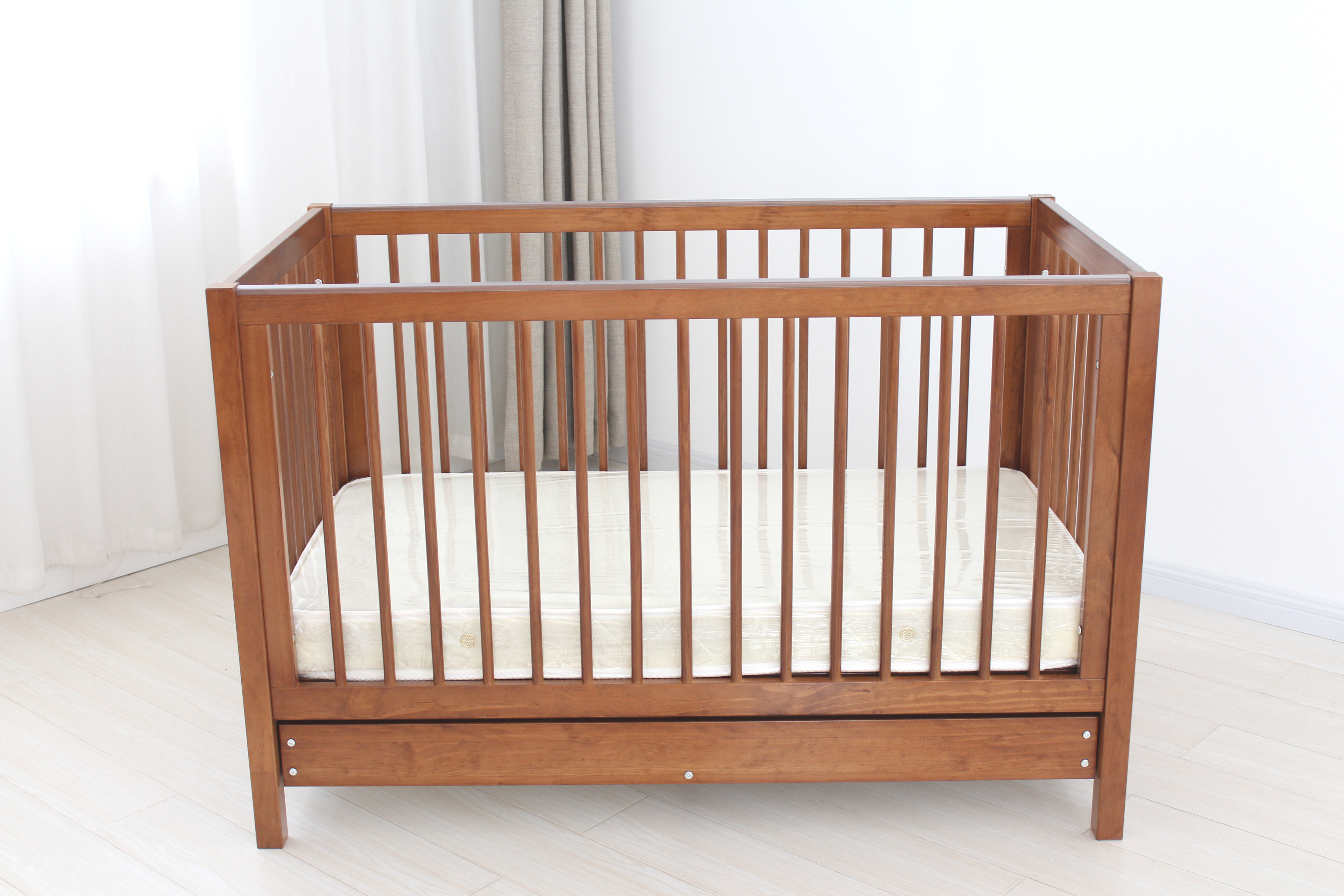
Wood expansion accelerates when moisture content exceeds 10-12%. The physical swelling of the wood fibers exerts tremendous pressure on joints. Swelling causes binding in adjustable mattress supports. This prevents secure locking at different height levels. Warping alters the strict, standardized spacing between protective rails. Bent slats create hazardously wide gaps that fail safety regulations. Damp wood fibers also invite secondary risks like mold, mildew, and bacterial development.
The pressure exerted by swelling wood can easily shear screws and break dowels. When a crib rail warps, it not only compromises the structural integrity of the frame but also creates a significant entrapment hazard for the child. The strict regulations governing slat spacing are rendered useless if the wood bends and distorts due to excessive moisture absorption.
Overly dry environments force wood to contract rapidly. Winter heating and arid climates strip moisture from the lumber. Shrinkage leads to stress fractures and splitting along the grain. These cracks create sharp wood edges and splinters that pose physical injury hazards. Furthermore, shrinkage causes the dangerous loosening of metal inserts, bolts, and barrel nuts. The surrounding wood literally shrinks away from the hardware, destabilizing the entire frame.
When wood shrinks, the mechanical fasteners that hold the crib together lose their grip. A bolt that was tight at 8% moisture content will become dangerously loose at 5% moisture content. This requires constant monitoring and tightening to prevent the crib from collapsing under the weight of a growing child. Splitting wood also compromises the structural integrity of the individual components, increasing the risk of catastrophic failure.
Repeated expansion and contraction degrades traditional joinery like mortise and tenon or dowels. Moisture cycling creates unsafe wiggle room in mechanical fasteners. Frame warping causes the mattress support deck to sag unevenly. It can pull away from the sides entirely. This creates dangerous gaps between the firm crib mattress and the wooden frame, introducing severe suffocation and entrapment risks.
The mattress support system is arguably the most critical safety feature of a crib. If the frame warps or the joints loosen, the support deck can fail, causing the mattress to drop or tilt. This creates a hazardous environment where a child can become trapped between the mattress and the crib sides. Maintaining proper moisture levels is essential for ensuring the long-term reliability of this critical support system.
A solid wood baby crib responds to moisture differently than MDF or plywood alternatives. Engineered woods use adhesives that resist directional warping but are highly vulnerable to swelling if water penetrates the surface. Solid wood offers superior longevity, strength, and non-toxic benefits. However, it requires stricter environmental control to prevent warping along the natural grain.
While engineered wood may offer some resistance to anisotropic movement, it lacks the structural strength and durability of solid wood. Solid wood, when properly dried and maintained, provides a far superior material for nursery furniture. The key is understanding how to manage the environment to prevent the natural movement of the wood from compromising the safety of the crib.
Density and cellular structure dictate seasonal movement. Hardwoods like beech, maple, and oak possess dense grain structures that slow moisture exchange. Softwoods have looser cellular structures. They react much faster to humidity changes. The choice of wood species significantly impacts the crib's susceptibility to moisture-related damage.
The pine wood baby crib presents a unique dilemma. Pine is a common, cost-effective softwood. It absorbs and releases moisture more rapidly than hardwoods. While highly responsive to humidity, pine offers excellent natural thermal insulation and breathability in winter climates. Proper kiln drying is absolutely essential for pine furniture to ensure it remains stable in a typical home environment.
Wood Type | Density | Moisture Exchange Rate | Stability in Fluctuating Humidity |
|---|---|---|---|
Oak (Hardwood) | High | Slow | Excellent |
Maple (Hardwood) | High | Slow | Excellent |
Beech (Hardwood) | Medium-High | Moderate | Good |
Pine (Softwood) | Low | Fast | Fair (Requires strict climate control) |
The thickness of the wood cuts dictates the rate of moisture exchange. Spindles react quickly to ambient air. Heavy corner posts change moisture content much slower. A standard wooden cot relies on robust corner posts for structural rigidity. Mixing thick and thin components requires careful design to ensure the overall resistance to deformation remains high.
When a crib features thin spindles and thick corner posts, the spindles will expand and contract much faster than the posts. This differential movement can cause the spindles to warp or break if they are not properly secured. Manufacturers must account for this by using flexible joinery techniques or allowing for slight movement within the mortises.
Manufacturers must kiln-dry lumber before milling. Controlled drying relieves internal stresses in the wood. It locks in the target 6-8% moisture content. Skipping this technical requirement guarantees future warping and joint failure. The kiln drying process involves carefully controlling the temperature and humidity within a specialized chamber to slowly extract moisture from the wood without causing it to crack or split.
Proper kiln drying is the foundation of a stable crib. If the wood is not dried to the correct moisture content before manufacturing, it will inevitably warp and shrink once it is placed in a climate-controlled home. This process requires significant time and energy, which is why high-quality cribs often command a premium price.
Raw wood must acclimate to the manufacturing facility's climate before being cut and assembled. Proper acclimation prevents post-assembly warping. If the factory environment differs wildly from the drying kiln, the wood will move during production. Manufacturers must maintain strict climate control within their facilities to ensure the wood remains stable throughout the manufacturing process.
Lumber is received from the kiln and stacked with spacers to allow airflow.
The wood sits in the climate-controlled facility for several weeks to equalize with the ambient humidity.
Moisture meters are used to verify the wood has reached the target EMC before milling begins.
Components are machined and assembled quickly to minimize exposure to fluctuating conditions.
Surface treatments like paints, varnishes, and natural oils act as semi-permeable barriers. Finishes slow down moisture exchange. They do not stop it entirely. Manufacturers must balance zero-VOC, baby-safe chemical requirements with effective moisture sealing properties. A high-quality finish provides a critical line of defense against environmental fluctuations.
While no finish is completely waterproof, a well-applied coating significantly reduces the rate at which wood absorbs and releases moisture. This gives the wood more time to adjust to seasonal changes, minimizing the risk of rapid expansion or contraction. Regular inspection of the finish is necessary to ensure it remains intact and effective.
CPSC and ASTM stability testing protocols indirectly test for moisture-resistant design. Testing subjects cribs to physical load-bearing forces and rigorous shake tests. Multi-level mattress adjustment cycles ensure no structural failures occur under environmental stress. Wood that fails to hold fasteners due to moisture issues will fail these physical tests.
These rigorous testing standards ensure that only cribs with sound structural design and proper moisture management reach the market. When a crib passes these tests, it demonstrates that the manufacturer has successfully accounted for the natural movement of the wood and implemented effective strategies to mitigate its impact on safety.
Nursery climates require specific baseline conditions. Maintain an ideal temperature of 68-72°F. Keep relative humidity between 35-55%. This stable environment prevents extreme wood movement. Monitoring these conditions with a digital hygrometer is a simple and effective way to ensure the nursery remains within the safe zone.
Consistency is key. Rapid fluctuations in temperature and humidity are far more damaging to wood than gradual seasonal changes. By maintaining a stable baseline environment, you minimize the stress placed on the crib's structural components and significantly extend its lifespan.
Use humidifiers during dry winter months to prevent wood shrinkage. Run dehumidifiers or air conditioning in the humid summer to stop swelling. Ensure proper room ventilation to prevent localized moisture buildup against the wooden cot bed. Managing the indoor climate is the most effective way to protect your investment and ensure your child's safety.
Install a digital hygrometer in the nursery to monitor humidity levels daily.
Use a cool-mist humidifier during the winter when the heating system dries out the air.
Utilize air conditioning or a dehumidifier during the summer to remove excess moisture.
Ensure the nursery has adequate airflow by keeping doors open and using ceiling fans when appropriate.
Never place a wooden cot bed directly over HVAC vents. Avoid pushing it against cold or uninsulated exterior walls. Keep the crib out of direct, prolonged sunlight. These locations create extreme microclimates that warp wood rapidly. Strategic placement within the nursery is a simple yet critical step in preventing moisture-related damage.
Position the crib on an interior wall, away from windows and heating sources. This ensures the wood is exposed to the most stable and consistent conditions within the room. Proper placement minimizes the risk of localized warping and ensures the crib remains structurally sound for years to come.
Perform quarterly mechanical checks to ensure ongoing safety. Regular maintenance is essential for identifying and addressing potential issues before they compromise the structural integrity of the crib.
Tighten loose bolts and mechanical fasteners securely.
Inspect joints, stiles, and rails for hairline cracks, splinters, or sharp edges.
Verify that the mattress remains firm, flat, and securely supported without sagging or tilting.
Check the stability of mattress support brackets at all three height levels.
The safety and longevity of a wooden crib are fundamentally tied to its moisture content. A structurally sound design can still fail if the wood was improperly dried or subjected to extreme environmental swings. Prioritize manufacturers that transparently disclose their kiln-drying processes, material sourcing, and compliance with ASTM safety standards. Weigh the durability of hardwoods against the cost-efficiency and natural warmth of softwoods, factoring in your local climate's humidity profile.
Verify the humidity levels in your intended nursery space using a digital hygrometer.
Select a crib with a robust, well-sealed non-toxic finish.
Establish a routine maintenance schedule to check all hardware and joints post-assembly.
A: The ideal indoor relative humidity for solid wood nursery furniture is between 35% and 55%. Maintaining this range prevents extreme expansion or contraction of the wood fibers.
A: Yes. If the air is too dry, pine will lose moisture rapidly. This leads to shrinkage, which can cause the wood to warp, crack, or split along the grain.
A: Signs of shrinking include loose bolts, visible gaps in joints, and hairline cracks. Signs of expansion include binding mattress supports, warped slats, and a generally distorted frame.
A: Finishes act as moisture retardants, slowing down the rate of moisture exchange. However, they are semi-permeable and do not completely stop wood from reacting to extreme humidity changes.
A: As wood dries and shrinks, it pulls away from metal hardware. Repeated seasonal expansion and contraction cycles loosen the grip on barrel nuts and bolts, requiring periodic tightening.
A: Engineered wood resists directional warping better than solid wood. However, if moisture penetrates its surface, it can swell significantly and permanently lose its structural integrity.
A: Yes. Severe swelling or warping can misalign the frame. This prevents the mattress support brackets from locking securely into their designated height positions.


