
- All
- Product Name
- Product Keyword
- Product Model
- Product Summary
- Product Description
- Multi Field Search


Views: 0 Author: Site Editor Publish Time: 2026-10-05 Origin: Site


Preparing for newborn sleep is often an overwhelming experience for new parents. Picture this. It is 3 AM. You are exhausted from round-the-clock feedings. A sudden wave of anxiety about infant sleep safety washes over you. Finding a truly secure resting place is challenging. Many trendy options hide behind clever marketing gimmicks rather than solid engineering. In this comprehensive guide, you will learn the essential standards required to navigate the market confidently. We will help you cut through the noise. You will learn how to choose a dependable product that protects your baby while giving you much-needed peace of mind.
Prioritize Certifications: Always look for safety certifications from recognized regulatory bodies like the Consumer Product Safety Commission and the American Society for Testing and Materials. This ensures the product meets strict and verifiable structural guidelines.
Firmness is Mandatory: From a biomechanical standpoint, a secure resting space demands a hard, flat surface. There must be absolutely no gaps around the edges to prevent entrapment and suffocation risks.
Breathability Matters: Opt for models with mesh sides or precisely engineered wooden slats. This promotes optimal airflow and reduces hazards if your baby rolls.
Avoid Clutter: Never add extra pillows, blankets, sleep positioners, or soft toys to your baby's sleeping environment. A bare surface is always the safest choice.
Match Your Lifestyle: Choose a design that fits your specific home layout and physical needs. This could mean a bedside co-sleeper for surgical recovery or a sturdy wooden frame for long-term durability.
Newborns are physically vulnerable during their first few months of life. Understanding this delicate physiology forms the absolute foundation of safe sleep practices. Infants lack the muscle strength and motor coordination required to lift their heavy heads. They cannot roll over or free themselves if their airway becomes obstructed. Because of this, the environment where they spend up to 16 hours a day must be meticulously curated.
According to the American Academy of Pediatrics safe sleep guidelines, parents are strongly advised to practice room-sharing for at least the first six months. Bed-sharing is strictly discouraged. Statistically, room-sharing has been shown to decrease the risk of Sudden Infant Death Syndrome by up to 50 percent. This is exactly where a dedicated Safe Bassinet becomes an indispensable piece of nursery equipment. It provides a secure, enclosed, and independent sleeping space. This structure shields the baby from the hazards of adult blankets, plush pillows, and accidental parental rollover. Simultaneously, it keeps your little one within arm's reach for midnight diaper changes, bridging the gap between rigorous safety and parental convenience.
Recent industry trend analyses reveal a significant consumer shift in nursery furniture design. Modern consumers are moving away from synthetic plastics and complex electronic beds. Instead, there is a strong demand for eco-friendly, sustainably sourced materials. This shift is driven by a growing awareness of indoor air quality and volatile organic compound emissions. Manufacturers are now prioritizing solid wood constructions and non-toxic finishes to meet these elevated safety benchmarks.
When evaluating nursery furniture, caregivers must look far beyond aesthetic appeal. Educating yourself on legal and industry benchmarks is the most reliable method to ensure product safety. You need to understand the mechanical integrity of the furniture you bring into your home.
In the United States, the Consumer Product Safety Commission and the American Society for Testing and Materials govern the safety of infant products. The federal agency issues mandatory regulations, whereas the testing society develops highly technical evaluation frameworks. For a sleeper to be legally sold, it must strictly comply with federal standard 1218.
These organizations subject products to rigorous structural tests. They guarantee the frame can withstand daily wear and tear without material fatigue. Specifically, testing evaluates stability to ensure the unit will not tip over if a curious toddler leans on the edge. Side height requirements dictate a minimum of 7.5 inches from the pad to prevent a growing infant from tumbling out. Furthermore, hardware integrity checks confirm that all screws, latches, and folding mechanisms remain locked under load.
Beyond mandatory federal laws, the Juvenile Products Manufacturers Association offers an additional layer of certification. Manufacturers seeking this seal must submit their designs to independent laboratories. These evaluations frequently exceed basic government minimums. Spotting this certification sticker provides extra reassurance. It signifies the item has been tested for heavy metals, phthalates, and strict adherence to the latest biomechanical safety protocols.
Understanding the physical components that construct a secure sleeping environment serves as a practical checklist for buyers. Here is a detailed breakdown of the non-negotiable features you should demand from a product engineering perspective.
One of the most pervasive misconceptions among new parents is the belief that a baby needs a plush surface to be comfortable. In reality, a hard, completely flat surface is absolutely essential to prevent suffocation. If a baby's face presses into soft padding, the material can conform to their nose and mouth, blocking oxygen flow.
A certified Bassinet Mattress must be firm enough that it does not indent when the infant's head rests upon it. Additionally, there is a strict one-inch thickness rule applied to these pads. Thicker cushions can create dangerous crevices between the edge of the pad and the side walls. There should be absolutely no space around the perimeter. Even a gap wide enough to slide two fingers poses a severe entrapment hazard.
Continuous airflow is a critical component of nighttime safety. Selecting a model with 360-degree breathable mesh sides, or widely spaced wooden slats, is highly recommended. Proper ventilation serves a dual purpose. First, it ensures steady air circulation to help regulate the baby's body temperature, preventing dangerous overheating. Second, if a baby happens to wiggle and their face ends up pressed against the side wall, the porous material or open slats allow them to continue breathing freely.
The mechanical foundation must feature a wide footprint to lower the center of gravity. A narrow base dramatically increases the risk of tipping, especially in bustling households with pets. For modern models equipped with wheels, reliable locking casters are mandatory. You must be able to securely lock the wheels in place so the frame cannot shift if accidentally bumped in the dark.
The current market offers a diverse variety of styles tailored to distinct lifestyle needs. Comparing these options will help you make a confident purchasing decision that suits your daily routine.
Material Type | Structural Stability | Air Quality and Toxicity | Best Use Case |
|---|---|---|---|
Solid Wood | Excellent. High load-bearing capacity and longevity. | Zero emissions when treated with water-based finishes. | Long-term durability and eco-conscious nursery setups. |
Plastic and Metal | Moderate. Prone to joint fatigue over extended use. | Potential for minor off-gassing depending on the plastics used. | Frequent travel or temporary secondary sleeping spaces. |
Smart Tech Beds | Good, but heavy and reliant on internal motors. | Mixed. Contains electronic components and wiring. | Parents requiring automated soothing technology. |
These standard models have been trusted for decades. They are typically lightweight, straightforward to assemble, and highly portable. The primary advantage is their simplicity. Parents can move them from the primary bedroom to the living room effortlessly. However, they generally lack the immediate bedside access found in specialized co-sleepers.
Engineered to safely attach flush against the adult bed using heavy-duty straps, these models feature one side that lowers for immediate access. They are strongly recommended for mothers recovering from surgery. They allow you to comfort or feed the baby without physically getting out of bed, all while maintaining a strictly separate sleep surface.
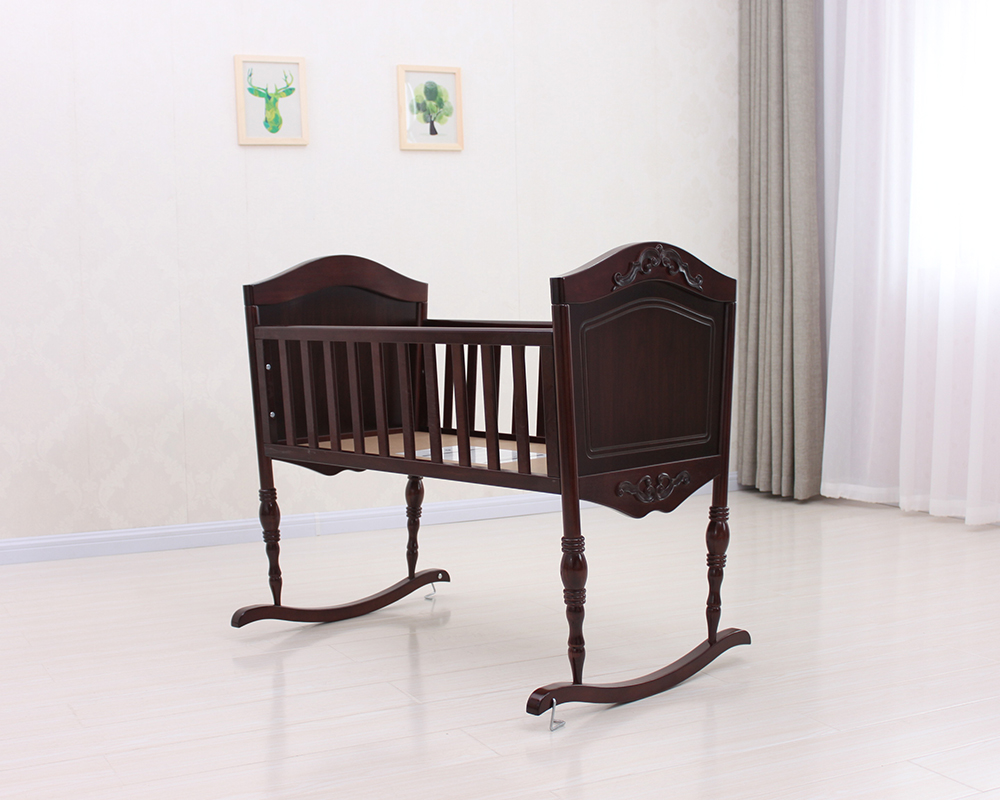
For families prioritizing longevity, eco-friendliness, and timeless aesthetics, solid wood options are ideal. A well-crafted Baby Cradle offers exceptional stability. High-quality designs utilize imported New Zealand pine and feature a strict slat spacing of less than 2.375 inches to eliminate entrapment risks. Furthermore, premium manufacturers apply non-toxic, water-based paint to ensure zero chemical off-gassing. These sturdy pieces beautifully blend traditional craftsmanship with rigorous modern safety standards.
Selecting the right furniture is merely the first step. Understanding the physical limitations of your chosen Infant Sleeper and knowing exactly where to position it are equally critical components. Proper spatial placement significantly reduces environmental risks.
Unlike standard cribs designed to house a child for years, a newborn sleeper is a temporary solution. Most standard models have a strict maximum weight capacity set at 20 pounds. However, developmental milestones are often more critical indicators than weight alone. Engineers and pediatricians uniformly recommend discontinuing use the moment an infant begins to roll over independently.
Why are these limits so strictly enforced? Because these units are generally shallower than cribs, a baby's shifting center of gravity introduces a severe tipping hazard. Ignoring these warnings compromises the structural integrity of the frame and puts your child at unnecessary risk.
Simply placing the bed in your room is not enough. The exact location requires careful logistical consideration to create a sterile safety zone. Keep the unit at least three feet away from windows to avoid drafts and direct sunlight. Ensure it is completely out of reach of blind cords, heavy drapery, or electrical wires. These items pose severe strangulation risks. Specifically, never position the sleeper directly beneath heavy wall art, floating shelves, or near active heating vents.
Even with the most rigorously tested equipment, user error can inadvertently introduce severe risks. Many common mistakes stem from well-intentioned parents trying to make their little one more comfortable. They are often unaware that adult standards of coziness do not apply to infants.
The golden rule of infant care is that a bare surface is best. The sleep surface should contain nothing but a firm pad covered by a single, tightly fitted sheet. The introduction of loose blankets, quilts, crib bumpers, or stuffed animals creates immediate suffocation hazards. If you are concerned about your baby's temperature, the safest alternative is a properly sized wearable blanket. These garments keep the infant warm while eliminating the risk of fabric riding up over the face.
In recent years, inclined surfaces gained popularity among parents seeking solutions for acid reflux. However, extensive biomechanical research has definitively proven that inclines greater than 10 degrees are highly dangerous. They force the baby's heavy head to slump forward. This posture can silently and rapidly compress their delicate airway. Following numerous tragic incidents, federal legislation officially banned inclined infant sleepers. Always ensure your purchase provides a completely flat, horizontal resting surface.
While purchasing second-hand gear saves money, it requires extreme caution from a mechanical standpoint. A used frame may harbor hidden dangers like degraded locking mechanisms or micro-fractures in the support joints. Older models may not comply with the latest evolving safety standards. If you must use a hand-me-down, always verify the exact model number on the federal recall database. Ensure all original hardware is intact, and immediately replace the old pad with a brand-new, manufacturer-approved one.
The transition to a full-sized crib is a major milestone. Because infants thrive on routine, changing their primary environment can sometimes cause temporary disruptions. Knowing when and how to make this move is vital for maintaining healthy habits.
Parents should closely monitor physical growth to determine the optimal time for this transition. You should immediately move your baby to a larger crib if they have reached the manufacturer's maximum weight limit. Another clear indicator is if they begin to roll from back to stomach. If your baby's head or feet frequently touch the mesh sides, it is time to upgrade to a more spacious surface.
Moving abruptly to a spacious crib in a different room can be jarring. A gradual approach generally yields the best results. Start by familiarizing your baby with the new crib during their waking hours. Allow them to play safely while supervised. Next, begin transitioning daytime naps while continuing to use the smaller bed for overnight sleep. Maintain consistency in all other aspects of the bedtime routine. Using the same white noise machine or wearable blanket helps signal to your baby's brain that it is time to rest.
Choosing the right resting place is one of the most important decisions you will make to protect your newborn. By prioritizing verifiable safety certifications, insisting on perfectly firm surfaces, and strictly avoiding extra bedding, you significantly reduce sleep-related risks.
Remember that a certified mattress ensures proper spinal support, while breathable walls guarantee vital airflow. Following these meticulous engineering guidelines creates a secure environment where your little one can thrive. Take the time to explore high-quality, durable solid wood options to start your parenthood journey with confidence. For premium, non-toxic, and structurally superior nursery furniture, choosing a meticulously engineered Bassinet ensures both safety and timeless style for your home.
Usually, an infant can safely sleep in this environment until they are 4 to 6 months old. However, this timeline is highly dependent on the child's physical development. You must stop using the product as soon as the baby reaches the manufacturer's specific weight limit, which is typically 20 pounds. You must also transition them the moment they begin to independently push up on their hands and knees.
Yes, using a waterproof cover is safe, provided it meets strict criteria. The cover must be specifically designed and manufactured for your exact model. It must fit tightly around the pad without any bunching, sagging, or creating air pockets. Most importantly, the addition of the waterproof cover must not compromise the firmness of the sleep surface. Never use generic plastic bags or unapproved liners, as these pose severe suffocation risks.
There are distinct structural differences in their engineering. A cradle is traditionally constructed from heavier materials, such as solid wood. It is engineered with a mechanical pivot that allows it to rock or glide smoothly. The alternative is typically lighter, stationary, and constructed from materials like aluminum and plastic, making it highly portable. Regardless of the style, both products must pass the exact same rigorous federal safety standards.
No. Car seats, strollers, and swings are engineered for transportation and temporary soothing, not for prolonged or unobserved sleep. Sleeping in a seated or semi-reclined position creates a severe risk of positional asphyxiation. If your baby falls asleep in a car seat, they should be moved to a flat, firm sleeping surface as soon as it is safe and practical to do so.
While wooden or metal frames do not have a strict expiration date like car seats, their components undergo material fatigue over time. Plastic joints can become brittle, and screws can strip after multiple assemblies. Furthermore, safety regulations evolve rapidly. A product manufactured ten years ago likely does not meet today's rigorous entrapment and stability standards. It is always recommended to use hardware manufactured within the last few years to ensure peak structural integrity.


