
- All
- Product Name
- Product Keyword
- Product Model
- Product Summary
- Product Description
- Multi Field Search


Views: 0 Author: Site Editor Publish Time: 2026-10-18 Origin: Site


Tired of moving heavy nursery furniture during daily baby care? A Baby Crib with Wheels makes room changes easier and supports flexible sleeping arrangements. Its smooth-rolling wheels and secure locks improve everyday convenience. In this article, discover how wheeled cribs simplify parenting and what features matter most.
A wheeled crib provides several practical advantages during everyday childcare. Its mobility helps families manage sleeping arrangements and changing household activities. These benefits become particularly useful when parents need flexible nursery furniture.
Moving a traditional crib between rooms can require considerable effort. A baby crib with wheels makes this process easier through integrated mobility features. Parents can reposition an empty crib without repeatedly lifting or disassembling its frame.
This flexibility helps families prepare suitable sleeping spaces in different rooms. They can move the crib before beginning daytime activities or preparing for bedtime. Smooth-rolling wheels can reduce physical effort during these changes. However, parents should always secure the crib before placing their baby inside.
Babies follow changing sleep routines during their early months. Parents may prefer different sleeping locations depending on household activities. A mobile crib allows families to prepare these arrangements more conveniently.
For example, parents can position the crib in a suitable living area during daytime naps. They can return it to the bedroom before nighttime care. This flexibility reduces the need for multiple permanent sleeping arrangements. Every location must still provide a safe environment and adequate space.
Frequent daytime naps require parents to prepare comfortable sleeping environments several times daily. A wheeled crib makes location changes more manageable. Families can select a quiet, suitable space before each sleeping session.
Parents should maintain consistent sleep practices regardless of the room. A firm, flat mattress and suitable fitted sheet remain essential. They should also check wheel locks and surrounding hazards. These precautions help maintain appropriate sleeping conditions while preserving everyday convenience.
Nighttime feeding can become challenging when nursery furniture is located far from parents. A baby crib with wheels allows families to position suitable furniture nearby. This arrangement can improve access during nighttime care.
Parents may place an approved crib inside their bedroom when sufficient space exists. However, ordinary wheeled cribs should retain their required protective sides. They must not become bedside sleepers through unapproved modifications. Safe room-sharing differs from bed-sharing or unsupported bedside configurations.
Lifting heavy baby furniture can make nursery changes inconvenient. Wheels reduce the need for repeated carrying or complete disassembly. This benefit is particularly useful when families frequently adjust room layouts.
Auready Wood's American Style Multifunctional Mobile Crib demonstrates this practical design approach. Model BC-1711 features New Zealand pine wood and 360-degree silent wheels. It also includes three adjustable mattress positions and detachable guardrails. These features provide flexibility for different nursery arrangements.
Small apartments and shared bedrooms often require adaptable furniture arrangements. A baby crib with wheels can help parents reorganize their available space. They can reposition furniture before cleaning or changing household activities.
However, wheel mobility does not automatically reduce a crib's dimensions. Parents should measure doorways, floor space, and furniture clearance. They must also avoid placing cribs near windows, cords, or unstable objects. Careful planning helps families benefit from mobility without creating unnecessary hazards.
Household arrangements sometimes change because of cleaning, maintenance, or family activities. A wheeled crib allows parents to prepare different furniture layouts more efficiently. They can temporarily reposition an empty crib without complicated assembly procedures.
For example, families may move furniture before cleaning bedroom floors. They can return the crib after the area becomes suitable again. Locking the wheels and inspecting frame stability should follow every movement. These simple practices support convenient daily organization.
Tip: B2B retailers should emphasize practical indoor mobility, suitable wheel construction, and dependable locking mechanisms when promoting wheeled cribs.

The convenience of a wheeled crib depends on its construction and functional features. Reliable wheels, secure brakes, and adjustable mattress supports contribute to easier daily care. Buyers should evaluate these details rather than focusing only on appearance.
Smooth-rolling wheels allow parents to reposition a crib more easily. Their performance depends on wheel design, materials, and floor compatibility. Suitable wheels can help reduce resistance during movement across appropriate indoor surfaces.
Some mobile cribs feature swivel wheels for improved maneuverability. These designs make changing direction easier in bedrooms and living areas. However, users should avoid uneven floors and unsuitable thresholds. The manufacturer's movement instructions should guide everyday operation.
Wheel locks are among the most important features of a mobile crib. They help prevent unintended movement after furniture reaches its intended position. Parents should check that the brakes engage securely before every sleeping session.
A baby crib with lockable wheels should remain stationary during normal use. However, the number and design of locking wheels vary between models. Buyers should inspect the manufacturer's specifications and operating instructions. Reliable braking performance deserves priority over decorative features.
Adjustable mattress supports accommodate changing infant development stages. Higher settings can simplify access during early infancy. Lower positions become necessary as babies develop stronger movement and climbing abilities.
The Modern Mobile Baby Crib with Safety Locks & Stylish Design from Auready Wood features three mattress height settings. Model BC-1902 also includes solid New Zealand pine construction and integrated wheels. Its adjustable design supports different nursery requirements. Parents must follow the manufacturer's instructions when changing mattress positions.
Strong construction helps a wheeled crib remain dependable during repeated use. Solid pine wood offers a natural appearance and familiar furniture structure. However, durability also depends on secure joints, reliable hardware, and appropriate assembly.
Parents should inspect frame connections and wheel components regularly. Smooth surfaces can simplify cleaning and maintenance. Damaged fasteners or worn wheels require appropriate replacement parts. Maintaining these components helps preserve the crib's functional condition.
A mobile crib becomes more useful when parents follow consistent operating practices. Daily routines should include suitable placement, secure wheel locking, and proper sleeping arrangements. These habits help combine convenience and safety.
Morning routines often involve feeding, changing clothes, and organizing household activities. Parents can prepare the crib's location before beginning these tasks. Wheeled furniture makes repositioning more manageable when the crib is empty.
Choose a level surface away from cords, curtains, and unstable furniture. Ensure enough clearance exists around the crib for normal use. After positioning it, engage the required wheel locks. A final stability check helps confirm that the crib remains stationary.
A mobile crib can support consistent nap arrangements across suitable rooms. Parents can prepare the sleeping environment before placing their baby inside. This reduces unnecessary furniture movement during rest periods.
The sleeping area should contain a firm, flat mattress and correctly fitted sheet. Pillows, loose blankets, and soft toys should remain outside the crib. These precautions apply even during short daytime naps. According to the U.S. Consumer Product Safety Commission, every infant sleep should follow safe sleep practices.
Evening routines may require parents to move nursery furniture closer to their bedroom. A mobile crib can simplify this preparation when sufficient space exists. Parents should complete repositioning before placing their baby inside.
Room-sharing allows babies to sleep in a separate approved sleeping space. However, removable rails should never be lowered without an approved configuration. Ordinary wheeled cribs are not automatically suitable for bedside attachment. Parents must follow the exact product instructions.
Correct movement procedures help maintain stability during everyday use. Parents should first remove the baby and check the intended route. Next, they can release the wheel locks and reposition the crib carefully.
After reaching the new location, engage all required locks. Inspect the frame and confirm that the crib remains stable. Avoid moving occupied cribs unless the manufacturer explicitly permits it. These steps help prevent unintended movement and operating errors.
Tip: Wheeled mobility improves convenience, but the crib should remain stationary whenever it is being used for infant sleep.
Different families have different nursery requirements. Some prioritize durable wooden furniture, while others need compact travel designs. Understanding these differences helps buyers choose appropriate products.
Wooden baby cribs with wheels combine familiar nursery styling and practical mobility. Solid wood frames provide a traditional furniture appearance. Integrated wheels allow easier repositioning across suitable indoor surfaces.
Auready Wood offers mobile wooden cribs featuring New Zealand pine construction. Selected models include three adjustable mattress positions and removable guardrails. These features support everyday convenience and changing infant care requirements. Buyers should verify wheel-lock functions and approved configurations before use.
Foldable travel cribs serve families who need compact transportation and storage. Some models combine folding frames and integrated wheels. These features may simplify movement during holidays or temporary accommodation.
Happy Island offers travel crib designs featuring folding construction and lightweight frames. Selected models also include wheels or additional care features. However, folding travel cribs differ from rigid wooden mobile cribs. Buyers should confirm the actual folding mechanism and intended sleeping classification.
Multifunctional cribs may combine mobility and adjustable sleeping arrangements. Selected products offer additional storage, removable components, or adjustable mattress supports. These features can improve everyday caregiving convenience.
However, available functions vary across different models. Removable guardrails should only be used within manufacturer-approved configurations. Buyers should also verify whether additional accessories are included. Clear operating instructions are essential for reliable daily use.
Compact wheeled cribs can help families organize smaller living spaces. Their mobility allows parents to change furniture placement when needed. This flexibility is useful in apartments and shared bedrooms.
However, compact dimensions must still meet appropriate safety requirements. Families should verify mattress compatibility and surrounding clearance. Doorway measurements also matter when moving furniture between rooms. A suitable crib should balance mobility, stability, and available space.
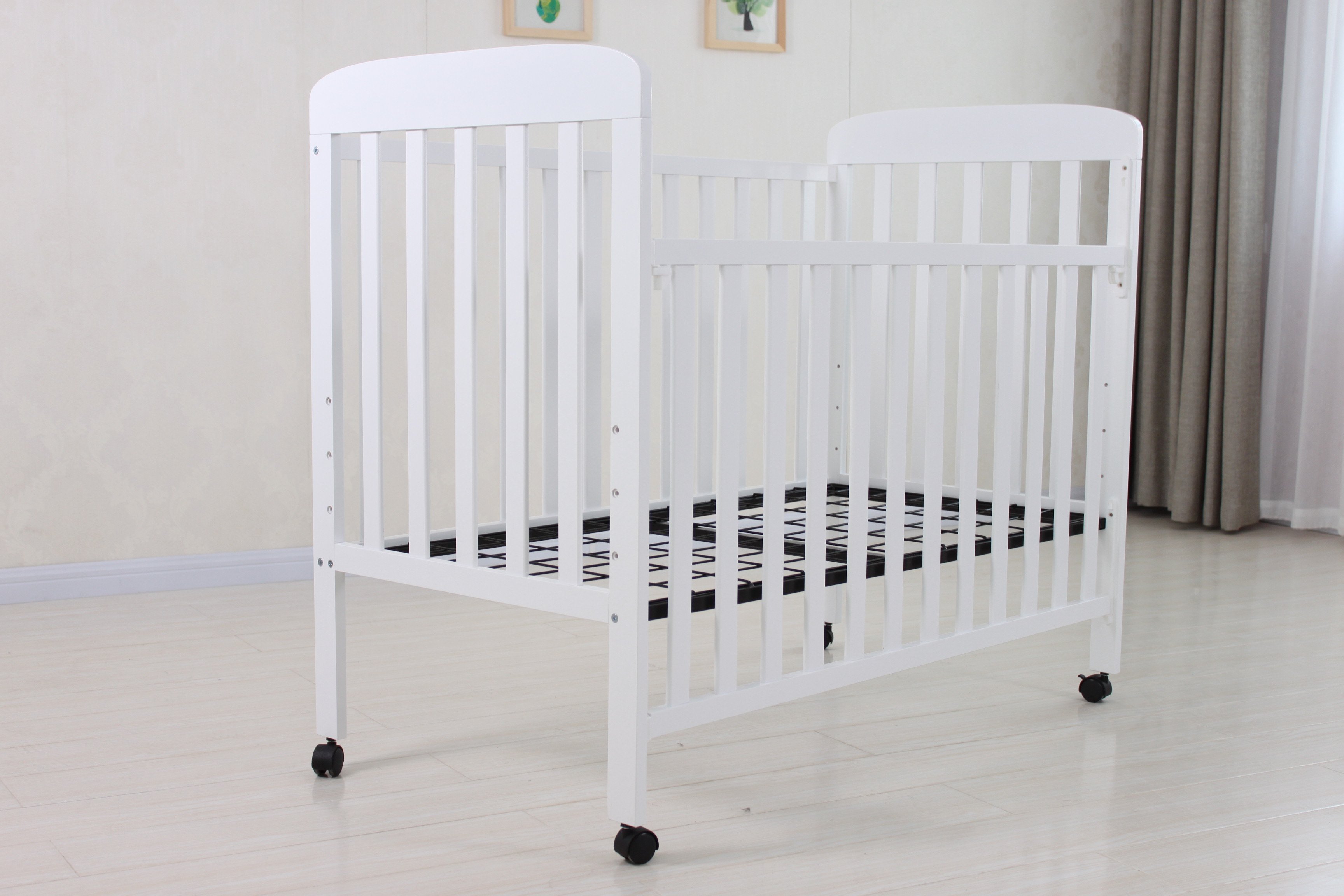
Both wheeled and stationary cribs can provide suitable sleeping arrangements. Their practical differences mainly involve mobility, maintenance, and placement flexibility. Families should choose according to everyday needs.
A wheeled crib offers greater flexibility when parents frequently rearrange nursery furniture. It can move between suitable rooms without repeated lifting. This makes it useful for changing household routines.
Stationary cribs remain practical for permanent nursery arrangements. They usually do not require wheel maintenance or brake inspections. Families rarely changing furniture placement may not need additional mobility features. The better choice depends on expected daily use.
Both crib types require reliable frames and suitable sleeping surfaces. Wheeled models also depend on secure braking mechanisms. Their wheels must remain properly locked during stationary use.
Stationary cribs eliminate wheel-related maintenance but still require regular structural inspections. Neither design is automatically safer than the other. Parents should verify applicable standards and follow manufacturer instructions. Proper assembly remains essential for both categories.
Wheeled cribs contain additional moving components requiring regular inspection. Parents should examine brakes, wheel connections, and frame hardware. These components may experience wear during repeated movement.
Stationary cribs generally have fewer mobility-related maintenance requirements. However, structural joints and mattress supports still need inspection. Durability depends on materials, manufacturing quality, and appropriate care. Both designs can provide long-term service when properly maintained.
Families should consider how often they rearrange nursery furniture. Frequent room changes may justify a wheeled design. Permanent nursery arrangements may favor stationary models.
Comparison Factor | Baby Crib with Wheels | Stationary Baby Crib |
|---|---|---|
Room movement | Easier when empty | Usually requires lifting |
Placement flexibility | Greater | More limited |
Wheel maintenance | Required | Not applicable |
Stability | Depends on frame and locked wheels | Depends on frame construction |
Daily convenience | Suitable for changing room arrangements | Suitable for fixed nursery spaces |
Best application | Flexible indoor childcare | Permanent nursery placement |
Both options can serve families effectively. The right purchase should match their actual living arrangements and childcare routines.
Safety remains essential when using mobile nursery furniture. Wheels introduce additional operating requirements beyond ordinary crib assembly. Parents should follow consistent safety procedures.
Wheel brakes help prevent unintended furniture movement during use. Parents should engage every required locking mechanism before placing their baby inside. They should also confirm that the crib remains stationary.
Loose brakes or damaged wheels can affect product stability. Regular inspections help identify these problems early. Families should stop using a crib if its required locks no longer function. Compatible replacement components should come from the manufacturer.
Moving an occupied crib can introduce avoidable risks. Parents should normally remove their baby before changing the crib's location. This allows them to inspect the movement route and surrounding furniture.
After repositioning, they should lock the wheels and check stability. They must never lift or roll the crib using unsupported components. Manufacturer instructions should determine acceptable movement procedures. Convenience should never override safe operation.
Crib placement influences everyday sleeping safety. Parents should keep the furniture away from window cords, heaters, and unstable objects. Level flooring also supports reliable stationary positioning.
Loose bedding and decorative accessories should remain outside infant sleeping spaces. Parents should avoid placing heavy objects above the crib. These precautions help reduce preventable household hazards.
Applicable safety standards depend on the product type and destination market. In the United States, full-size cribs fall under 16 CFR Part 1219. Non-full-size cribs follow separate requirements under Part 1220.
Parents should use an approved mattress matching the crib's specified dimensions. A firm, flat sleeping surface remains essential. The CPSC also recommends placing infants on their backs and keeping sleeping areas free of soft objects.
Tip: Importers should verify crib classification, mattress specifications, testing documentation, and wheel-lock performance before distributing mobile cribs.

Selecting a suitable wheeled crib requires balancing practical features and product reliability. Parents should examine the mobility system, dimensions, construction, and safety documentation. These factors influence everyday convenience and long-term satisfaction.
Wheel construction directly affects movement convenience. Buyers should examine materials, rotation mechanisms, and floor compatibility. Suitable wheels should move smoothly without excessive resistance.
Reliable brakes remain equally important. Parents should confirm that the required wheel locks engage securely. They should also inspect whether the crib stays stationary after locking. These checks provide practical information beyond product appearance.
A suitable crib should fit the intended nursery space. Parents should measure bedroom dimensions and doorway widths before purchasing. They should also consider nearby furniture and movement clearance.
Some manufacturers offer customizable product dimensions for wholesale orders. Auready Wood identifies customization options on selected wooden crib models. However, any customized size must maintain appropriate mattress compatibility and safety compliance. Buyers should confirm these specifications before finalizing orders.
Construction quality affects crib durability and everyday functionality. Solid pine wood is commonly used in traditional nursery furniture. Reliable joints and appropriate hardware also support structural stability.
Adjustable mattress heights provide additional convenience during infant development. Auready Wood's BC-1711 and BC-1902 models both offer three mattress positions. Parents should confirm the approved adjustment stages and mattress dimensions. Proper assembly remains essential for every configuration.
Buyers should request safety documentation appropriate to their destination markets. This includes product testing information, assembly instructions, and usage limits. Manufacturers should also identify compatible mattress specifications.
The BC-1711 product page contains inconsistent mattress measurements. Its feature list specifies 130 × 60 cm, while another section specifies 130 × 69 cm. Buyers should confirm the approved dimensions directly before ordering.
B2B purchasers should also verify replacement hardware availability and packaging specifications. These details support consistent product distribution and after-sales service.
The best wheeled crib should provide useful functionality without unnecessary features. Parents should prioritize dependable brakes, stable construction, and appropriate sleeping dimensions. Attractive finishes can complement these essential requirements.
Buyers can explore different models through Auready Wood's Cots & Crib collection. Its range includes wooden cribs featuring mobility and adjustable support options. Comparing actual specifications helps families identify suitable products.
Tip: Wholesale buyers should confirm MOQ, OEM/ODM options, target-market compliance, and replacement component availability before ordering.
A Baby Crib with Wheels simplifies daily care through easy movement and flexible nursery arrangements. It helps parents manage naps, nighttime care, and limited living spaces. Lockable wheels, adjustable mattress heights, and durable construction improve convenience and stability. Proper wheel locking and safety compliance remain essential. Auready Wood offers mobile wooden cribs featuring solid pine construction and practical designs. Its OEM/ODM services provide flexible solutions for international buyers and distributors.
A: A Baby Crib with Wheels allows easier movement between rooms.
A: A Baby Crib with Wheels helps parents manage naps and nursery arrangements.
A: A Baby Crib with Wheels requires secure brakes and proper assembly.
A: Wheeled cribs offer easier movement, while stationary models suit fixed nurseries.
A: Prices depend on materials, features, and construction quality.
A: Stop using the crib until the brakes are properly repaired.


