
- All
- Product Name
- Product Keyword
- Product Model
- Product Summary
- Product Description
- Multi Field Search


Views: 0 Author: Site Editor Publish Time: 2026-04-15 Origin: Site


Many buyers assume that all baby sleeping products are basically the same, but that is not always true. A household cot and a portable folding cot may serve a similar purpose, yet they differ in structure, intended use, stability, and compliance requirements.
That is why this comparison matters for importers, distributors, retailers, and manufacturers. In this post, we’ll explain the key differences between these two types of Cots, the main safety risks to consider, and the factors that help buyers choose the right product for different use scenarios.
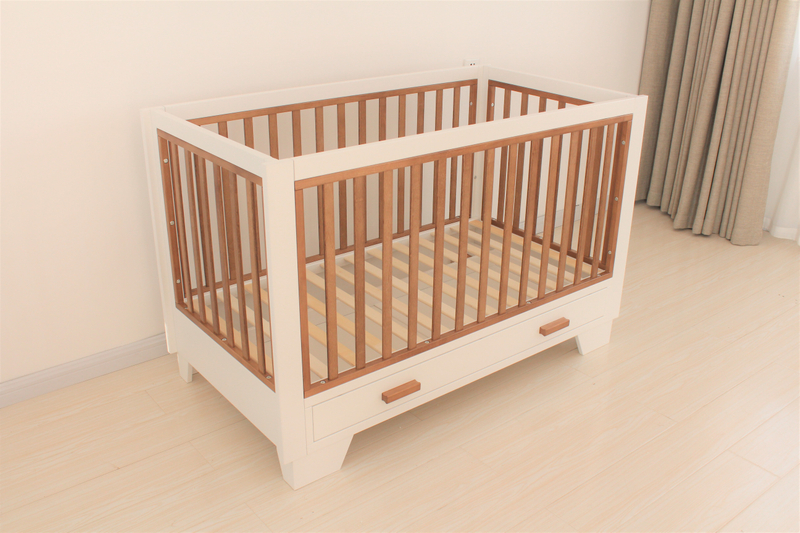
A household cot is a more permanent baby sleeping enclosure designed mainly for regular use in the home. It is typically placed in a nursery, bedroom, or family living environment where the baby sleeps every day. Compared with many portable products, a household cot usually has a more rigid frame, a more stable overall structure, and a design focus on long-term daily use.
For this reason, household Cots are often seen as the standard solution for routine infant sleeping arrangements. Their construction is generally more robust, their structure is less dependent on moving joints, and their use is usually more predictable. When parents, brands, or distributors think about a product intended for everyday sleeping in a fixed place, household Cots are often the first category considered.
From a manufacturing point of view, household Cots are also easier to position as long-term nursery furniture. Buyers often expect these products to deliver reliable frame stability, consistent dimensions, good mattress compatibility, and clear safe-use guidance. In other words, a household cot is not simply a larger or less portable product. It is a category built around repeated home use.
A portable folding cot is a baby sleeping product designed to be folded for storage, transport, or temporary placement. Many buyers choose this type of product because it is easier to move, easier to store, and more convenient for travel, small apartments, guest rooms, or short-term stays.
Portable folding Cots are appealing because they solve a real lifestyle problem. Modern families often want flexibility. They may need a sleeping solution for grandparents’ homes, vacation travel, weekend visits, or compact living spaces. In these situations, portability becomes a major selling point.
However, convenience changes the engineering logic of the product. A portable folding cot must balance mobility with structural integrity. It must lock properly, unfold correctly, maintain a safe sleep surface, and resist accidental collapse or misuse. That means portability is not automatically a weakness, but it does introduce additional design and user-related safety variables. This is why portable folding Cots should be assessed on more than appearance or convenience alone.
The difference between these two categories is not just that one stays in the home and one can be folded. The deeper difference lies in product architecture, usage pattern, user behavior, and safety priorities.
A household cot is generally engineered around consistency. It is expected to remain assembled, remain in one place, and provide a stable sleeping space day after day. A portable folding cot is engineered around flexibility. It must be capable of repeated setup, repeated collapse, and use in changing environments. That alone changes the safety discussion.
The comparison between these two kinds of Cots becomes clearer when buyers evaluate the following dimensions.
Household Cots usually have the advantage in pure structural stability. Because they are not primarily built around folding mechanisms, they often rely on a more rigid frame design and fewer moving parts. This tends to reduce the number of failure points in daily use.
Portable folding Cots, by contrast, depend on hinges, joints, locking systems, and collapsible frame logic. A well-designed portable folding cot can still be safe and effective, but it has to perform correctly through every stage of opening, locking, use, and storage. That means structure and user interaction are more tightly connected.
A household cot is generally intended for everyday nursery use. A portable folding cot is more commonly intended for temporary, travel-related, or flexible placement. That does not mean a portable folding cot cannot be used frequently, but it does mean its strongest value proposition is often portability rather than permanent in-room placement.
Portable folding Cots clearly offer greater convenience for travel and storage. This makes them attractive for families who move often, live in smaller homes, or need an extra baby sleeping product in multiple locations. Household Cots offer less mobility, but greater permanence and typically greater peace of mind for full-time use.
Household Cots are less likely to be repeatedly assembled and collapsed, so user error after initial setup is often lower. Portable folding Cots require more interaction. If users fail to fully lock the frame, use the wrong mattress, or set up the product incorrectly, risk increases. In practice, this is one of the most important differences between the two categories.
A safe sleep surface depends on more than the frame. Household Cots often benefit from more controlled mattress pairing for fixed home use. Portable folding Cots may use thinner or more specialized mattresses, and the sleep surface must remain flat, stable, and correctly fitted. This means mattress compatibility is critical in both categories, but especially important where portability and compact storage shape the design.
The most accurate answer is that neither type is automatically safer in every situation. Safety depends on product design, intended use, correct setup, proper mattress fit, and compliance with the applicable market requirements. However, for everyday home use, a household cot is generally considered the safer choice because it is usually more stable, more rigid, and less dependent on folding mechanisms.
That said, portable folding Cots should not be dismissed as unsafe. A well-designed portable folding cot can be a safe and practical product when it is used for the purpose it was designed for, assembled correctly, fully locked, and supplied with a proper sleep surface and clear instructions. The problem is not portability itself. The problem is poor design, poor locking reliability, poor user guidance, or misuse.
So if the question is “Which is safer for daily home use?” the answer often leans toward household Cots. If the question is “Can a portable folding cot be safe when used correctly?” the answer is also yes. The right conclusion is not that one category always wins. The right conclusion is that the safer product is the one that matches the use case and is properly designed, tested, and used.
For everyday home sleeping routines, household Cots are often preferred because they are built around stability and consistency. Their structure is usually more robust, their position in the home is more fixed, and their performance is less influenced by repeated folding and unfolding. This makes them especially suitable for parents who want a long-term sleeping setup in a nursery or bedroom.
Another advantage of household Cots is predictability. Once assembled correctly, they tend to remain in the same condition without frequent mechanical interaction. This can reduce user mistakes over time. Retailers and importers also often see household Cots as the more traditional daily-use category, which makes them easier to position for customers looking for primary sleep furniture.
In product development terms, household Cots also allow more emphasis on enduring structure, long-term visual quality, and furniture-style design. That is why many manufacturers treat them as a flagship category for regular home use.
Portable folding Cots become highly attractive when flexibility matters. Families who travel, live in smaller apartments, split time between multiple homes, or need a temporary sleeping arrangement often value portability as much as structure. In these scenarios, a portable folding cot can be a very practical choice.
For example, when a family needs a cot at grandparents’ home, in a hotel, or in a secondary room, a portable folding cot can provide convenience that household Cots simply do not offer. The key point is that the product should be chosen with its real-life use case in mind. A portable folding cot is strongest when it is treated as a flexible sleeping solution, not when it is expected to function identically to a fixed household cot in every respect.
When comparing household Cots and portable folding Cots, buyers should focus on specific hazards rather than broad marketing language. Safety risks are usually easier to understand when broken into practical categories.
Instability is one of the most important issues in baby sleeping products. Household Cots usually reduce this risk through a more rigid frame, while portable folding Cots must prove that their folding structure can remain stable during real use. Locking systems, joints, connectors, and frame geometry all matter here.
Entrapment can occur when there are dangerous gaps, poor side construction, or incorrect mattress fit. This risk applies to all Cots. If openings are too large, if the mattress does not fit properly, or if the product structure changes under load, the cot may become unsafe.
A safe sleep environment depends on a flat and firm sleep surface, correct mattress use, and the absence of unsafe accessories or gaps. Portable folding Cots can face additional attention in this area because thin mattresses, flexible surfaces, or incompatible replacements can affect performance. Household Cots also need precise mattress guidance.
As babies grow, side height and enclosure design become increasingly important. Both household Cots and portable folding Cots must support safe containment for the appropriate age and developmental stage.
A compliant product can still become unsafe if the user assembles it incorrectly, fails to lock it fully, adds an unapproved mattress, or ignores warnings. Misuse risk tends to be higher where the product is folded, transported, or reassembled regularly. This is why instructions and intuitive design matter so much.
Whether a buyer chooses household Cots or portable folding Cots, the following features deserve close attention:
● A strong and stable frame that resists deformation during normal use
● Secure joints, fasteners, and hardware that remain reliable over time
● Safe side construction with no hazardous gaps or openings
● Proper mattress compatibility and clear mattress specifications
● A flat, firm, and stable sleep surface
● Reliable locking systems in portable folding Cots
● Clear warnings, labels, and step-by-step instructions
● Consistent manufacturing quality across production batches
These points are especially valuable for B2B buyers because they help move the conversation away from vague claims like “premium quality” and toward measurable product performance.
Comparison Point | Household Cot | Portable Folding Cot |
Main Use Scenario | Daily home or nursery use | Travel, temporary use, flexible placement |
Structure | More rigid and permanent | Foldable and more mechanically complex |
Stability | Usually stronger for routine use | Depends heavily on locking and setup quality |
Portability | Low | High |
Assembly Frequency | Usually assembled once and left in place | Repeated setup and folding are common |
Misuse Risk | Lower after correct installation | Higher if locking or setup is incomplete |
Mattress Control | Often easier to standardize | Must be matched carefully to folding design |
Best For | Families wanting a primary sleep solution | Families needing mobility and convenience |
The table above shows why comparing Cots is not simply a matter of saying one is good and one is bad. The better question is which product is safer for the intended use case.
When sourcing Cots, buyers should never assume that one generic test report is enough. Safety requirements depend on the destination market and product classification. In practical terms, the first step is always to confirm whether the product is being treated as a household cot, a folding cot, or another infant sleep product category in the target market.
In the United States, buyers commonly need to distinguish between crib categories rather than relying only on everyday trade language. In the UK and Europe, children’s cot and folding cot requirements are often discussed through established furniture safety standards and related mattress considerations. In Australia and nearby markets, newer infant sleep product rules have sharpened attention on classification, warnings, and product-specific requirements.
The key lesson for importers is simple: do not ask only whether the product “has a test report.” Ask what exactly was tested, under which product category, for which market, and whether the report matches the final commercial design. This is one of the most important sourcing habits in the Cots business.
Today’s Cots market is shaped by more than traditional structure testing. Several broader trends are changing how buyers compare safety.
First, safe-sleep messaging has become more important. Buyers now pay closer attention to whether the product is presented as a primary sleep solution, a temporary travel product, or a flexible multi-use item. Marketing language can influence how a product is understood and judged.
Second, mattress compatibility is receiving more scrutiny. More buyers understand that the cot frame and mattress work together as a safety system. This means better manufacturers now provide more detailed guidance instead of leaving mattress selection vague.
Third, user instructions matter more than before. With portable folding Cots, the clarity of setup instructions, lock indicators, warning labels, and product markings can significantly affect safe real-world use.
Fourth, traceability and compliance transparency are becoming stronger expectations in global trade. Importers increasingly want to know not only that a factory can make Cots, but that it can explain standards, control production, maintain specifications, and support documentation.
For professional buyers comparing Cots, asking better questions early can prevent expensive mistakes later. A useful checklist includes the following:
● Is this product positioned as a household cot or a portable folding cot?
● What is the intended use scenario?
● Which market is it designed for?
● What mattress size and thickness are required?
● What safety testing has been completed?
● What warnings and instructions come with the product?
● How does the factory control frame consistency, hardware quality, and dimensional tolerance?
These questions help buyers evaluate Cots based on real safety and compliance logic rather than only cost or styling.

Buyer Question | Why It Matters | What a Strong Supplier Should Provide |
Is this a household cot or a portable folding cot? | Product classification affects safety evaluation and market positioning | A clear product category explanation |
What market is this cot designed for? | Different markets may require different compliance paths | Market-specific guidance, not vague claims |
What mattress works with this cot? | Mattress mismatch can create risk | Exact mattress dimensions and usage guidance |
What testing has been done? | Reports must match the product and target market | Relevant, up-to-date supporting documents |
What warnings and instructions are included? | Safe use depends on user understanding | Draft manuals, labels, and clear warning content |
How is production quality controlled? | A safe sample is not enough without batch consistency | Inspection and QC process details |
In the Cots industry, safety does not start in the testing lab. It starts at the design stage. A professional manufacturer considers frame geometry, material selection, locking integrity, mattress interface, user behavior, packaging, labeling, and production consistency long before mass production begins.
This is especially important when comparing household Cots and portable folding Cots. The two categories may target different users and different usage patterns, so they should not be engineered or marketed in exactly the same way. A professional factory understands that daily-use nursery products and travel-oriented folding products require different priorities, even when both are safe when designed properly.
For brands and importers, that manufacturing experience creates real value. It helps reduce sourcing risk, improve consistency, clarify compliance planning, and support long-term customer trust. In a competitive market, buyers do not only need factories that can produce Cots. They need manufacturing partners who understand why certain Cots are better suited to certain use cases and how to turn that understanding into safer products.
When comparing a household cot and a portable folding cot, the safer choice depends on the intended use. For everyday home use, household Cots are generally the more stable option, while portable folding Cots can be a safe and practical solution for travel or temporary use when they are properly designed and used correctly.
For buyers, the key is to evaluate Cots based on structure, mattress fit, instructions, and market-specific compliance rather than convenience alone. At Auready Wood Industry Co.,Ltd, we believe safe and reliable Cots begin with thoughtful design, strict quality control, and a clear understanding of global market requirements.
For daily home use, a household cot is usually considered safer because it typically offers stronger frame stability and fewer moving parts. However, portable folding Cots can also be safe when they are properly designed, fully locked, correctly assembled, and used for their intended purpose.
Some buyers may consider using portable folding Cots more frequently, but these products are generally most attractive for travel, temporary use, or flexible placement. Daily use decisions should always depend on product design, manufacturer guidance, and the applicable market expectations.
The most common concerns include incomplete locking, setup mistakes, poor mattress fit, and misuse. This is why portable folding Cots need clear instructions, reliable locking mechanisms, and carefully matched sleep surfaces.
You should check product classification, target market, testing status, mattress specifications, warning labels, instructions, and factory quality control. For both household Cots and portable folding Cots, these points are far more important than appearance alone.
The right choice depends on your customer needs and how the product will actually be used. If your customers want a primary nursery sleep product, household Cots may be the better fit. If they need mobility and temporary convenience, portable folding Cots may be more suitable. In both cases, market-specific compliance and safe design should guide the decision.


