
- All
- Product Name
- Product Keyword
- Product Model
- Product Summary
- Product Description
- Multi Field Search


Views: 0 Author: Site Editor Publish Time: 2026-06-23 Origin: Site


Expecting parents often face a core conflict when planning their nursery. You desire effortless room mobility, but infant safety remains a strict, non-negotiable demand. We understand the strong appeal of gliding furniture easily across a room. However, a crib is never merely a static sleeping space. When you incorporate casters, it transforms into a highly dynamic piece of furniture. This critical change requires rigorous mechanical evaluation. Daily convenience must never overshadow structural stability. Our primary objective is to provide an evidence-based breakdown of these features. We will explore why robust locking mechanisms matter immensely. You will learn how to evaluate hardware quality effectively and independently. We will also outline the specific compliance standards you should verify before purchasing. By understanding caster materials and engagement styles, you avoid common safety pitfalls. Let us dive into the mechanics of securing your mobile sleep environment.
Wheels add significant functional value for postpartum recovery, room-sharing, and cleaning, but fundamentally alter the crib's structural stability profile.
A lockable baby crib is not a luxury; it is a baseline safety requirement to prevent unintended movement caused by siblings, pets, or an active toddler.
Not all casters are equal: evaluation must focus on lock engagement type, wheel material, and adherence to CPSC/ASTM safety standards.
Purchasing decisions should weigh the convenience of mobility against the diligence required to consistently engage the locking mechanisms.
Parents encounter multiple friction points during the first year of a baby’s life. Moving heavy furniture ranks high among these daily annoyances. When you need to reorganize a room or soothe a crying infant at 3 AM, a stationary bed often feels like a barrier. We must examine the specific reasons why families actively seek out a Baby Crib With Wheels to solve these logistical problems.
Room-Sharing and Layout Flexibility: Medical professionals widely recommend room-sharing for the first six months. However, traditional cribs are bulky and notoriously difficult to maneuver. A wheeled frame allows you to transition the unit between the primary bedroom and the nursery effortlessly. You bypass the frustrating process of dismantling the frame to fit it through standard doorways.
Ergonomics and Postpartum Recovery: Physical recovery after childbirth demands careful movement. Reaching, bending, or lifting heavy objects can severely strain a healing body. Mobility features reduce this physical toll. You can easily pull the mattress closer to your bedside for late-night feedings. This ergonomic advantage protects your back and aids in a faster, more comfortable postpartum recovery.
Sanitation and Maintenance: Nurseries require frequent cleaning to minimize dust and allergens. Stationary models create dark, inaccessible zones where dirt accumulates quickly. Casters eliminate this pain point. You simply unlock the frame, roll it aside, and run your vacuum over the previously blocked floor space. This facilitates a much healthier breathing environment for your infant.
These functional benefits are undeniable. They directly reduce the physical and logistical stress placed on new parents. However, this convenience introduces a new set of mechanical responsibilities. A mobile frame must be anchored securely when not in active transit.
A skeptical buyer rightfully questions the wisdom of putting an infant’s bed on wheels. Unintended rolling and structural compromise are valid concerns. Addressing these fears requires looking at the issue through a strict security and compliance lens.
Federal bodies like the Consumer Product Safety Commission (CPSC) and industry groups like ASTM International regulate infant furniture closely. They view mobility as a potential hazard if not properly managed. According to their alignment, wheels are permissible only if they feature highly reliable locking mechanisms. A secure Lockable Baby Crib satisfies these strict safety mandates by providing a stable, immovable base upon demand.
We must also consider the physics of an active toddler. An infant transitions quickly from a passive newborn to a 30-pound toddler who pulls up, stands, and jumps. This shifting center of gravity generates significant kinetic energy. Simple floor friction cannot resist this lateral force. If the wheels lack proper locks, the child’s momentum will cause the frame to slide. This shifting creates dangerous gaps between the bed and surrounding walls or furniture.
External factors compound this risk daily. Consider the environment outside of the crib itself. Uneven flooring can cause a slow, unnoticed drift. An older sibling might lean against the frame during playtime. Large pets often bump into furniture while walking past. These everyday occurrences reinforce why dependable wheel locks are absolutely essential. They transform a rolling hazard back into a secure fortress.
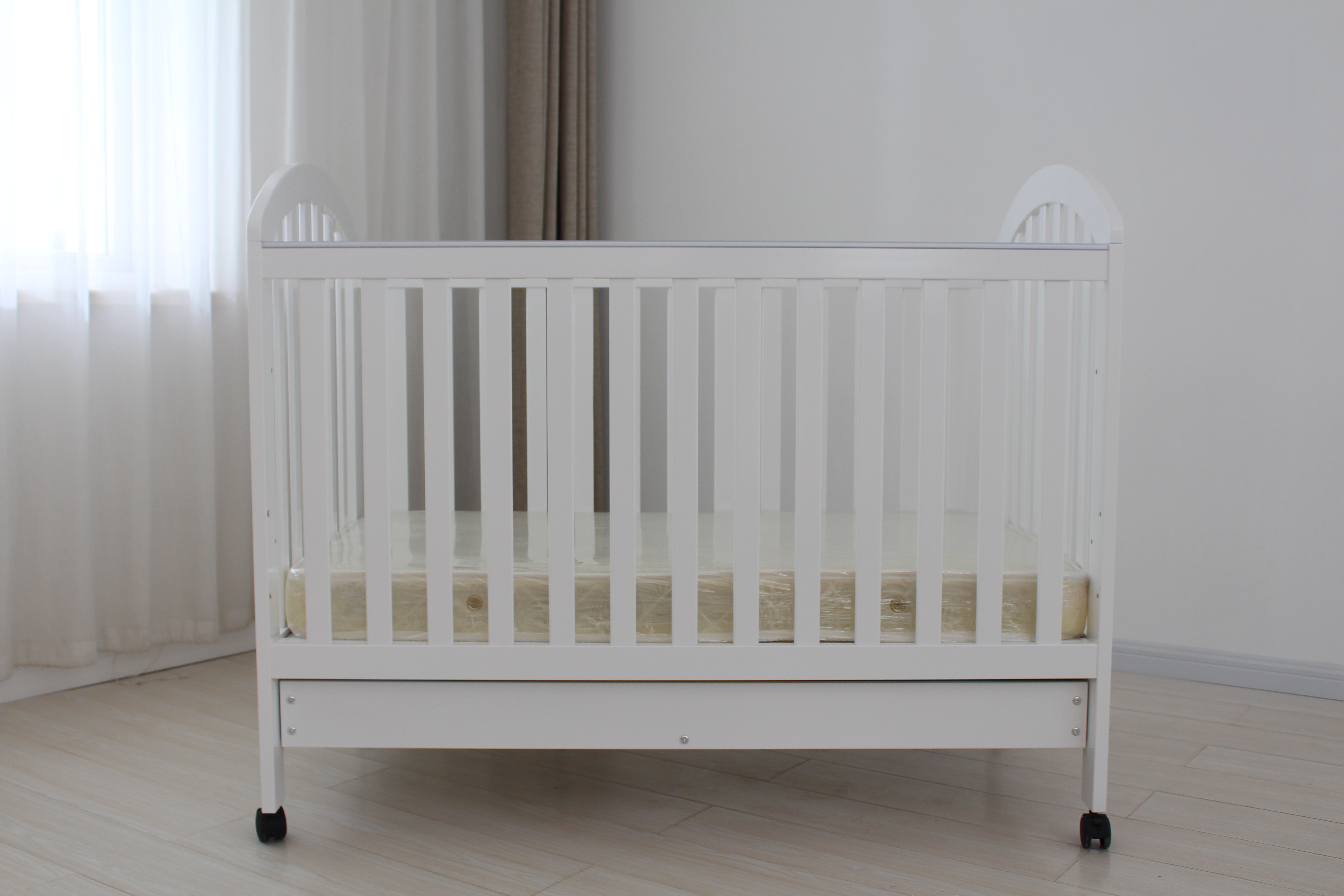
Understanding the theory of safety is helpful, but you must know how to inspect the hardware. When shopping, shift your focus from aesthetics to specific assessment criteria. The materials and engagement styles dictate the lifespan and safety of the product.
Not all wheels perform equally on household floors. Manufacturers typically use two main categories of materials for casters. Your choice impacts noise, floor preservation, and rolling friction.
Caster Material | Floor Safety | Noise Level | Friction / Grip Quality |
|---|---|---|---|
Polyurethane / Rubber-Coated | Excellent (Will not scratch hardwoods) | Silent, smooth gliding | High grip; resists unwanted sliding even when unlocked |
Hard Plastic / Nylon | Poor (Prone to scratching or denting floors) | Loud, rattling during movement | Low friction; easily slides on smooth surfaces |
Polyurethane wheels represent the premium standard. They protect expensive flooring and glide without waking a sleeping infant. Avoid hard plastic casters whenever possible. They rattle loudly and fail to grip slick surfaces effectively.
The lock itself is the most critical hardware component. You must evaluate how the lock engages and how many wheels feature braking capability.
Chart: Engagement Style Comparison
Engagement Style | Ease of Use | Risk of Accidental Disengagement |
|---|---|---|
Foot-Pedal Locks | High. Engaged quickly with a downward step. | Moderate. Can be bumped by a sweeping broom or a pet. |
Manual Hand Switches | Moderate. Requires bending down to flip the latch. | Low. Highly secure and difficult to accidentally knock loose. |
Industry standards mandate minimum dual-locking systems. This means at least two out of the four wheels must have brakes. However, four-wheel locks offer maximum stability. Securing all four corners prevents the frame from pivoting on a central axis when a child jumps.
Finally, consider the "silent" factor. Evaluate the mechanical noise generated when engaging the lock. A loud metallic click might startle a freshly soothed infant. High-quality mechanisms feature damped, silent engagement levers. This allows you to secure the bed without interrupting naptime.
Even the highest quality hardware requires proper human implementation. We must ground our expectations in real-world usage realities. The primary risk associated with a mobile frame is user error. Parents face exhaustion. It is incredibly easy to move the bed to vacuum, push it back, and simply forget to flip the levers down. This human error leaves the child vulnerable to the physics we discussed earlier. Diligence is a daily requirement.
Flooring limitations also play a massive role in functionality. Plush, high-pile carpets often render small wheels entirely ineffective. The casters sink into the fibers, and pushing the frame requires immense effort. Conversely, highly polished hardwood floors present the opposite challenge. If you purchase inferior plastic casters, even locked wheels might slide across a slick floor. You must match the wheel material to your specific home environment.
Furthermore, acknowledge the realities of transitioning out of the mobile phase. Infants grow rapidly. As your child learns to sit and pull up, you must lower the mattress. Eventually, the child’s increased strength and activity level diminish the need for mobility altogether. When assessing a frame, evaluate whether the casters are safely removable. Removing them permanently converts the bed into a highly stable, traditional frame for the active toddler years.
Common Mistakes to Avoid:
Assuming two locked wheels provide the same stability as four.
Relying on caster locks on heavily slanted or highly waxed floors.
Leaving tools or toys near foot-pedal locks where toddlers can reach them.
You need a concrete checklist for evaluation before finalizing a purchase. Use this shortlisting logic to filter out unsafe or inferior products.
Certification Verification: Always look for the JPMA (Juvenile Products Manufacturers Association) seal. This certification ensures the product has undergone rigorous third-party stability testing. Crucially, it verifies the frame passed these tip-over and stability tests with the wheels fully attached and engaged.
Weight Capacity Clarification: Check the stated weight limits carefully. Confirm that the specified limits explicitly include the load-bearing capacity of the casters. The wood might hold fifty pounds, but cheap metal caster stems can snap under the same dynamic weight.
Warranty on Moving Parts: Hardware eventually fails under stress. Check if the manufacturer covers the wheel mechanisms under their standard warranty. Reputable brands often offer replacement casters. This ensures a broken lock does not render the entire bed unsafe or unusable.
Physical Inspection (If Possible): If buying in-store, test the lateral sway. Lock the floor model and push firmly against the top rail. The frame should remain rigid without excessive rattling at the caster base.
By following this framework, you strip away marketing claims and focus strictly on verified mechanical safety. You protect your investment and, most importantly, your child.
Lockable wheels are far more than a convenient add-on; they are the definitive feature making a mobile nursery safe. While mobility aids greatly in room-sharing, postpartum recovery, and sanitation, it inherently changes the structural dynamics of the furniture. Without robust, high-quality brakes, a rolling frame poses severe risks to an active child.
To ensure a safe environment, always prioritize polyurethane wheels over hard plastic. Demand multi-wheel locking systems and verify that the product carries recognized safety certifications like the JPMA seal. The convenience of a mobile setup is wonderful, but it demands your daily diligence to keep those locks engaged.
Your actionable next step is simple. Before you click "buy," meticulously check the caster specifications of your top two or three choices. Verify their CPSC compliance, assess the flooring in your nursery, and ensure the wheel mechanics meet the stringent standards outlined in this guide.
A: No. Adding DIY aftermarket wheels poses severe safety risks and instantly voids the manufacturer’s warranty. Standard legs are not engineered to handle the concentrated shear stress created by caster stems. This modification can cause the wood to split, leading to catastrophic frame collapse.
A: Yes, they can. Hardware fatigue occurs with daily use, especially if you forcefully push the bed while the brakes are engaged. It is vital to perform routine physical checks every month. Ensure the levers still click firmly into place and do not slip under lateral pressure.
A: It depends on the material. Polyurethane or rubberized casters are entirely safe and will not scratch or dent premium hardwoods. However, hard plastic or nylon wheels can cause severe surface damage and often slide even when locked. Always specify rubberized wheels for hard flooring.
A: It is highly recommended. Once an active toddler begins pulling up, shaking the rails, or jumping, the dynamic forces increase dramatically. Removing the wheels and placing the frame flat on the floor provides the maximum possible stability, eliminating any risk of the lock failing under extreme toddler activity.


