
- All
- Product Name
- Product Keyword
- Product Model
- Product Summary
- Product Description
- Multi Field Search


Views: 0 Author: Site Editor Publish Time: 2026-08-18 Origin: Site


The "buy it once" promise of convertible nursery furniture sounds highly appealing on paper. You purchase a single bed, and it theoretically grows with your child from day one through high school. However, the reality of child development, hardware degradation, and changing spatial needs complicates this narrative. Buyers face a distinct choice. You either absorb a higher upfront cost for a multi-stage bed or purchase cheaper, stage-specific beds over time. Choosing the wrong path risks higher cumulative expenses and unnecessary furniture waste.
Determining the true return on investment requires looking past marketing claims. You must evaluate lifecycle expenses, structural durability, independent safety testing, hidden hardware requirements, and practical implementation risks. We will break down exactly what you get when you invest in convertible Cots and how to avoid common purchasing traps that leave parents with unusable furniture parts years down the line.
Lifecycle Cost vs. Upfront Premium: Convertible models require a higher initial investment and often rely on separately sold conversion kits, which alters the true break-even point.
The Durability Mandate: A bed designed to last from infancy to adolescence must meet stringent material standards; assessing the track record of the baby cot manufacturer is critical.
The "Next Child" Variable: For families planning multiple children in quick succession, standard beds are often more practical, as the original bed will be needed for the new infant before the older child reaches the final conversion stage.
Space and Aesthetic Realities: Converted full-size beds require significantly more floor space, and the furniture will accumulate a decade of wear-and-tear.
Sustainability and Convenience: When executed correctly, a single convertible bed reduces landfill waste and saves the time associated with researching and assembling new furniture at every developmental milestone.
Understanding the fundamental trade-offs helps narrow down your furniture strategy. Convertible frames offer distinct advantages for specific household planning models. They also carry inherent risks that standard frames avoid entirely. You must weigh these factors against your specific living situation and long-term family planning goals.
Long-term expense reduction if you purchase all conversion parts upfront and maintain the hardware properly.
Familiarity for the child, which often eases difficult sleep transitions between the infant and toddler stages.
Eco-friendly reduction of bulky furniture waste entering landfills, as you bypass the need for standalone transitional beds.
Time saved bypassing future furniture shopping cycles, delivery scheduling, and assembly frustrations.
Higher initial purchase requirement compared to fixed-stage alternatives.
Severe risk of discontinued conversion kits if you delay purchasing the toddler and full-size rails.
Aesthetic fatigue and accumulated physical damage over ten or more years of daily use.
Potential mismatch with future bedroom space constraints as the bed expands to its final footprint.
Defining what "convertible" actually means in practice is your first step. The term encompasses several different structural approaches. Not all models offer the same transition paths. Knowing the exact configuration category prevents unexpected limitations when your child outgrows the infant stage.
Manufacturers generally divide these beds into two main categories. The first category includes 2-in-1 and 3-in-1 models. These units transition from the infant stage to a toddler bed. Many also convert into a daybed by removing the front panel entirely and dropping the mattress to the lowest setting. This setup works well for the first four to five years of a child's life but stops there.
The second category includes 4-in-1 and 5-in-1 models. These extend the transition much further. They eventually convert into a full-size adult bed. In this configuration, the original back panel becomes the headboard. The original front panel becomes the footboard. You then connect them using long wooden rails. Some models only utilize the headboard, requiring you to attach it to a standard metal mattress frame.
Most models do not include the toddler rail in the initial box. Full-size bed rails are almost never included. You are buying the potential to convert, not the complete system. This creates a massive supply chain risk. Manufacturers update their furniture lines every two to three years. Colors change, finishes change, and bracket alignments shift.
If you buy a frame today and wait five years to buy the full-size bed rails, that specific finish will likely be out of production. You will be left with a perfectly good headboard that cannot attach to anything. The only workaround is buying a generic metal bed frame and attempting to bolt the headboard to it, which often results in a wobbly, unsafe structure. This forces you to buy a completely new bed anyway, entirely defeating the purpose of the initial premium investment.
Purchasing a convertible model ties you to a specific brand's proprietary hardware. You enter a closed design ecosystem for the next decade. Standard bed frames allow you to mix and match parts from various suppliers. Convertible frames demand exact matching rails, brackets, and barrel nuts. If a specialized bracket breaks during a move, you must source it directly from the original manufacturer. Hardware stores rarely carry the exact metric pitch and length required by foreign furniture makers.
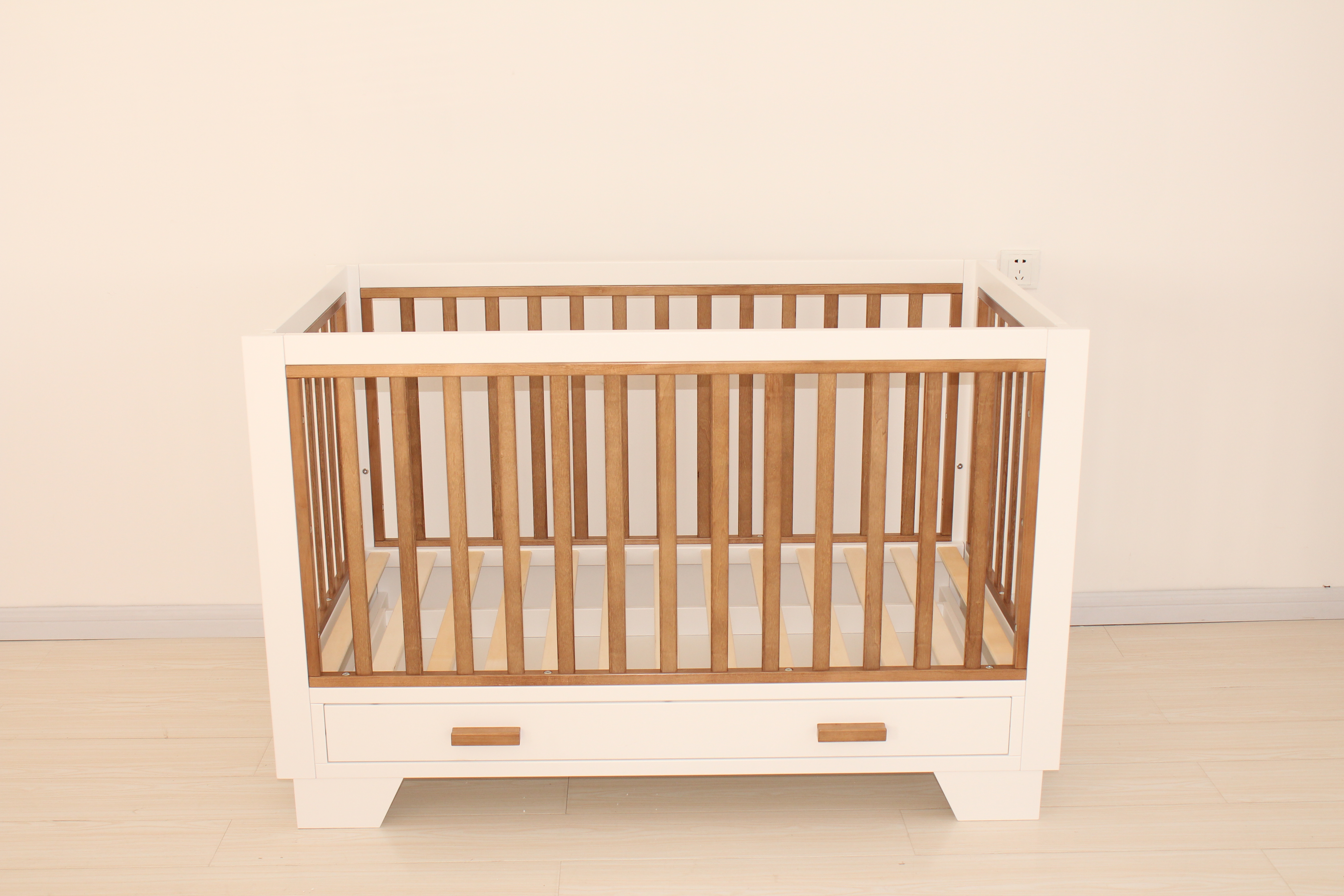
Establishing a framework for calculating long-term expenses over a ten-year timeline is necessary. You must look beyond the sticker shock of day one. A proper evaluation weighs the cumulative financial impact against the lifestyle benefits of reduced shopping fatigue.
Consider two distinct purchasing routes. Scenario A represents the standard route. You buy a fixed infant bed, later purchase a separate toddler bed, and finally buy a separate twin or full bed. Scenario B represents the convertible route. You buy the initial unit, the toddler kit, the full-size kit, and eventually a full-size mattress.
Lifecycle Expense Comparison
Lifecycle Stage | Standard Route (Scenario A) | Convertible Route (Scenario B) | Hardware Required |
|---|---|---|---|
Infant Stage (0-2 Years) | Standard Frame Purchase | Convertible Frame Purchase | Included Hardware |
Toddler Stage (2-4 Years) | Secondary Toddler Bed Purchase | Toddler Conversion Kit Purchase | Proprietary Half-Rail |
Childhood Stage (4+ Years) | Final Twin/Full Bed Purchase | Full-Size Conversion Kit Purchase | Proprietary Long Rails |
Mattress Requirements | Infant, Toddler, Twin/Full | Infant, Full-Size Mattress | Standard Sizing |
Hardware Risk Level | Low (Independent Units) | High (Requires Proprietary Parts) | Varies by Brand |
Factor in the unquantifiable value of time saved. Avoiding the research, purchasing, and assembly of three separate beds holds massive appeal. Parents reclaim weekends otherwise spent navigating furniture stores and breaking down cardboard boxes. The environmental return on investment is equally compelling. Keeping transitional furniture out of landfills aligns with sustainable household practices. You eliminate the manufacturing and shipping carbon footprint of two entirely separate beds.
While the frame converts, the infant mattress does not scale. The final full-size bed configuration requires a completely new mattress. Many buyers overlook this eventual expenditure. The transition from toddler daybed to full-size bed triggers a mandatory mattress upgrade. You must factor this into your long-term budgeting framework. You will also need new sheets, blankets, and mattress protectors sized for the larger footprint.
The secondary market prices multi-stage furniture based on completeness. A frame missing its conversion hardware severely depreciates in resale value. Buyers want the full system. If you lose the toddler rail or the specific bolts needed for conversion, the unit becomes virtually unsellable. Proper hardware storage dictates your ability to recoup funds later. A complete set with all original manuals and hardware bags intact commands a premium on local resale marketplaces.
Assessing if a frame can withstand a decade of continuous use requires technical scrutiny. Active toddlers test the limits of furniture joints. You must evaluate materials, hardware types, and manufacturing standards before committing to a long-term piece.
Solid wood frames handle dynamic loads far better than engineered alternatives. Hardwoods like European beech or oak resist denting and structural fatigue. They hold metal fasteners tightly. Engineered wood, such as MDF (Medium Density Fiberboard) or particleboard, degrades faster under stress. Repeated assembly and disassembly weaken engineered wood joints rapidly. Once an MDF joint strips out, you cannot repair it easily. The internal fibers turn to dust, permanently compromising the connection.
Hardware quality matters just as much as the wood. Look for metal-on-metal threaded inserts. These allow for repeated assembly without damaging the frame. Direct wood screws strip the surrounding timber over time. A bed meant to transform three times must utilize threaded metal inserts and barrel nuts to maintain structural integrity.
Material Durability Matrix
Material Type | Impact Resistance | Joint Strength Over Time | Best Use Case |
|---|---|---|---|
Hardwood (Beech/Oak) | High | Excellent | 4-in-1 Long Term Conversions |
Softwood (Pine) | Low (Dents Easily) | Moderate | 2-in-1 Short Term Conversions |
Engineered Wood (MDF) | Moderate | Poor (Strips Easily) | Fixed Stage Furniture Only |
Residential buyers can learn heavily from daycare and hospitality standards. Sourcing commercial nursery furniture prioritizes reinforced joints and non-toxic, commercial-grade finishes. Interestingly, commercial facilities often avoid complex convertible models. They favor fixed, heavy-duty units that require zero mechanical adjustments. This highlights the inherent structural vulnerability introduced by moving parts and conversion joints. If you choose a convertible model for home use, you must replicate commercial maintenance standards by checking and tightening bolts every six months.
Always check the track record of the baby cot manufacturer. Look for JPMA (Juvenile Products Manufacturers Association) certification. Greenguard Gold certification ensures low chemical emissions, which is vital for indoor air quality. Review the manufacturer's recall history. Evaluate their warranty length and historical parts availability. A company known for discontinuing parts quickly or ignoring warranty claims is a poor choice for a ten-year investment.
Seek out models that have undergone rigorous third-party lab testing. The frame must maintain structural integrity across all conversion stages. A bed might be perfectly safe for an infant but wobble dangerously when expanded to a full-size frame. Independent testing verifies stability, shear strength, and weight capacity at every intended configuration.
The day-to-day realities of family life often derail the ten-year plan for multi-stage furniture. You must anticipate aesthetic changes, spatial limitations, and logistical hurdles. Planning for these risks prevents frustration down the line.
Furniture accumulates damage during the toddler years. Teething marks scar the top rails. Toys scratch the side panels. Structural loosening occurs as children jump against the frame. By the time you convert the unit to a full-size bed, it carries a decade of visible wear. Furthermore, consider the psychological factor. A teenager may reject a bed that still visually resembles their infant furniture, regardless of how functional it remains.
Map the footprint of a converted full-size bed against your secondary bedroom dimensions. A full-size bed consumes significant floor space. Standard twin beds offer much more room layout flexibility. If the bedroom is small, expanding the infant frame into a massive full-size bed might eliminate play space or room for a desk.
Room Footprint Analysis
Bed Configuration | Average Dimensions (Inches) | Floor Space Required (Sq Ft) | Impact on a 10x10 Room |
|---|---|---|---|
Infant / Toddler Stage | 30" W x 54" L | 11.25 | Leaves ample play space |
Standard Twin Bed | 38" W x 75" L | 19.79 | Allows room for a desk |
Converted Full-Size Bed | 54" W x 75" L | 28.12 | Dominates the room layout |
The logistical burden of safely storing conversion rails is substantial. You must keep large wooden rails, specific bolts, and instruction manuals safe for three to five years. Loss or damage to these parts renders the conversion impossible. Storing these in an attic exposes them to extreme heat, which bakes the moisture out of the wood and causes warping. Storing them in a basement exposes them to humidity, causing swelling. When wood warps even a quarter of an inch, the pre-drilled holes will no longer align with the metal inserts on the headboard.
Purchase all conversion kits on the same receipt as the main frame.
Leave the conversion rails in their original cardboard packaging.
Tape a heavy-duty Ziploc bag containing all proprietary hardware directly to the rails.
Store the boxes flat under a guest bed or upright in a climate-controlled closet.
Tailoring your purchasing strategy to your specific scale and needs ensures the best outcome. Different buyers require different sourcing channels. The approach varies wildly between a single-family home and a multi-unit facility.
Individual families usually benefit from direct-to-consumer brands or big box retail. This route prioritizes aesthetics and specific brand ecosystems. Retail channels offer easy returns and accessible customer service for single-unit buyers. You can inspect floor models to gauge the sturdiness of the wood and the quality of the finish before committing to the purchase.
Evaluating bulk purchasing makes sense for multi-child households, foster organizations, or boutique hospitality venues. Sourcing wholesale baby cots impacts upfront capital requirements significantly. It streamlines warranty claims and replacement part logistics. When buying in bulk, standardize on one specific model. This creates a unified parts inventory, allowing you to swap hardware between units if a specific bolt strips or a rail sustains damage.
Measure the intended bedroom to confirm it can accommodate a 54-inch by 75-inch full-size bed footprint before purchasing a 4-in-1 model.
Verify the availability of all toddler and full-size conversion kits and purchase them on the same receipt as the main frame.
Establish a secure, climate-controlled storage location inside the house to prevent wooden conversion rails from warping over a five-year period.
Inspect the frame hardware upon delivery to ensure the manufacturer uses metal-on-metal threaded inserts rather than standard wood screws.
A: Most models do not include the conversion kits in the initial purchase. You typically receive only the infant frame. Toddler rails and full-size bed rails require separate transactions. Buy these kits immediately to avoid the risk of the manufacturer discontinuing the specific parts later.
A: A high-quality solid wood model easily lasts 10 to 15 years, taking a child from infancy through early adolescence. Models made from engineered wood or MDF degrade faster. Repeated assembly and active toddler use loosen joints, significantly shortening the usable lifespan.
A: It is often cheaper upfront to buy standard, stage-specific beds. Convertible models carry a premium initial price tag. However, if you factor in the expense of buying three separate beds over ten years, a convertible model proves more economical overall.
A: Yes, they are generally more eco-friendly. Utilizing a single frame through multiple developmental stages drastically reduces furniture waste. It prevents transitional pieces, like standalone toddler beds, from ending up in landfills after only two years of use.
A: During the infant and toddler stages, you use a standard infant mattress. When you convert the frame to a full-size bed, you must purchase a standard full-size mattress. The original infant mattress will no longer fit the expanded frame.
A: Weight limits vary significantly by manufacturer and material quality. Solid wood frames with proper metal hardware often support 400 to 500 pounds in the full-size configuration. Always check the specific independent lab testing limits provided by the manufacturer.


