
- All
- Product Name
- Product Keyword
- Product Model
- Product Summary
- Product Description
- Multi Field Search


Views: 0 Author: Site Editor Publish Time: 2026-01-27 Origin: Site


When it comes to selecting the best sleeping arrangement for your baby, there are several options available, and two of the most popular choices are the cot and the cradle. While both are designed to provide a safe and comfortable sleeping environment for newborns, they have distinct features and purposes that may influence your decision.
In this article, we will break down the differences between a cot and a cradle, discussing their size, design, functionality, and safety features. By the end of this guide, you’ll have a clear understanding of which option might be best for you and your baby’s needs.
A cradle is a small, rockable bed designed to comfort newborns and help them sleep peacefully. Cradles have been used for centuries, and their gentle rocking motion has been known to help calm babies, mimicking the movements they felt while in the womb. Cradles are often considered ideal for the first few months of a baby’s life.
Rocking Motion: One of the most defining features of a cradle is the gentle rocking movement. Many cradles are designed to rock from side to side, helping soothe babies to sleep. Some cradles are even equipped with automatic rocking mechanisms to make this motion easier for parents.
Compact Size: Cradles are smaller than cots and cribs, making them perfect for keeping babies close by, whether in the parent’s bedroom or a nursery. Their compact design allows them to fit into smaller spaces and can be easily moved from room to room.
Portable: Cradles are typically lightweight and easy to transport, making them a flexible option for parents who want to move the baby around the house or take the cradle on trips.
While cradles provide the benefit of soothing rocking motion and portability, they typically have a shorter lifespan than cots due to their smaller size and limited weight capacity.
Ideal for newborns who need gentle rocking to fall asleep.
Easy to move from room to room.
Smaller and more compact, perfect for limited space.
Can only be used for a short period until the baby outgrows it.
Limited weight capacity as babies grow.
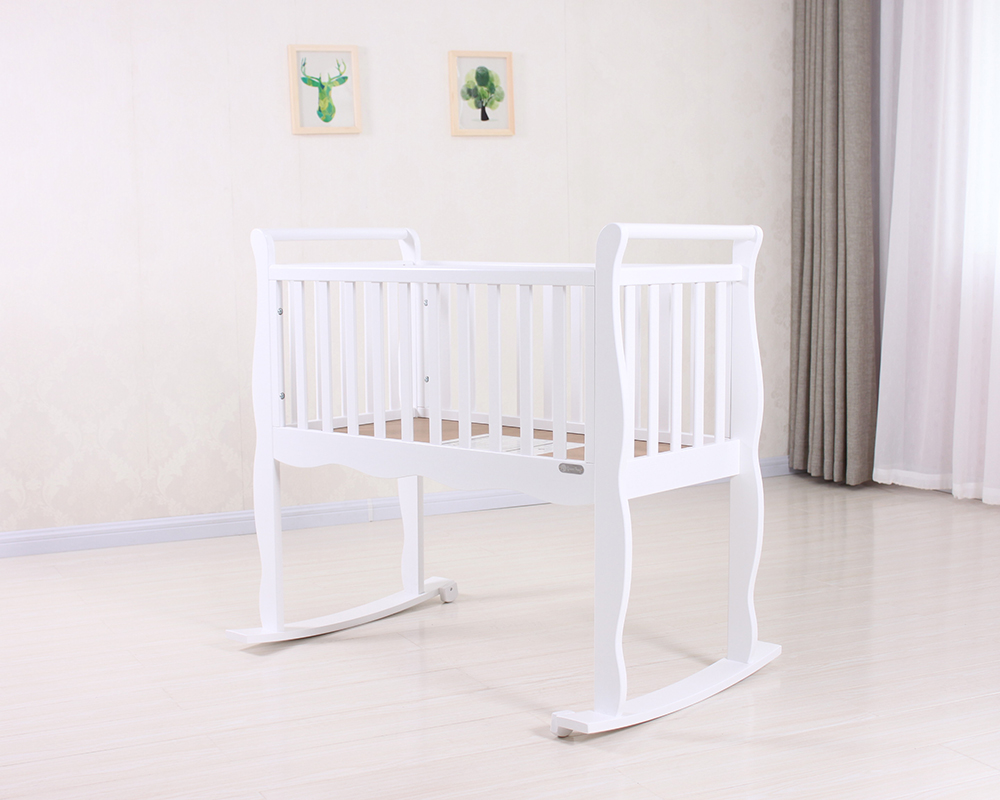
A cot, on the other hand, is a larger, stationary bed designed for babies and toddlers. Cots are built to accommodate babies as they grow, providing a long-term sleep solution that typically lasts from infancy through toddlerhood.
Stationary Design: Unlike cradles, cots do not move or rock. This makes them a stable option for babies who have outgrown the soothing motion of a cradle. Cots usually feature solid, sturdy sides and a firm mattress to ensure the baby is safe and secure.
Larger Size: Cots are larger than cradles and can accommodate babies as they grow. They typically have adjustable mattress heights, which allows parents to lower the mattress as the baby grows and begins to stand or sit up.
Longevity: While cradles are generally used for the first few months, a cot can serve your child for several years. Many cots are designed to convert into toddler beds, extending the lifespan of the bed even further.
Cots are considered a long-term investment for parents, providing a safe sleeping environment for babies as they transition into toddlerhood.
Can be used for a longer period, typically until the child is 2 to 3 years old.
Often includes adjustable features for growing babies, such as adjustable mattress heights.
More spacious, allowing babies to sleep comfortably as they grow.
Doesn’t provide the soothing rocking motion that some babies need for sleep.
Larger and less portable than cradles, requiring more space in the nursery.
Now that we have explored both the cradle and the cot individually, let's compare the two side by side to help you better understand the key differences.
Cradle: Cradles are typically smaller and more compact, making them ideal for parents with limited space. They are also lightweight and easy to move around the house.
Cot: Cots are much larger, designed to accommodate a growing child. While they can’t be moved as easily as cradles, many modern cots come with wheels for easier relocation within the nursery or home.
Cradle: Cradles are designed to rock gently, providing a soothing motion that can help babies fall asleep faster.
Cot: Cots are stationary and do not rock. However, some cots may have a motion feature or bassinet attachments that mimic a gentle rocking movement.
Cradle: Cradles are typically used for a few months until the baby grows too large or begins to roll over. They are meant for newborns and are not suitable for extended use.
Cot: Cots have a longer lifespan and can be used until the child is 2 to 3 years old. Many cots also convert into toddler beds, which can last even longer.
Cradle: Cradles are designed for newborns, with secure sides to prevent the baby from rolling out. However, they may not be as sturdy as a cot and may not be suitable for babies who can sit up or roll over.
Cot: Cots have more robust safety features, including higher side rails and sturdy frames to prevent the baby from falling out. They are designed to support the baby as they grow and develop new skills, such as standing and sitting.
Cradle: Cradles are generally less expensive than cots due to their smaller size and shorter lifespan. They can be a cost-effective solution for parents who want a temporary sleeping arrangement for their newborn.
Cot: Cots are more expensive than cradles, but they are designed to be used for a longer period, making them a more cost-effective investment over time.
Choosing between a cradle and a cot largely depends on your specific needs, the space available, and your budget. Here are some factors to consider:
Age of Your Baby: Cradles are ideal for newborns who benefit from the soothing rocking motion, while cots are better for babies who are getting older and need more space and stability.
Space Availability: If you have limited space in your home, a cradle’s compact size may be more suitable. However, if you’re planning to use the bed for several years, a cot offers a more lasting solution.
Budget: If you are looking for a short-term solution for your newborn, a cradle can be a more budget-friendly choice. If you want a bed that will last through toddlerhood, investing in a cot may provide better long-term value.
Both cradles and cots serve important roles in providing a safe and comfortable sleeping space for your baby, but they each have distinct advantages depending on your needs. Cradles offer a soothing, rockable environment for newborns and are ideal for parents who want to keep their baby close. Cots, on the other hand, are more spacious, versatile, and long-lasting, making them a better choice for families seeking a more permanent solution.
For parents looking for high-quality, safe, and durable baby furniture, Auready Wood Industry Co., Ltd. provides a range of cradles and cots that meet both safety standards and aesthetic preferences. Their products are designed to provide comfort and peace of mind to parents while ensuring the best sleeping environment for babies.
Q: How long can a baby stay in a cradle?
A: A baby can stay in a cradle for the first few months until they begin to roll over or grow too large for the space.
Q: Can I use a cradle for my toddler?
A: Cradles are designed for newborns, and most babies will outgrow them by the time they reach 4 to 6 months of age. A cot is better suited for toddlers.
Q: What is the difference in safety between a cradle and a cot?
A: Cots are typically more secure for older babies as they feature higher sides and sturdier frames. Cradles are meant for newborns and may not be suitable once babies start moving more.
Q: Are cradles and cots safe for my baby?
A: Both cradles and cots are safe when used properly. Be sure to follow all safety guidelines, such as using a firm mattress and ensuring the cradle or cot meets safety standards.


