
- All
- Product Name
- Product Keyword
- Product Model
- Product Summary
- Product Description
- Multi Field Search


Views: 0 Author: Site Editor Publish Time: 2026-04-17 Origin: Site


Choosing a cot may seem simple, but the right choice affects more than appearance. It can influence safety, comfort, space planning, and long-term convenience. That is why many parents and buyers feel unsure when comparing different Cots. Some models are better for daily home use, while others are more suitable for travel or temporary use.
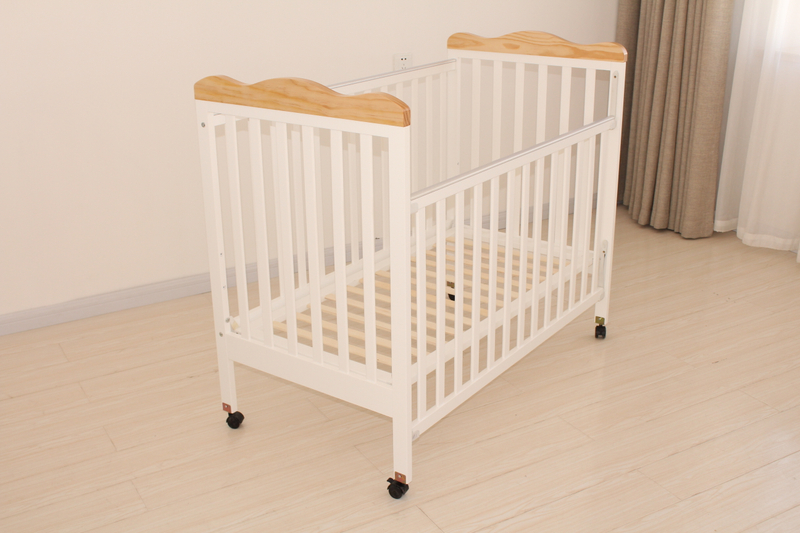
In this post, we’ll explain how to choose the right cot for your baby based on safety, size, materials, mattress fit, and intended use. You’ll also learn how different Cots compare and what factors matter most when making the right decision.
A cot is not just another baby product. It is one of the most important items in a nursery because it directly affects where a baby sleeps, how the room is organized, and how parents manage daily care. The right choice can make bedtime easier, improve nursery efficiency, and provide a stronger sense of confidence. The wrong choice can create inconvenience, wasted space, avoidable expense, or safety concerns.
This is especially important because not all Cots are designed for the same purpose. Some are built for long-term home use, some are made for travel or temporary placement, and some are designed to grow with the child. That means choosing the right cot is not only about finding a nice-looking product. It is about matching the cot to real-life needs.
For manufacturers, retailers, and importers, this also explains why buyers ask more detailed questions than before. Today’s market is more informed. Parents want to know about mattress fit, stability, safe finishes, storage, portability, and ease of use. As a result, better guidance leads to better product choices.
A cot is a baby sleeping enclosure designed for infants and young children. Depending on the market, the word may refer to what some regions call a crib, while in other markets it may include several baby sleeping product types under one broader term. Even though the basic purpose is similar, the construction and intended use of Cots can vary a great deal.
Some Cots are designed for fixed use in a nursery. Others are made to fold, store, or travel more easily. Some focus on long-term value through convertible designs, while others focus on compactness or convenience. This is why buyers should avoid treating all Cots as interchangeable products.
Understanding this basic definition is important because it leads to the most practical buying principle: the right cot is the one that suits the baby, the family’s routine, the available space, and the expected usage pattern.
Before choosing among Cots, it helps to understand the main categories on the market. Each type serves a different purpose, and each one offers different benefits.
Standard household Cots are designed mainly for regular home use. They are typically placed in a nursery or bedroom and remain there as the baby’s main sleep space. These Cots often have a more rigid frame and are usually preferred by families who want a stable, long-term setup.
A standard household cot is often the best choice when daily use, durability, and room consistency are the priorities. Because it is not built around repeated folding or movement, it often provides a stronger sense of permanence and structure.
Portable folding Cots are designed to be folded for storage or transport. These products are especially useful for travel, short-term stays, small apartments, or families who need a flexible sleeping solution that can be moved more easily.
Their main advantage is convenience. However, buyers should remember that portability changes the engineering logic. Portable folding Cots must combine flexibility with safe locking, stable support, and correct mattress compatibility.
Travel Cots are often lightweight, compact, and easy to move. They are especially useful for families who travel frequently or need a second sleep space outside the main home. Some travel Cots overlap with portable folding models, but the key difference is that travel products are strongly optimized for mobility and transport.
Convertible Cots are designed to provide longer-term value by changing into another child-use furniture form, such as a toddler bed. These products appeal to families who want to extend the product’s service life and avoid replacing furniture too soon.
Convertible Cots are often attractive from a value perspective, but they should still be evaluated carefully in terms of structure, hardware, assembly clarity, and practical day-to-day use.
When comparing Cots, buyers should focus on a group of core decision factors rather than one single feature. A cot may be beautiful but impractical. It may be compact but too limited for long-term use. It may be affordable but difficult to maintain. The right choice usually comes from balancing several needs at once.
Safety should always come first when evaluating Cots. That includes frame stability, safe side construction, secure joints, smooth finishes, reliable hardware, and a properly fitted mattress. A good cot should feel stable, well-made, and appropriately designed for infant sleeping use.
Modern buyers also pay more attention to safe-sleep basics than in the past. They are increasingly aware that a baby sleep space should be clear, the mattress should fit correctly, and the sleeping surface should support safe everyday use. This is one of the reasons why the quality gap between professionally designed Cots and poorly specified products becomes so important.
Cot size matters more than many buyers expect. A cot that is too large can make a small nursery feel crowded and inconvenient. A cot that is too compact may limit long-term usability. Buyers should think about both the room size and the practical movement space around the cot.
This is especially relevant when choosing between different Cots for apartments, shared bedrooms, or dedicated nurseries. A larger room may allow for a full-size household cot without issue, while a smaller space may benefit from a more compact footprint. The goal is not simply to choose the biggest cot possible, but to choose one that fits the room and still allows the nursery to function well.
The materials used in Cots affect durability, appearance, weight, maintenance, and perceived quality. Common options include solid wood, engineered wood, metal, and mixed-material construction.
Solid wood Cots often appeal to buyers who want a natural look, long-term durability, and a premium nursery style. Metal or hybrid Cots may appeal to buyers looking for different design aesthetics, lighter structures, or simplified maintenance. Regardless of material, build quality matters more than marketing language. Buyers should look for strong joints, stable assembly, smooth surfaces, and consistent finishing quality.
Mattress fit is one of the most important but most overlooked parts of choosing Cots. A cot should be paired with a mattress that fits correctly, without unsafe gaps, sliding, or instability. This is not a secondary issue. The mattress and cot work together as one sleep system.
For that reason, responsible buyers should always confirm what mattress size, thickness, and specification the cot is designed to use. Good manufacturers of Cots typically provide precise mattress guidance rather than leaving this point vague.
Parents do not only buy Cots based on structure. They also care deeply about daily convenience. This includes assembly, cleaning, access height, storage, and overall practicality.
Some Cots are easier to wipe clean. Some are easier to move. Some offer a better height for reaching the baby comfortably. Others take less effort to assemble or reassemble. These quality-of-life factors can make a major difference over months of use.
Some buyers want Cots only for a shorter early stage. Others want a product that can support longer use or adapt as the baby grows. This is where flexibility becomes an important decision factor.
Families seeking long-term value often consider convertible Cots, while families prioritizing compactness or temporary use may choose simpler solutions. The best decision depends on whether the cot is meant to solve an immediate need or remain a key part of the nursery over a longer period.
The best cot is not the same for every family. Different households have different spaces, routines, budgets, and priorities. This is why choosing among Cots is easier when buyers first identify their own real needs.
If the cot will be the baby’s main daily sleep space, a stable household cot is often the best option. Among all Cots, this type is usually preferred for long-term room placement and consistent day-to-day use. It is typically more rigid, more permanent, and more suitable for a dedicated nursery environment.
If room size is limited, compact Cots may be the better choice. In a smaller nursery, apartment, or shared room, the most practical cot is one that fits well without making movement difficult. Buyers should pay attention to external dimensions as well as the total footprint within the room.
For families who travel often or need a second baby sleep space, portable or travel Cots may be the right solution. Their ability to fold, store, and move easily makes them highly practical in flexible living situations. The key is to choose models with reliable structure, clear setup instructions, and appropriate mattress compatibility.
If long-term use is the priority, convertible Cots can offer strong value. They may reduce the need for later furniture replacement and can appeal to buyers who want more functionality from one product. However, those benefits should still be weighed against assembly complexity, room layout, and overall ease of use.
When comparing Cots, buyers can make better decisions by focusing on specific safety features rather than general advertising language. Below is a simple feature checklist.
Safety Feature | Why It Matters | What Buyers Should Check |
Stable frame | Helps support consistent structure during normal use | No wobbling, weak joints, or visible instability |
Safe side construction | Reduces avoidable hazards from openings or poor design | Even spacing, smooth edges, secure side panels |
Proper mattress fit | Helps avoid unsafe gaps and poor support | Correct size, clear specification, secure fit |
Smooth finish | Improves safety and user comfort | No rough edges, splinters, or poor coating quality |
Strong hardware | Supports long-term durability and stability | Reliable connectors, fasteners, and structural parts |
Clear instructions | Helps reduce user mistakes | Easy-to-understand setup, use, and care guidance |
This checklist is useful for parents and also for importers comparing different Cots across suppliers. A product that performs well on these core points is more likely to deliver safe and practical real-world use.
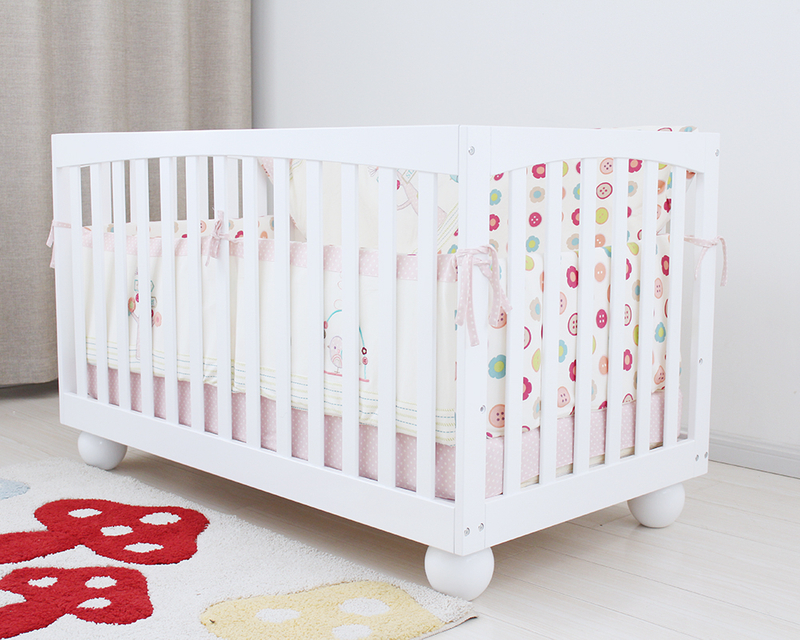
Even careful buyers can make mistakes when choosing Cots, especially when there are many similar-looking products on the market. The most common mistakes include the following.
First, many buyers focus too much on appearance. Stylish Cots can be appealing, but appearance alone tells very little about structure, safety, or long-term practicality.
Second, some buyers ignore mattress fit. This is one of the biggest mistakes because the mattress is a key part of how Cots actually perform during use.
Third, people sometimes buy a cot that is wrong for the room size. Large Cots in small spaces can make daily movement difficult, while overly compact models may create limitations later.
Fourth, some buyers choose based only on current needs and forget future use. A family may initially want a simple solution, then later wish they had chosen convertible Cots or a more durable long-term design.
Fifth, buyers sometimes assume all Cots offer the same level of quality if the product photos look similar. In reality, differences in materials, hardware, finish, stability, and instructions can be significant.
This is one of the most practical comparisons for buyers considering Cots. A household cot is usually better for long-term, everyday nursery use. A portable cot is often better for flexibility, travel, or temporary placement. Neither category is automatically the best in every case.
A household cot usually wins on stability and permanence. Portable Cots usually win on mobility and storage convenience. That means the better product depends on how the family will really use it.
The table below gives a simple side-by-side comparison.
Comparison Point | Household Cot | Portable Cot |
Main purpose | Daily home use | Travel or temporary use |
Structure | More rigid and permanent | More flexible and movable |
Portability | Lower | Higher |
Room placement | Best for fixed nursery setup | Best for flexible placement |
Long-term use | Usually stronger | Depends on product design |
Convenience for travel | Limited | Excellent |
Typical buyer priority | Stability and long-term comfort | Mobility and storage convenience |
This comparison helps explain why the “right” choice among Cots is always linked to lifestyle. A family with a dedicated nursery may prefer a household cot, while a family that values movement and flexibility may prefer a portable model.
The way people choose Cots is changing. Today’s buyers are usually more informed, more comparison-driven, and more conscious of both safety and lifestyle fit.
One strong trend is the growing preference for simpler and more practical nursery design. Parents increasingly want Cots that fit modern interiors without making the room feel crowded. That is why compact shapes, clean lines, and efficient footprints are drawing more attention.
Another trend is the rise of flexibility. More families now live in smaller spaces, share rooms, travel frequently, or split time across multiple homes. This has increased interest in portable and travel Cots, especially those that are easier to store without giving up too much stability.
A third trend is stronger awareness of mattress fit and safe-sleep basics. Buyers are no longer looking only at the cot frame. They want to know how the sleep surface works, how clear the cot remains, and whether the product feels trustworthy as a complete baby sleep solution.
There is also growing interest in long-term value. Convertible Cots appeal to buyers who want furniture that can evolve with the child instead of serving only one short phase.
These trends matter because they show that buyers are choosing Cots with a wider set of expectations than before. They want safety, practicality, design harmony, and value all at once.
A well-made cot does not begin with marketing. It begins with design logic, material selection, careful construction, and production consistency. This is why professional manufacturing matters so much in the Cots industry.
Experienced manufacturers understand that different Cots serve different use cases. A nursery-focused household cot should not be designed exactly like a travel or folding product. The material choices, hardware requirements, dimensions, and ease-of-use priorities may all differ.
Professional manufacturers also understand that real product quality includes more than the sample. Consistent production is essential. Buyers need to know that the cot they approve is the cot that will be delivered in larger quantities with the same finish quality, the same dimensions, and the same hardware performance.
For importers and distributors, this is particularly important. When sourcing Cots, a trusted manufacturer can support product selection, customization, documentation, packaging logic, and long-term quality stability. That is why choosing the right supplier is almost as important as choosing the right cot design.
Choosing the right cot for your baby means focusing on safety, comfort, space, and intended use rather than appearance alone. The best Cots are the ones that match your baby’s needs, your room layout, and your family’s lifestyle.
Some families may prefer standard household Cots for long-term stability, while others may choose portable, travel, or convertible Cots for greater flexibility and value. At Auready Wood Industry Co.,Ltd, we believe that well-designed Cots should combine safety, practicality, and reliable quality to support everyday family needs.
The best size depends on the baby’s age, room layout, and how long the cot is expected to be used. Among different Cots, the ideal size is one that provides enough sleeping space while still fitting the nursery comfortably.
A safe cot should have a stable frame, a properly fitting mattress, smooth finishes, secure hardware, and clear instructions. When comparing Cots, buyers should focus on these practical safety basics instead of appearance alone.
Each has different advantages. Wooden Cots are often preferred for daily home use and long-term nursery placement, while folding Cots are often chosen for travel, storage, or temporary use. The better option depends on lifestyle and intended use.
This depends on the child’s size, development stage, and the cot’s design. Some Cots are intended for shorter use periods, while convertible Cots may support longer-term use.
You should check product type, materials, dimensions, mattress compatibility, finish quality, instructions, and production consistency. When sourcing Cots, these details are essential for choosing the right supplier and the right product.


