
- All
- Product Name
- Product Keyword
- Product Model
- Product Summary
- Product Description
- Multi Field Search


Views: 0 Author: Site Editor Publish Time: 2026-07-28 Origin: Site


The private label nursery market offers significant revenue potential but suffers from heavy saturation. Retailers relying on off-the-shelf, white-labeled products face a race to the bottom. Competing solely on cost erodes brand equity and exposes companies to severe liability risks from unverified generic goods. Transitioning to developing custom baby furniture solves this problem. It allows brands to control material safety, dictate aesthetic differentiation, and establish a defensible market position. Strategic end-to-end OEM and ODM partnerships transform generic sourcing into proprietary product lines. You will learn how to engineer distinct nursery collections, navigate compliance standards, and mitigate supply chain risks effectively.
Differentiation Through Design: Customization moves private label brands away from price wars by allowing exclusive designs, custom brand detailing (such as logos and hardware), and cohesive nursery collections.
Non-Negotiable Compliance: Direct involvement in the manufacturing process ensures rigorous adherence to CPSC, ASTM, and international safety standards, backed by verifiable Children’s Product Certificates (CPCs).
The Pilot Run Imperative: Conducting a pilot production run bridges the gap between prototyping and mass production, minimizing structural, aesthetic, and packaging failure risks.
Scalable Unit Economics: While custom tooling and prototyping require higher upfront investment, optimized OEM/ODM partnerships yield stronger long-term margins and brand loyalty.
Risk Mitigation: Thorough factory vetting, third-party material testing, and strict Quality Assurance (QA) protocols are critical to surviving the implementation phase of custom furniture production.
Defining success in the private label space requires moving beyond basic utility. A successful collection must offer uncompromising safety, aesthetic cohesion, and immediate brand trust. Consumers expect nursery products to look premium while functioning flawlessly. Meeting these expectations builds a loyal customer base that returns for future purchases. When you control the manufacturing specifications, you dictate the exact tolerances, hardware grades, and finish qualities that define your brand's reputation on the retail floor.
Overcoming white-label saturation demands proprietary product development. Selecting pre-existing catalog items limits your growth potential because competitors can easily source the exact same products from the same factory floors. Custom development creates a competitive moat. You achieve this through custom brand detailing, unique surface patterns, and exclusive structural designs. This approach prevents direct price comparisons and elevates perceived value. Instead of fighting over pennies on a generic crib, you command a premium for a proprietary design that exists nowhere else in the market.
Modern consumers evaluate baby brands based on strict criteria. They demand verifiable non-toxic material claims and sustainable sourcing. Using FSC-certified wood appeals to environmentally conscious buyers who scrutinize supply chains. Multi-functional longevity also drives purchasing decisions. Parents want furniture that adapts as their child grows, such as cribs that convert to toddler beds and eventually full-size headboards. Aligning your product development with these premium market demands ensures long-term profitability and stronger brand loyalty.
To execute this effectively, brands must understand the raw materials they specify. Solid hardwoods like New Zealand pine or European beech offer excellent strength-to-weight ratios and take non-toxic finishes beautifully. Engineered woods, when specified with CARB Phase 2 compliant adhesives, provide dimensional stability for large panels like dresser sides. By dictating these material choices, you eliminate the risk of off-gassing and structural failure that plagues cheap, white-labeled alternatives.
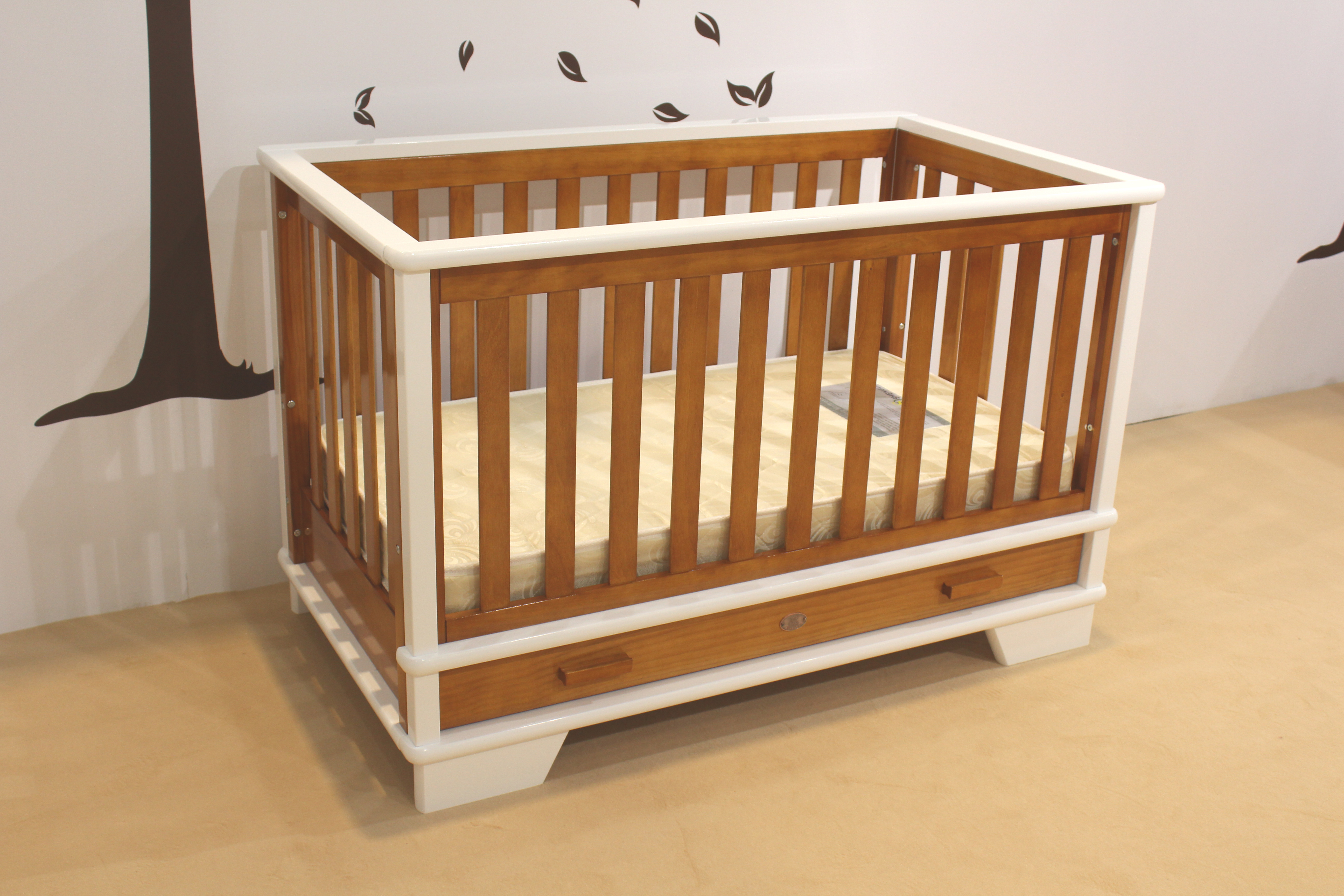
Integrating convertible mechanisms increases customer lifetime value. A crib that transitions into a toddler bed keeps the product relevant for years. This multi-stage functionality justifies a higher retail price point. Parents appreciate the extended utility of convertible designs. When engineering these mechanisms, specify heavy-duty threaded inserts and machine screws rather than cheap wood screws that strip out after one conversion. The hardware must withstand multiple assembly and disassembly cycles over a five-to-seven-year period.
Incorporating proprietary aesthetic details sets your product apart. Apply laser-engraved or embossed brand logos discreetly on the lower rail or mattress support frame. Mill custom end panels to create a signature silhouette that stands out in lifestyle photography. Utilize bespoke, non-toxic color palettes that match modern interior design trends. Developing a custom baby crib requires attention to these visual elements to ensure it doesn't look like a generic factory template.
Technical considerations dictate the safety of the final product. Strict slat spacing prevents entrapment hazards, requiring precise CNC routing during manufacturing. Mattress support hardware must withstand heavy, repeated use and dynamic loads. All finishes must remain non-toxic and bite-safe, requiring multi-step water-based painting processes that cure to a hard, durable shell. Rigorous engineering ensures the crib meets all mandatory safety regulations while maintaining its aesthetic appeal.
Combining aesthetic brand signatures with functional features is essential. A well-designed dresser often includes a removable changing table topper. This dual-purpose approach maximizes space in smaller nurseries. It provides immediate utility while retaining long-term storage value once the child outgrows diapers. The topper must secure firmly to the dresser chassis without damaging the top surface finish, requiring clever hardware engineering like hidden rear brackets.
Integrating custom hardware elevates the entire piece. Bespoke brass or wood drawer pulls create a premium feel that generic plastic or stamped metal hardware cannot match. Custom-patterned drawer liners add a surprise element of luxury when the customer opens the product. These small details significantly enhance the perceived quality of the furniture and reinforce the brand's attention to detail.
A custom nursery dresser must comply with strict safety rules. The STURDY Act mandates rigorous anti-tip testing for clothing storage units. You must incorporate reliable drawer interlock systems that prevent more than one drawer from opening at a time. Heavy-duty, under-mount soft-close glide hardware ensures smooth operation, prevents pinched fingers, and stops drawer failure over time. The back panel must be structurally integrated, not just tacked on, to provide lateral stability.
Providing a secure, aesthetically matched accessory drives cross-selling. A stand designed specifically for your collection encourages customers to buy the complete set. It offers a safe resting place for infants while maintaining visual harmony in the nursery. When customers see a cohesive collection, they are far more likely to add accessory items to their cart, increasing the average order value.
Coordinating materials ties the collection together. Match the timber species used in the stand to the primary crib design. Incorporate fabric accent components like OEKO-TEX certified cotton liners or straps. Consistent material usage strengthens your brand identity. If your crib features a specific whitewashed ash finish, the basket stand must undergo the exact same finishing process to ensure a perfect match under nursery lighting.
Structural stability remains the top priority. Rocking mechanism safety limits require precise engineering and testing to prevent over-rotation. Ensure exact dimensional matching to standard or proprietary baskets so the basket cannot slip or tilt. Engineering a custom Moses basket stand prevents tipping and ensures infant safety. The base must have a wide enough footprint to pass standard stability tests, even when subjected to lateral forces.
Capturing the toddler demographic extends the brand relationship. Parents who trust your infant products will naturally look to you for toddler furniture. This expansion strategy increases overall customer lifetime value significantly. A table set serves as the perfect bridge product, moving the brand out of the nursery and into the playroom or living room.
Offering unique, modern shapes appeals to design-conscious parents. Custom-molded storage compartments add practical value for art supplies or small toys. Integrated play-focused features, such as built-in paper rolls or chalk surfaces, engage children directly. These additions make the furniture interactive and fun, transforming a basic table into a creative workstation.
A custom kids table set demands careful ergonomic scaling. The dimensions must suit growing toddlers perfectly, allowing their feet to touch the ground while seated. Scratch-resistant surfaces, such as high-pressure laminates or catalyzed clear coats, protect against daily wear and tear. Robust joinery, like mortise and tenon connections reinforced with corner blocks, is necessary to withstand high-impact, daily use by active children.
Evaluating structural materials determines product durability and market positioning. Solid hardwoods offer premium appeal and exceptional strength, ideal for structural components like crib posts and table legs. Engineered woods like MDF or plywood provide cost-effective stability for large, flat panels that might otherwise warp. Metal components add modern aesthetics and structural reinforcement. The choice of material directly impacts the final retail price, the weight of the shipping carton, and the target demographic.
Mandating strict toxicity standards protects end-users and your brand reputation. Require zero-VOC paints and water-based coatings on all surfaces. Lead-free finishes and phthalate-free adhesives are absolute requirements. Verify these claims through third-party certifications. Look for GREENGUARD Gold, FSC for timber, and OEKO-TEX Standard 100 for integrated textiles. Factory-level testing must be verified by independent labs to ensure no contaminated batches slip through.
Navigating regulatory compliance is a complex but necessary process. You must understand Consumer Product Safety Commission requirements. Adhere strictly to ASTM F1169 standards for full-size baby cribs, which dictate everything from mattress support strength to spindle torque resistance. Obtain and maintain valid Children’s Product Certificates. Work only with CPSC-accepted third-party laboratories to conduct these mandatory tests.
Production Model | Best Suited For | Level of Customization | Upfront Investment |
|---|---|---|---|
OEM (Original Equipment Manufacturer) | Brands with in-house designers and exact tech packs. | High. Completely bespoke structural molds and designs. | High. Requires custom tooling and extensive prototyping. |
ODM (Original Design Manufacturer) | Brands modifying existing, pre-tested factory designs. | Moderate. Custom branding, colors, and minor tweaks. | Lower. Utilizes existing molds and safety testing data. |
Choosing the right production model depends on your internal capabilities. OEM suits brands that provide exact CAD files and bespoke aesthetic molds. ODM works best for brands making minor structural tweaks to pre-tested designs. Regardless of the model, prioritize partners offering end-to-end solutions. They should manage raw material sourcing, hardware manufacturing, and custom packaging seamlessly. A fragmented supply chain increases the risk of delays and quality control failures.
Understanding Minimum Order Quantities is crucial for inventory planning. MOQs scale directly with the complexity of your design. Custom structural molds require significantly higher MOQs to justify tooling costs and factory setup time. Applying custom paint colors to existing frames usually allows for lower initial order volumes. Negotiating these terms requires a clear understanding of the factory's production line efficiency and raw material purchasing minimums.
The realistic timeline of custom furniture development requires patience. The process includes CAD approval, initial sampling, physical safety testing, and necessary revisions. Only after these steps do you reach final golden sample approval. You must balance the desire for speed to market with the necessity of rigorous physical drop-testing and load-testing. Rushing the prototyping phase inevitably leads to structural failures or compliance issues during mass production.
Conducting a limited first run is an essential risk management strategy. A pilot run of 20 to 50 units evaluates production line assembly accurately. It reveals tooling wear-and-tear early in the process. It also tests real-world package handling before you commit to full container loads. This small batch allows you to refine assembly instructions and verify that all hardware packs contain the correct components.
Margin planning must account for various hidden costs. Tooling fees and third-party lab testing fees impact your bottom line. Customized packaging engineering also adds to the initial investment. Factoring in these specialized requirements ensures your unit economics remain viable at scale. You must calculate the landed cost, including ocean freight, customs duties, and domestic fulfillment, to set an accurate retail price.
Auditing potential manufacturing partners requires strict criteria. Look for ISO 9001 certification to ensure consistent quality management systems are in place. Verify social compliance through standards like BSCI or Sedex to ensure ethical labor practices. Demand historical experience specifically in manufacturing juvenile products. This specialized experience is non-negotiable for safety-critical items, as general furniture factories often lack the precision required for crib safety standards.
Implementing independent pre-shipment inspections protects your inventory investment. Use Acceptable Quality Limit (AQL) standards to evaluate finished goods. Third-party inspectors catch defects before products leave the factory floor, checking for finish inconsistencies, missing hardware, and structural flaws. This prevents costly returns and protects your brand reputation from negative reviews caused by out-of-box failures.
Drafting enforceable Non-Disclosure Agreements protects your intellectual property. Utilize Non-Compete and Non-Use agreements to secure proprietary designs. These legal frameworks prevent the manufacturer from selling your unique products to competitors or displaying them at trade shows without permission. Protecting design exclusivity maintains your competitive advantage in a crowded market.
Designing exclusive, flat-packed packaging balances aesthetics with damage prevention. The unboxing experience should feel premium while protecting heavy components from transit damage. Ensure packaging survives the harsh e-commerce fulfillment network. Mandate ISTA 3A transit testing certification for all cartons, which simulates the drops and vibrations of parcel delivery. Optimize carton dimensions to maximize shipping container yield and reduce landed costs.
Custom baby furniture represents a high-barrier, high-reward strategy. It demands significant upfront investment in compliance, pilot testing, and prototyping. However, this approach ultimately builds a resilient, high-margin private label brand. Select manufacturing partners based on their ability to offer end-to-end solutions and proven compliance track records. Prioritize transparency in material sourcing and robust QA infrastructure over unit cost alone.
Define your product specifications clearly by creating a comprehensive tech pack that details all materials, dimensions, and hardware requirements.
Establish your target unit economics, factoring in third-party testing, custom tooling costs, and ISTA 3A packaging engineering.
Secure design patents for any proprietary aesthetic features before initiating mass production to protect your intellectual property.
Initiate dialogue with vetted OEM or ODM partners to request capabilities decks and verify their historical experience with juvenile products.
Schedule a pilot production run of 20 to 50 units to validate assembly quality, hardware accuracy, and packaging durability before ordering a full container.
A: Minimum Order Quantities vary based on material and factory capabilities. For custom structural designs requiring new molds, MOQs typically range from 100 to 500 units per SKU. Modifying existing ODM designs with custom colors may allow for lower MOQs.
A: You must submit your final production samples to a CPSC-accepted third-party laboratory for rigorous safety testing. Upon passing, the lab issues test reports which you use to generate a Children's Product Certificate prior to importation and sale.
A: A pilot run of 20 to 50 units identifies assembly line issues, tooling inaccuracies, and packaging flaws before mass production begins. It prevents widespread defects and ensures the final product meets all quality standards.
A: OEM involves manufacturing a completely new product based on your proprietary design and CAD files. ODM involves selecting a factory's existing, pre-tested design and modifying it with your brand's colors, logos, and minor aesthetic details.
A: Before sharing tech packs, require the factory to sign strict Non-Disclosure, Non-Use, and Non-Compete (NNN) agreements. Additionally, file for design patents in your target markets to legally protect your unique structural and aesthetic features.
A: Look for Forest Stewardship Council (FSC) certification to ensure the timber is sustainably harvested. Additionally, require GREENGUARD Gold certification for the finished product to verify low chemical emissions and zero-VOC finishes.


